Regional Celebrations - Art And Culture | UPSC Learning
Topics
0 topics • 0 completed
🔍
No topics match your search

Regional Celebrations
Easy⏱️ 8 min read
art and culture
📖 Introduction
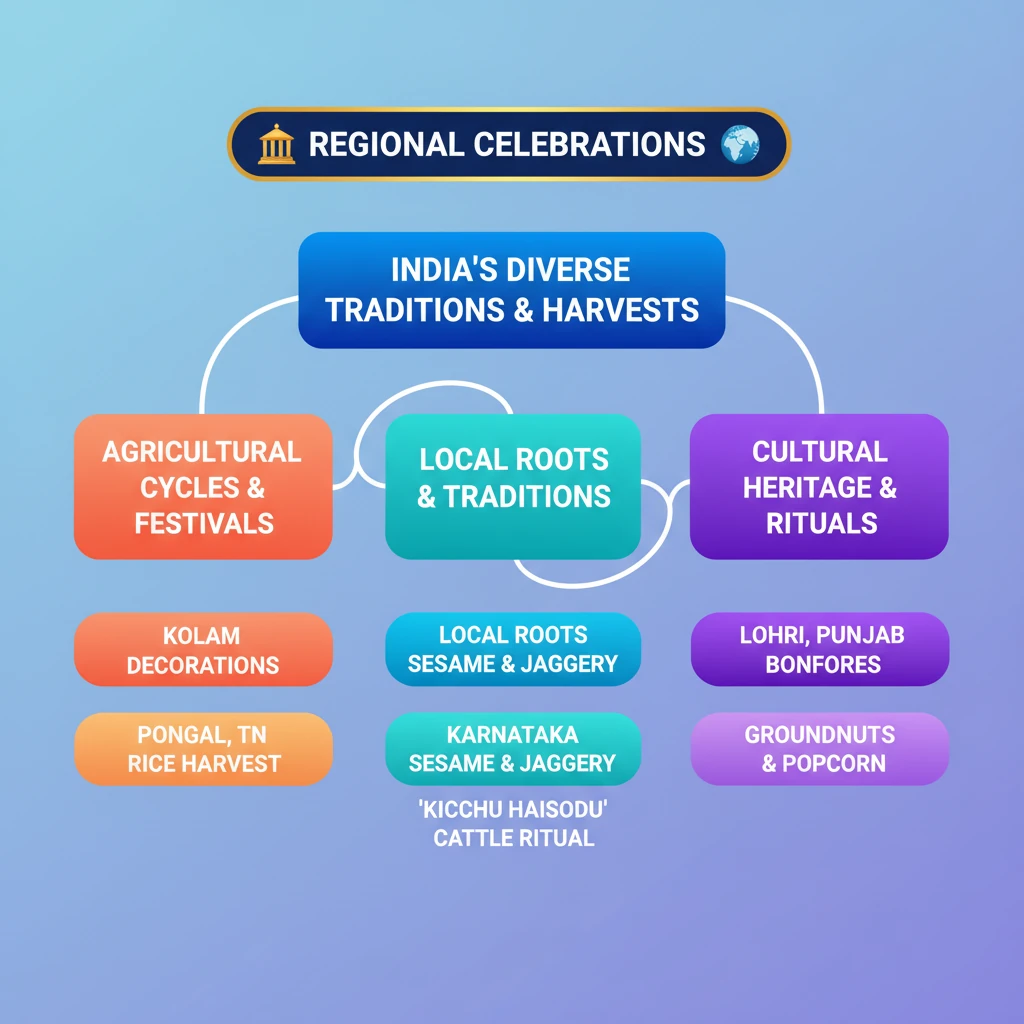
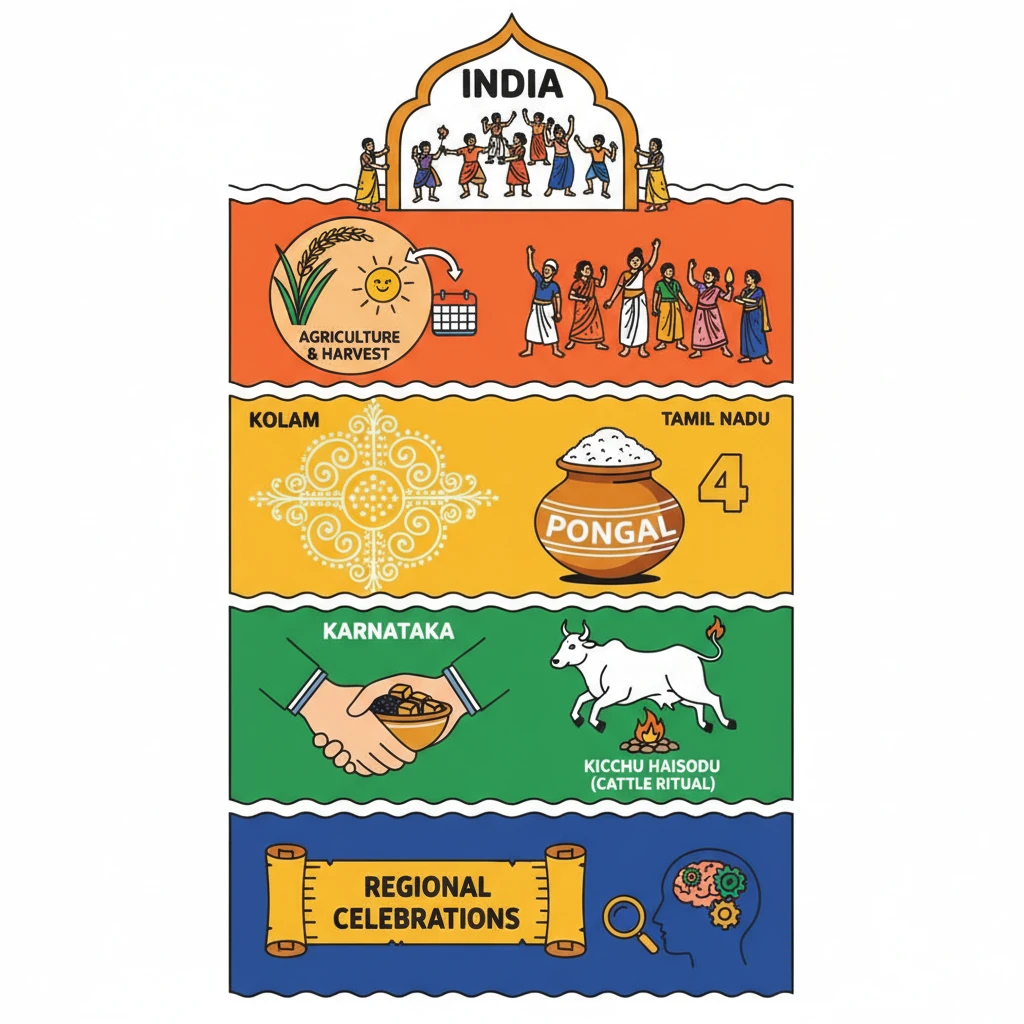
<h4>Introduction to India's Diverse Regional Celebrations</h4><p>India is a land of immense cultural diversity, reflected vividly in its numerous <strong>regional celebrations</strong>. These festivals are deeply rooted in local traditions, agricultural cycles, and historical practices, fostering community bonding and preserving cultural heritage.</p><div class="key-point-box"><strong>Key Aspect:</strong> Regional celebrations often mark significant events like <strong>harvest seasons</strong>, the beginning of a <strong>new year</strong>, or specific cultural observances unique to a state or community.</div><h4>Pongal: Tamil Nadu's Harvest Festival</h4><p><strong>Pongal</strong> is a prominent <strong>four-day festival</strong> celebrated in <strong>Tamil Nadu</strong>. It marks the auspicious <strong>rice harvest</strong>, signifying gratitude to nature for its bounty.</p><p>During Pongal, Tamilian homes are adorned with intricate traditional <strong>kolams</strong>. These beautiful designs are typically made from <strong>rice powder</strong> at the entrance of houses, symbolizing prosperity and welcome.</p><div class="info-box"><strong>State:</strong> Tamil Nadu<br><strong>Festival:</strong> Pongal<br><strong>Duration:</strong> Four days<br><strong>Significance:</strong> Rice harvest, gratitude to nature<br><strong>Tradition:</strong> Kolams made from rice powder</div><h4>Karnataka's Unique Harvest Traditions</h4><p>In <strong>Karnataka</strong>, locals observe a tradition of sharing a special mixture of <strong>sesame and jaggery</strong>. This act symbolizes <strong>harmony and goodwill</strong> among people, promoting sweet relations.</p><p>Farmers' communities in Karnataka engage in a distinctive ritual called <strong>'Kicchu Haisodu'</strong>. During this, their cattle are dressed in colorful costumes and jewels, then made to jump over a fire pit, a display believed to bring good fortune.</p><div class="info-box"><strong>State:</strong> Karnataka<br><strong>Traditions:</strong> Sharing sesame and jaggery mixture (harmony), 'Kicchu Haisodu' (cattle jumping over fire)</div><h4>Lohri: The Bonfire Festival of Punjab</h4><p><strong>Lohri</strong> is a vibrant festival celebrated predominantly in <strong>Punjab</strong>. It is characterized by the lighting of large <strong>bonfires</strong>, around which people gather to sing folk songs and perform traditional dances.</p><p>Offerings such as <strong>groundnuts and popcorn</strong> are traditionally thrown into the bonfire. This ritual is believed to invoke blessings and mark the end of winter, welcoming longer days.</p><div class="info-box"><strong>State:</strong> Punjab<br><strong>Festival:</strong> Lohri<br><strong>Key Elements:</strong> Bonfires, folk songs, offerings<br><strong>Offerings:</strong> Groundnuts, popcorn</div><h4>Bihar's Khichdi Festival</h4><p>In <strong>Bihar</strong>, a festival specifically named <strong>'Khichdi'</strong> is celebrated. As the name suggests, a dish of the same name, a wholesome preparation of <strong>rice and lentils</strong>, is central to the festivities.</p><p>Alongside the main dish, <strong>sesame and jaggery ladoos or chikkis</strong> are prepared and widely distributed among family and friends. These sweets are symbolic of warmth and togetherness during the colder months.</p><div class="info-box"><strong>State:</strong> Bihar<br><strong>Festival:</strong> Khichdi<br><strong>Key Food:</strong> Khichdi (rice and lentils)<br><strong>Sweets Distributed:</strong> Sesame and jaggery ladoos or chikkis</div><h4>Kite Festivals: Rajasthan and Gujarat</h4><p>The states of <strong>Rajasthan and Gujarat</strong> are renowned for their enthusiastic celebration of <strong>kite-flying competitions and festivals</strong>. These events draw large crowds and showcase intricate kite designs and skillful flying.</p><p><strong>Ahmedabad</strong> in Gujarat hosts the globally recognized <strong>International Kite Festival</strong>, attracting participants and spectators from across the world. In the evenings, the skies are beautifully lit up with numerous <strong>sky lanterns</strong>, creating a mesmerizing spectacle.</p><div class="info-box"><strong>States:</strong> Rajasthan, Gujarat<br><strong>Activity:</strong> Kite-flying competitions<br><strong>Major Event:</strong> International Kite Festival (Ahmedabad)<br><strong>Evening Tradition:</strong> Sky lanterns</div><h4>Magh Bihu: Assam's Harvest and New Year</h4><p><strong>Magh Bihu</strong> is a significant festival celebrated in <strong>Assam</strong>. It marks the culmination of the <strong>annual harvest</strong> season, bringing joy and prosperity to the farming communities.</p><p>Beyond being a harvest festival, Magh Bihu also signifies the beginning of the <strong>Assamese new year</strong>. It is a time for feasting, traditional games, and community gatherings, celebrating new beginnings.</p><div class="info-box"><strong>State:</strong> Assam<br><strong>Festival:</strong> Magh Bihu<br><strong>Significance:</strong> Annual harvest, beginning of Assamese new year</div>
💡 Key Takeaways
- •India's regional celebrations are diverse and deeply rooted in local traditions.
- •Many festivals are linked to agricultural cycles and harvest seasons.
- •Pongal in Tamil Nadu is a four-day rice harvest festival with kolam decorations.
- •Karnataka celebrates with sesame-jaggery sharing and 'Kicchu Haisodu' cattle ritual.
- •Lohri in Punjab involves bonfires and offerings like groundnuts and popcorn.
- •Bihar's Khichdi festival features the dish 'Khichdi' and sesame-jaggery sweets.
- •Rajasthan and Gujarat are famous for kite-flying festivals, including Ahmedabad's International Kite Festival.
- •Magh Bihu in Assam marks both the annual harvest and the Assamese new year.
🧠 Memory Techniques
98% Verified Content
📚 Reference Sources
•NCERT Class XI - An Introduction to Indian Art
•Ministry of Culture, Government of India official website
•Cultural India website (for festival details)