Key Animal Species of the Nilgiri Biosphere Reserve - Art And Culture | UPSC Learning
Topics
0 topics • 0 completed
🔍
No topics match your search
Key Animal Species of the Nilgiri Biosphere Reserve
Medium⏱️ 7 min read
art and culture
📖 Introduction
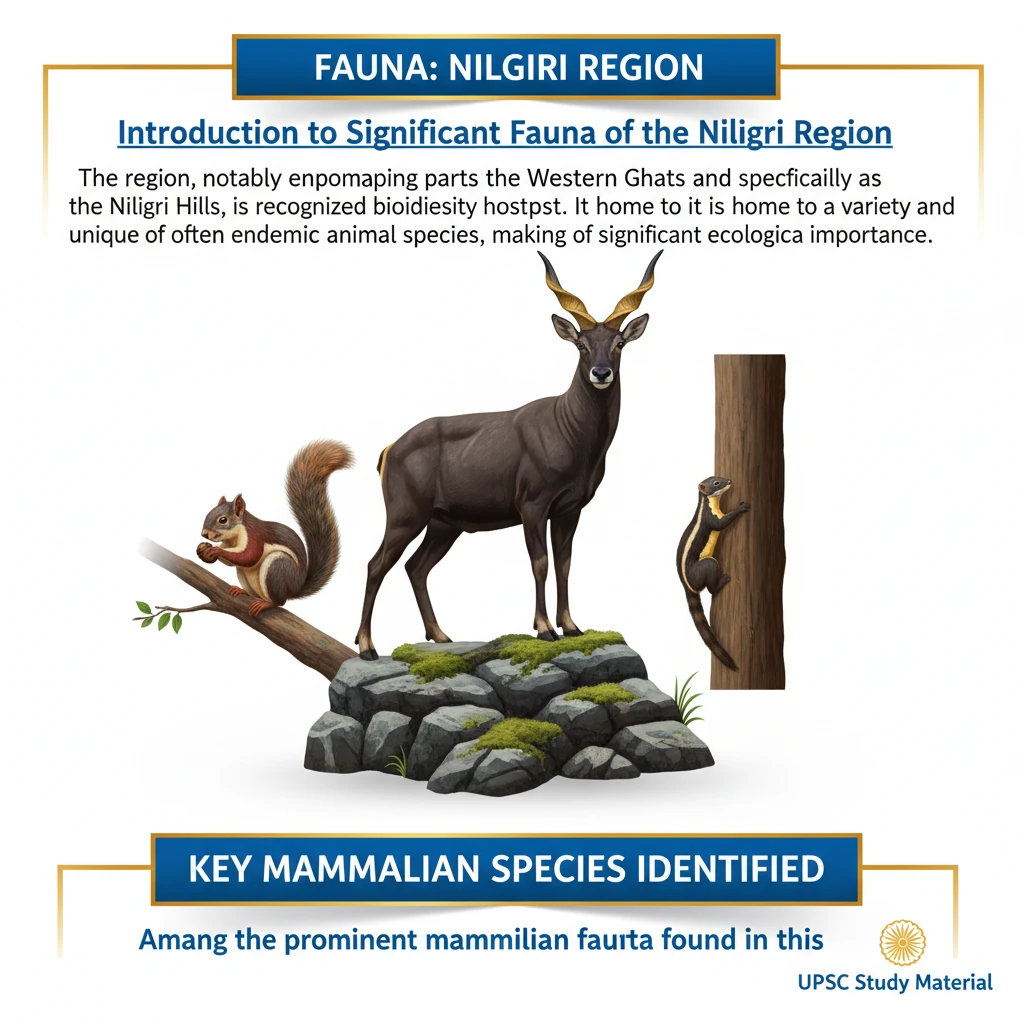
<h4>Introduction to Significant Fauna of the Nilgiri Region</h4><p>The region, notably encompassing parts of the <strong>Western Ghats</strong> and specifically the <strong>Nilgiri Hills</strong>, is recognized as a crucial <strong>biodiversity hotspot</strong>. It is home to a variety of unique and often <strong>endemic animal species</strong>, making it an area of significant ecological importance.</p><h4>Key Mammalian Species Identified</h4><p>Among the prominent mammalian fauna found in this ecologically rich area are several iconic species. These include the <strong>Nilgiri Tahr</strong>, <strong>Nilgiri Langur</strong>, <strong>Gaur</strong> (also known as the Indian Bison), and the majestic <strong>Indian Elephant</strong>.</p><div class="info-box"><ul><li><strong>Nilgiri Tahr:</strong> An endangered mountain goat species, strictly endemic to the Nilgiri Hills and parts of the Western Ghats.</li><li><strong>Nilgiri Langur:</strong> A primate species characterized by its glossy black fur, found exclusively in the evergreen forests of the Western Ghats.</li><li><strong>Gaur (Indian Bison):</strong> The largest extant bovine, playing a vital role in forest ecosystems through grazing.</li><li><strong>Indian Elephant:</strong> A keystone species, critical for seed dispersal and maintaining forest health.</li></ul></div><h4>Unique Freshwater Fish Species</h4><p>Beyond the terrestrial mammals, the freshwater ecosystems within this region are also remarkably diverse. They support a range of unique fish species, indicating healthy aquatic environments.</p><div class="info-box"><ul><li><strong>Nilgiri Danio (<em>Devario neilgheriensis</em>):</strong> A small, colourful freshwater fish species, endemic to hill streams in the Nilgiri region.</li><li><strong>Nilgiri Barb:</strong> Another endemic freshwater fish, signifying the unique aquatic biodiversity of the area.</li></ul></div><h4>Ecological and Conservation Significance</h4><p>The presence of these diverse and often <strong>endemic species</strong> underscores the immense ecological value of the region. Many of these animals are found nowhere else globally, highlighting their irreplaceable nature.</p><div class="key-point-box">The high degree of <strong>endemism</strong> in the <strong>Western Ghats</strong> makes it one of the world's top <strong>biodiversity hotspots</strong>, demanding focused conservation efforts and sustainable management practices.</div><h4>UPSC Exam Perspective</h4><div class="exam-tip-box">For <strong>UPSC Prelims (Environment & Ecology)</strong>, questions often target <strong>endangered and endemic species</strong>, their habitats, and associated conservation initiatives. In <strong>Mains (GS III)</strong>, this knowledge is crucial for answering questions on biodiversity conservation, human-wildlife conflict, and environmental policy.</div>
💡 Key Takeaways
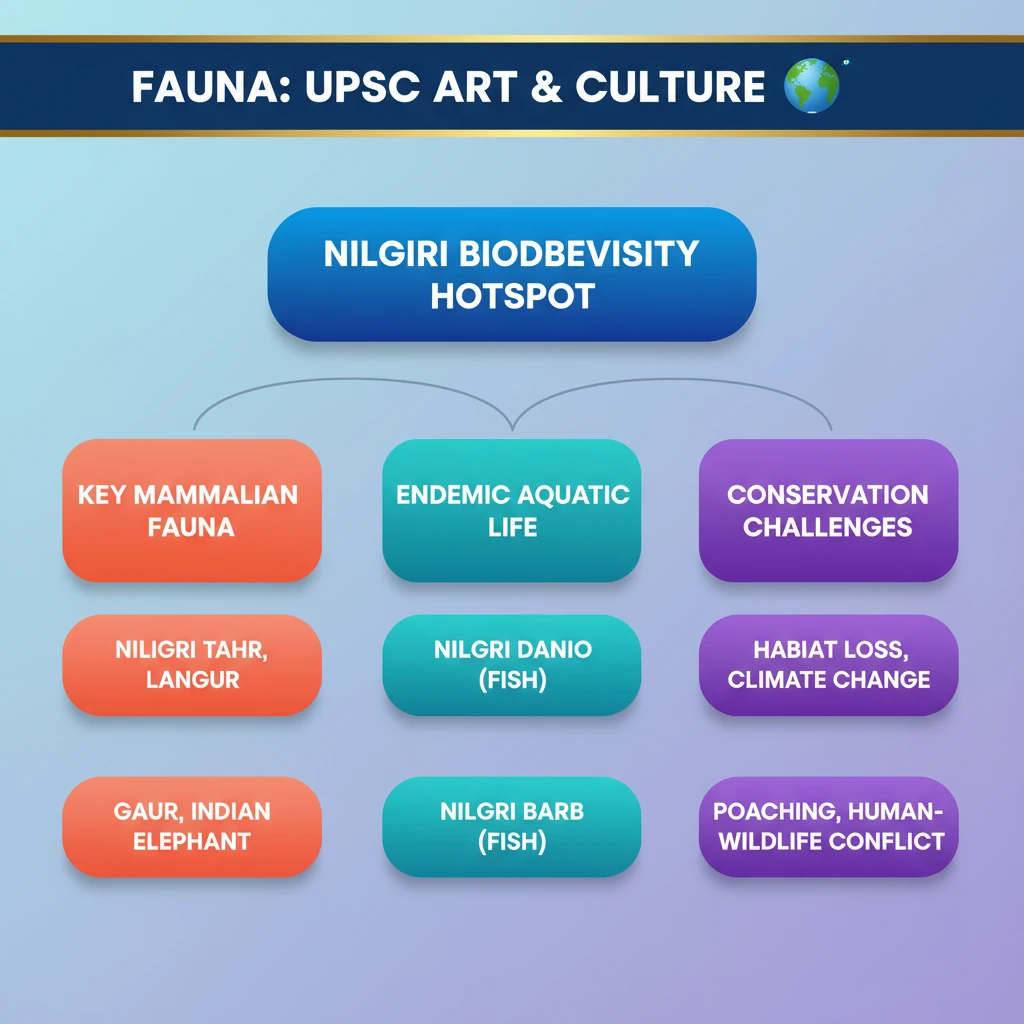
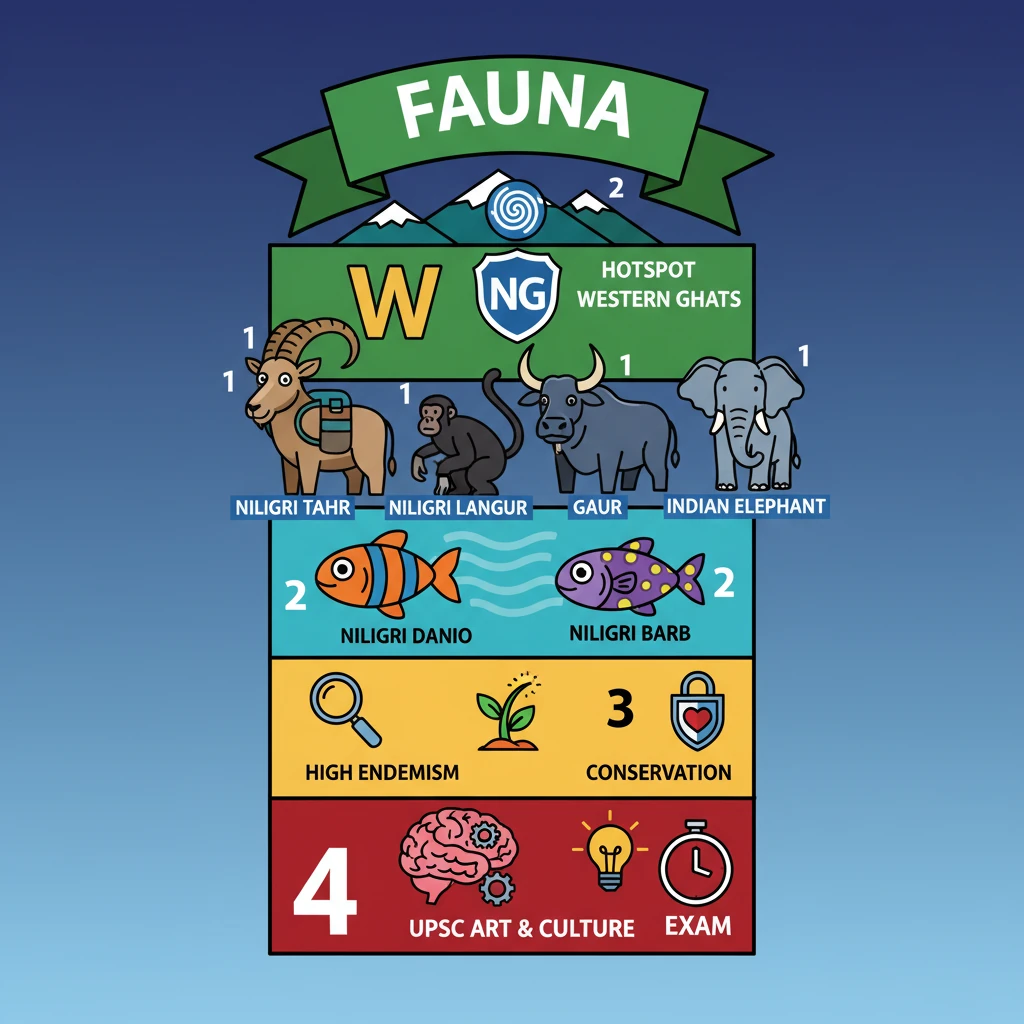
- •The Nilgiri region, part of the Western Ghats, is a critical biodiversity hotspot.
- •Key mammalian fauna include the endangered Nilgiri Tahr, Nilgiri Langur, Gaur, and Indian Elephant.
- •Endemic freshwater fish like Nilgiri Danio and Nilgiri Barb highlight unique aquatic biodiversity.
- •High endemism in the region necessitates focused conservation efforts.
- •Major threats include habitat loss, climate change, poaching, and human-wildlife conflict.
- •India implements conservation through protected areas, species-specific projects like Project Elephant, and community involvement.
- •Understanding specific species and their conservation status is vital for UPSC exams.
🧠 Memory Techniques
95% Verified Content
📚 Reference Sources
•IUCN Red List of Threatened Species
•Ministry of Environment, Forest and Climate Change (MoEFCC), Government of India reports
•Wildlife Protection Act, 1972
•National Parks and Wildlife Sanctuaries data