Cultural Celebration - Art And Culture | UPSC Learning
Topics
0 topics • 0 completed
🔍
No topics match your search
Cultural Celebration
Easy⏱️ 6 min read
art and culture
📖 Introduction
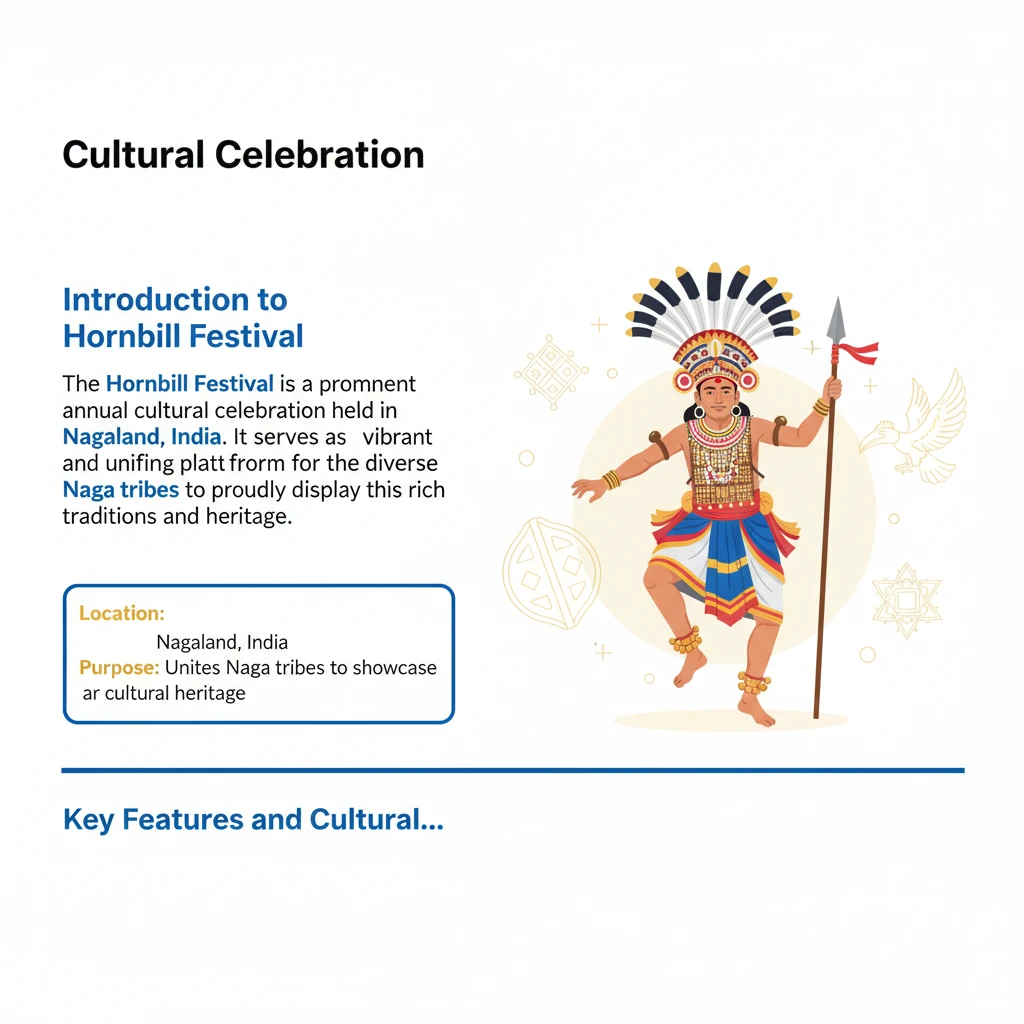
<h4>Introduction to Hornbill Festival</h4><p>The <strong>Hornbill Festival</strong> is a prominent annual cultural celebration held in <strong>Nagaland</strong>, India. It serves as a vibrant and unifying platform for the diverse <strong>Naga tribes</strong> to proudly display their rich traditions and heritage.</p><div class="info-box"><strong>Location:</strong> Nagaland, India<br><strong>Purpose:</strong> Unites Naga tribes to showcase their cultural heritage</div><h4>Key Features and Cultural Displays</h4><p>The festival is renowned for its spectacular array of cultural expressions. These include various <strong>performances, traditional dances, and elaborate exhibitions</strong> that highlight the unique customs and artistry of each participating tribe.</p><div class="key-point-box"><strong>Main Activities:</strong> Performances, traditional dances, cultural exhibitions</div><h4>Warrior Performances and Narratives</h4><p>A central and captivating aspect of the festival involves <strong>Naga warriors</strong>. Dressed in full and striking ceremonial attire, they perform powerful <strong>traditional dances</strong> accompanied by resounding <strong>war cries</strong>, creating an immersive experience for spectators.</p><p>These performances are deeply narrative, serving as living archives of tribal history. They recount significant <strong>stories of victories, successful harvests, expressions of love, and ancient tribal legends</strong>, preserving oral traditions for future generations.</p><h4>Distinctive Attire and Symbolism</h4><p>The ceremonial attire worn by the warriors is a visual feast and a key element of the cultural display. It is highly distinctive, featuring a rich combination of materials and designs that profoundly reflect <strong>Naga heritage</strong> and pride.</p><ul><li><strong>Colorful Feathers:</strong> Often from the <strong>Hornbill bird</strong> itself, symbolizing valor, beauty, and connection to nature.</li><li><strong>Intricate Beadwork:</strong> Signifies tribal identity, social status, and historical achievements.</li><li><strong>Animal Tusks:</strong> Commonly from wild boars, representing strength, hunting prowess, and bravery.</li><li><strong>Colorful Woven Clothes:</strong> Uniquely patterned textiles, known as <strong>Naga shawls</strong>, each specific to a particular tribe and conveying its distinct identity.</li></ul><div class="exam-tip-box">Remember that the <strong>Hornbill Festival</strong> is named after the revered bird, which holds deep cultural significance for the Naga people. Its presence in attire is a crucial detail for exams.</div>
💡 Key Takeaways
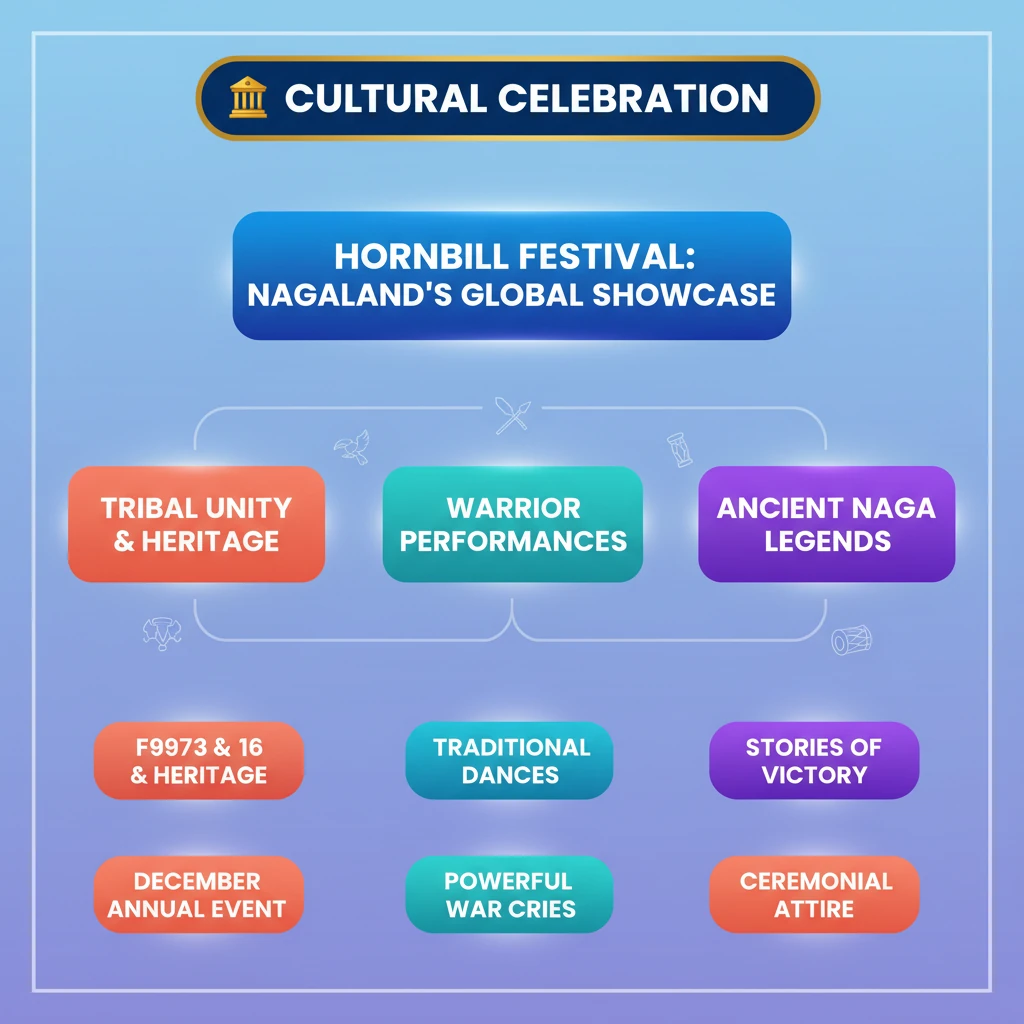
- •The Hornbill Festival is Nagaland's premier annual cultural event, celebrated every December.
- •It serves as a unique platform uniting diverse Naga tribes to showcase their distinct traditions.
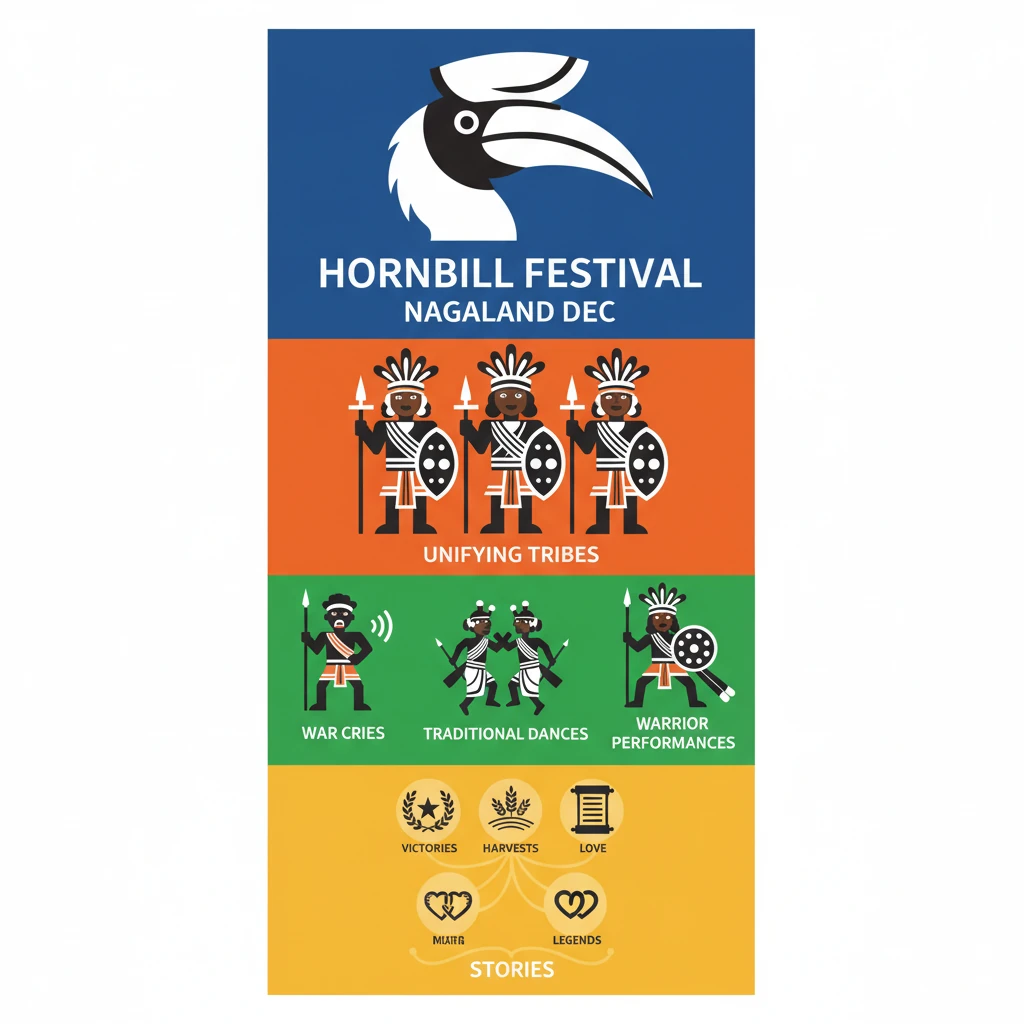
- •Key features include elaborate warrior performances, traditional dances, and powerful war cries.
- •Performances narrate stories of victories, harvests, love, and ancient tribal legends.
- •The distinctive ceremonial attire, featuring feathers, beads, and tusks, is a striking display of Naga heritage.
- •The festival was initiated in 2000 by the Government of Nagaland to promote tourism and inter-tribal unity.
- •It plays a crucial role in cultural preservation, boosting tourism, and fostering national integration.
🧠 Memory Techniques
98% Verified Content
📚 Reference Sources
•Official Nagaland Tourism website
•Ministry of Culture, Government of India reports
•Academic articles on North-East Indian culture and festivals