UNESCO List of Intangible Cultural Heritage of Humanity - Art And Culture | UPSC Learning
Topics
0 topics • 0 completed
🔍
No topics match your search
UNESCO List of Intangible Cultural Heritage of Humanity
Easy⏱️ 6 min read
art and culture
📖 Introduction
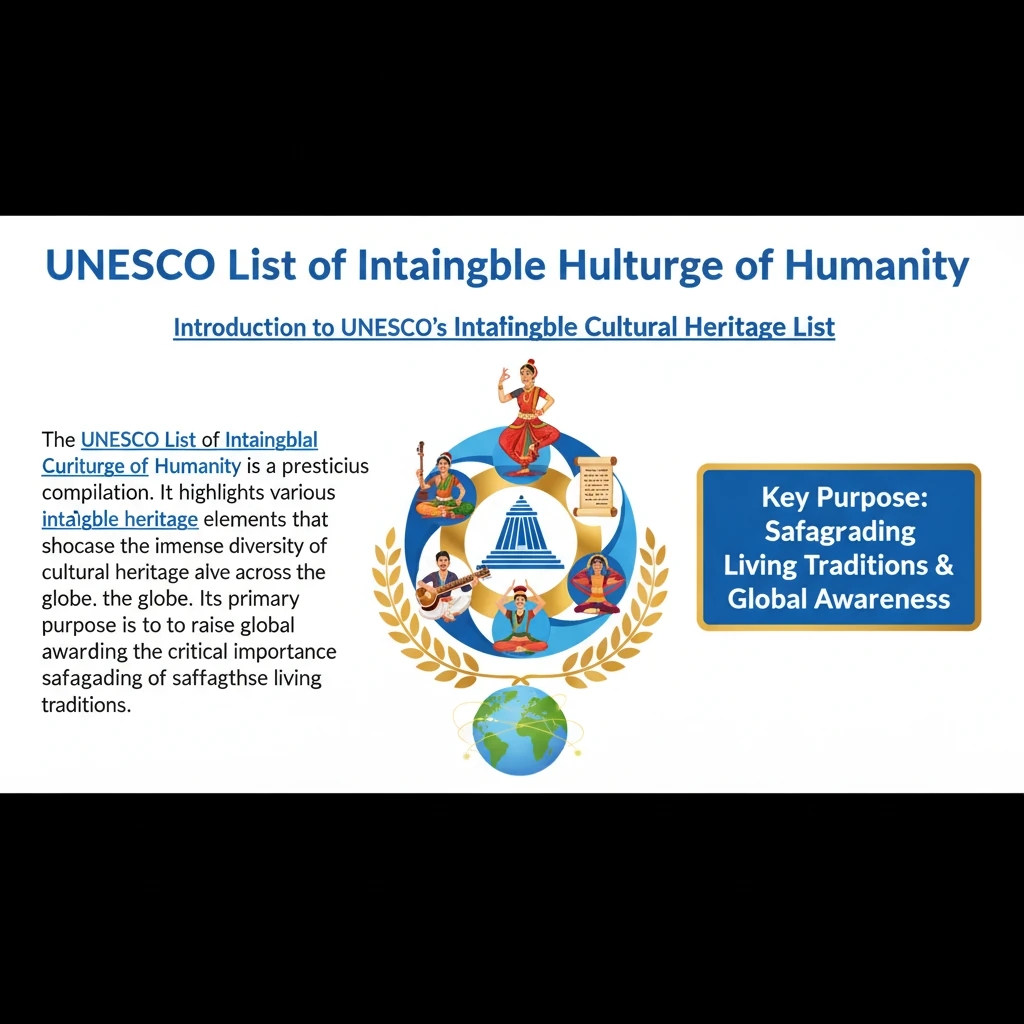
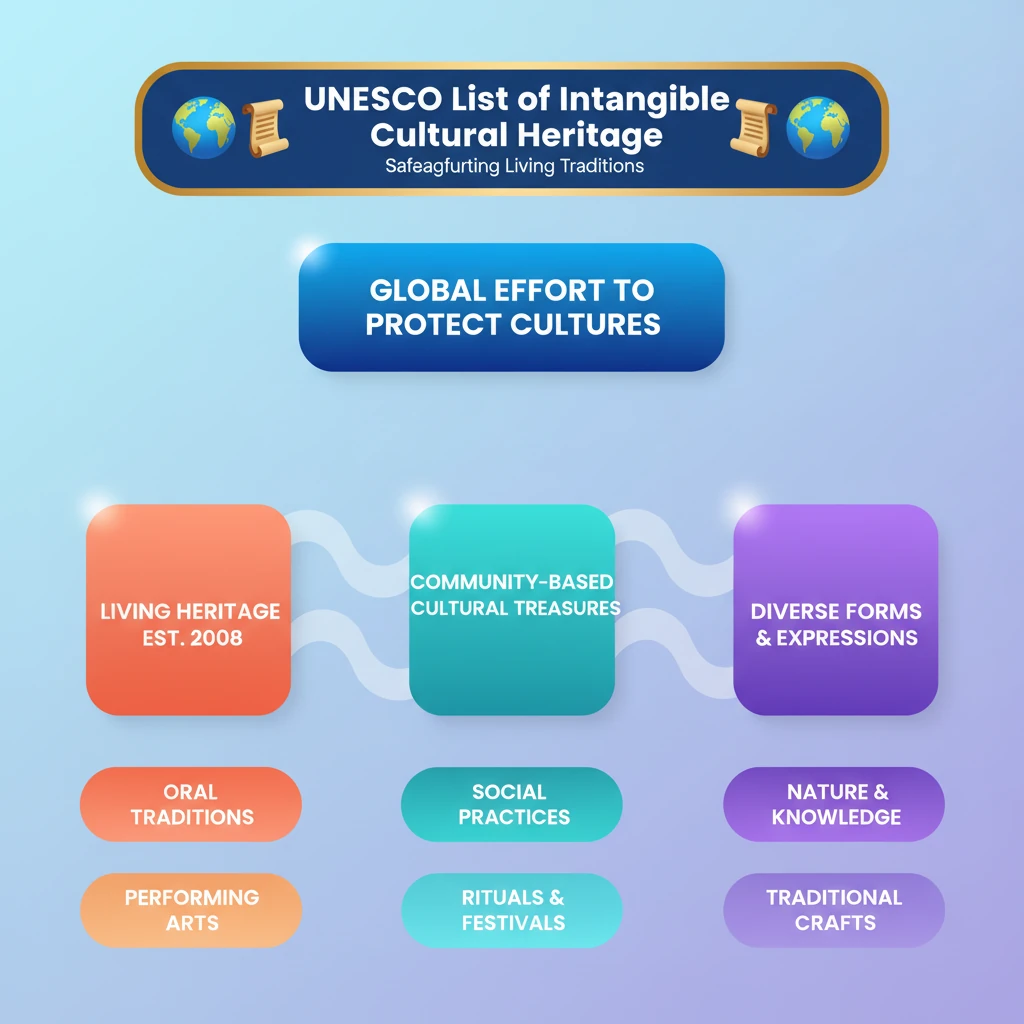
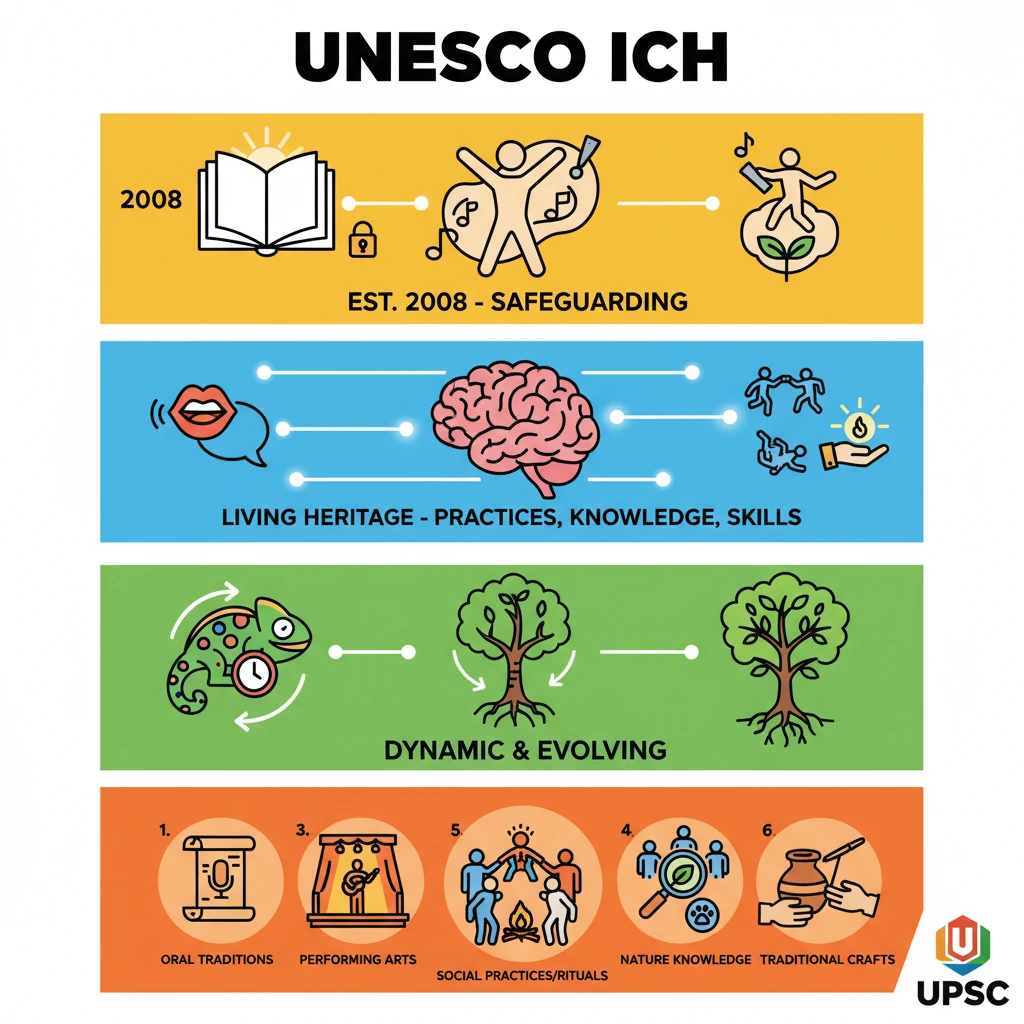
<h4>Introduction to UNESCO's Intangible Cultural Heritage List</h4><p>The <strong>UNESCO List of Intangible Cultural Heritage of Humanity</strong> is a prestigious compilation. It highlights various intangible heritage elements that showcase the immense <strong>diversity of cultural heritage</strong> across the globe.</p><p>Its primary purpose is to raise global awareness regarding the critical importance of safeguarding these living traditions.</p><div class="key-point-box"><strong>Key Purpose:</strong> To demonstrate cultural diversity and raise awareness about the importance of intangible heritage.</div><h4>Establishment of the List</h4><p>This significant list was formally established in <strong>2008</strong>. Its creation coincided with the official coming into effect of the <strong>Convention for the Safeguarding of the Intangible Cultural Heritage</strong>.</p><div class="info-box"><strong>Established:</strong> 2008<br><strong>Under:</strong> Convention for the Safeguarding of the Intangible Cultural Heritage</div><h4>Defining Intangible Cultural Heritage (ICH)</h4><p><strong>Intangible Cultural Heritage (ICH)</strong> encompasses the practices, expressions, knowledge, and skills that communities, groups, and sometimes individuals recognize as integral to their cultural identity. It is often referred to as <strong>'living cultural heritage'</strong>.</p><div class="info-box"><strong>Definition of ICH:</strong> Practices, expressions, knowledge, and skills recognized by communities as part of their cultural heritage. Also known as <strong>living cultural heritage</strong>.</div><h4>Forms of Intangible Cultural Heritage</h4><p>Intangible Cultural Heritage is manifested in various forms, reflecting the rich tapestry of human creativity and tradition. These forms are recognized globally and include:</p><ul><li><strong>Oral traditions:</strong> Such as storytelling, epic poetry, and traditional songs.</li><li><strong>Performing arts:</strong> Including traditional music, dance, theatre, and puppetry.</li><li><strong>Social Practices:</strong> Customs, rituals, and events that structure the lives of communities.</li><li><strong>Rituals and Festive events:</strong> Celebrations, ceremonies, and festivals with deep cultural significance.</li><li><strong>Knowledge and Practices concerning nature and the universe:</strong> Traditional ecological knowledge, indigenous healing practices, and cosmologies.</li><li><strong>Traditional Craftsmanship:</strong> Skills involved in creating traditional tools, textiles, pottery, and other crafts.</li></ul><div class="exam-tip-box">For UPSC, understanding the <strong>definition and forms of ICH</strong> is crucial. Be prepared to provide examples for each category, especially those from India's UNESCO list.</div>
💡 Key Takeaways
- •The UNESCO ICH List was established in 2008 to safeguard living cultural heritage.
- •Intangible Cultural Heritage includes practices, expressions, knowledge, and skills recognized by communities.
- •It is also known as 'living cultural heritage' due to its dynamic and evolving nature.
- •Key forms include oral traditions, performing arts, social practices, rituals, knowledge about nature, and traditional craftsmanship.
- •The list aims to demonstrate cultural diversity and raise awareness about heritage importance.
- •The 2003 Convention for the Safeguarding of the Intangible Cultural Heritage provides its framework.
🧠 Memory Techniques
98% Verified Content
📚 Reference Sources
•UNESCO Official Website: Intangible Cultural Heritage