Cultural Significance - Art And Culture | UPSC Learning
Topics
0 topics • 0 completed
🔍
No topics match your search
Cultural Significance
Easy⏱️ 6 min read
art and culture
📖 Introduction
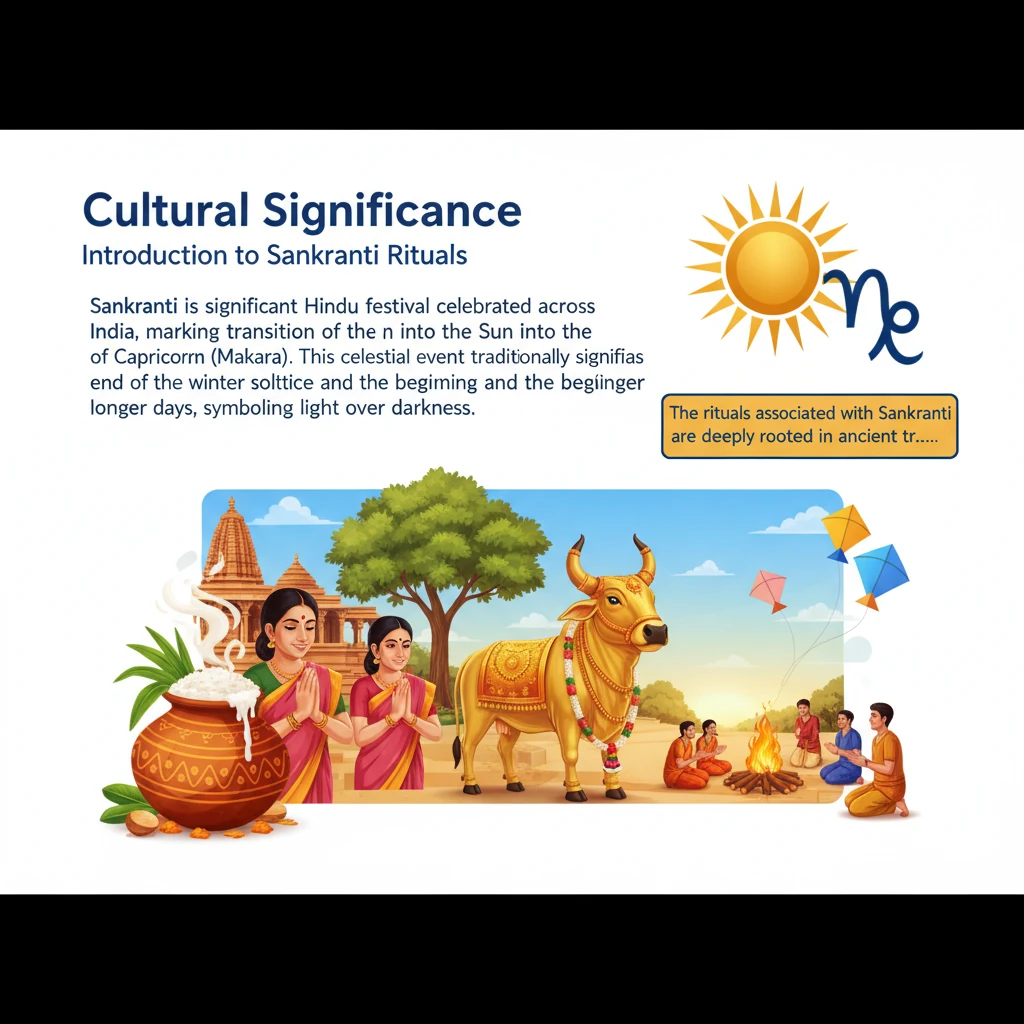
<h4>Introduction to Sankranti Rituals</h4><p><strong>Sankranti</strong> is a significant Hindu festival celebrated across India, marking the transition of the <strong>Sun</strong> into the zodiac sign of <strong>Capricorn</strong> (Makara). This celestial event traditionally signifies the end of the winter solstice and the beginning of longer days, symbolizing light over darkness.</p><div class="key-point-box">The rituals associated with <strong>Sankranti</strong> are deeply rooted in ancient traditions, emphasizing purification, devotion, and charity. They are performed during the day of the transition.</div><h4>Key Rituals and Practices</h4><p>Devotees engage in a series of sacred activities to honor <strong>Lord Surya</strong> (the Sun God) and seek blessings. These practices are believed to cleanse sins and bring prosperity.</p><ul><li><strong>Bathing:</strong> A ritualistic bath, often in sacred rivers, is considered highly auspicious for purification.</li><li><strong>Offering Naivedhya:</strong> Food offerings are made to deities, particularly <strong>Lord Surya</strong>, as a gesture of gratitude.</li><li><strong>Giving Charity (Daan):</strong> Acts of philanthropy, such as donating food, clothes, or money, are encouraged.</li><li><strong>Performing Shraddha:</strong> Ancestral rites are observed by some, honoring departed souls.</li><li><strong>Breaking Fast:</strong> Many devotees observe a fast that is broken after performing the rituals.</li></ul><h4>Significance of Sacred River Baths</h4><p>A central ritual involves bathing in holy rivers, believed to have purifying powers during this auspicious time. This practice connects devotees with nature and ancient spiritual beliefs.</p><div class="info-box"><strong>Prominent Sacred Rivers for Bathing:</strong><ul><li><strong>Ganga</strong></li><li><strong>Yamuna</strong></li><li><strong>Godavari</strong></li><li><strong>Krishna</strong></li><li><strong>Cauvery</strong></li></ul></div><div class="exam-tip-box"><strong>UPSC Insight:</strong> Understanding the cultural significance of festivals like <strong>Sankranti</strong> and their associated rituals is crucial for <strong>Art and Culture (GS Paper I)</strong>. Focus on the symbolism and regional variations.</div>
💡 Key Takeaways
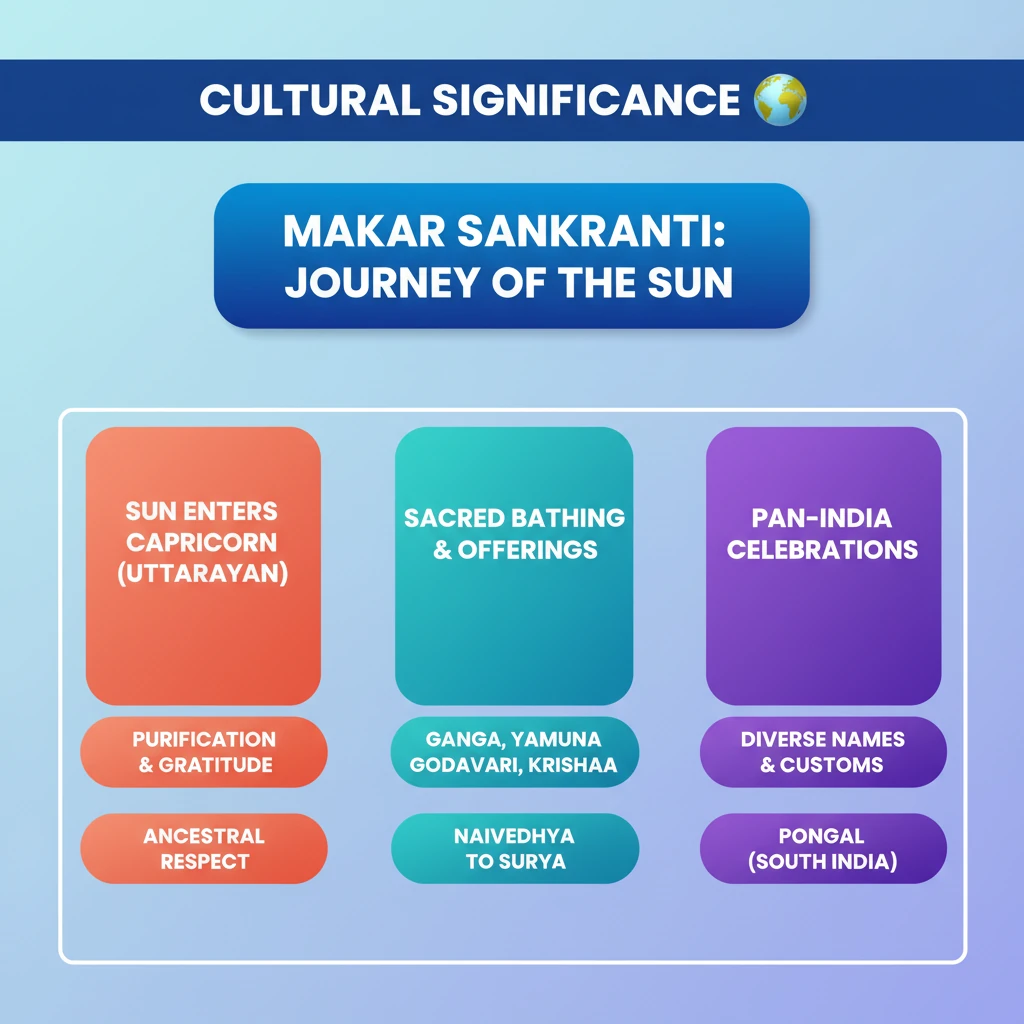
- •Sankranti marks the Sun's entry into Capricorn, signifying Uttarayan.
- •Key rituals include bathing in sacred rivers, offering Naivedhya to Lord Surya, and giving charity.
- •Sacred rivers like Ganga, Yamuna, Godavari, Krishna, and Cauvery are important for ritualistic bathing.
- •The festival emphasizes purification, gratitude, compassion, and ancestral respect.
- •Sankranti is celebrated pan-India with diverse regional names and customs, like Pongal in South India.
- •It reinforces community bonds, cultural identity, and traditional values.
- •The rituals have ancient Vedic roots, connecting to astronomical observations and agricultural cycles.
🧠 Memory Techniques

95% Verified Content