UNESCO World Heritage Site - Art And Culture | UPSC Learning
Topics
0 topics • 0 completed
🔍
No topics match your search
UNESCO World Heritage Site
Medium⏱️ 8 min read
art and culture
📖 Introduction
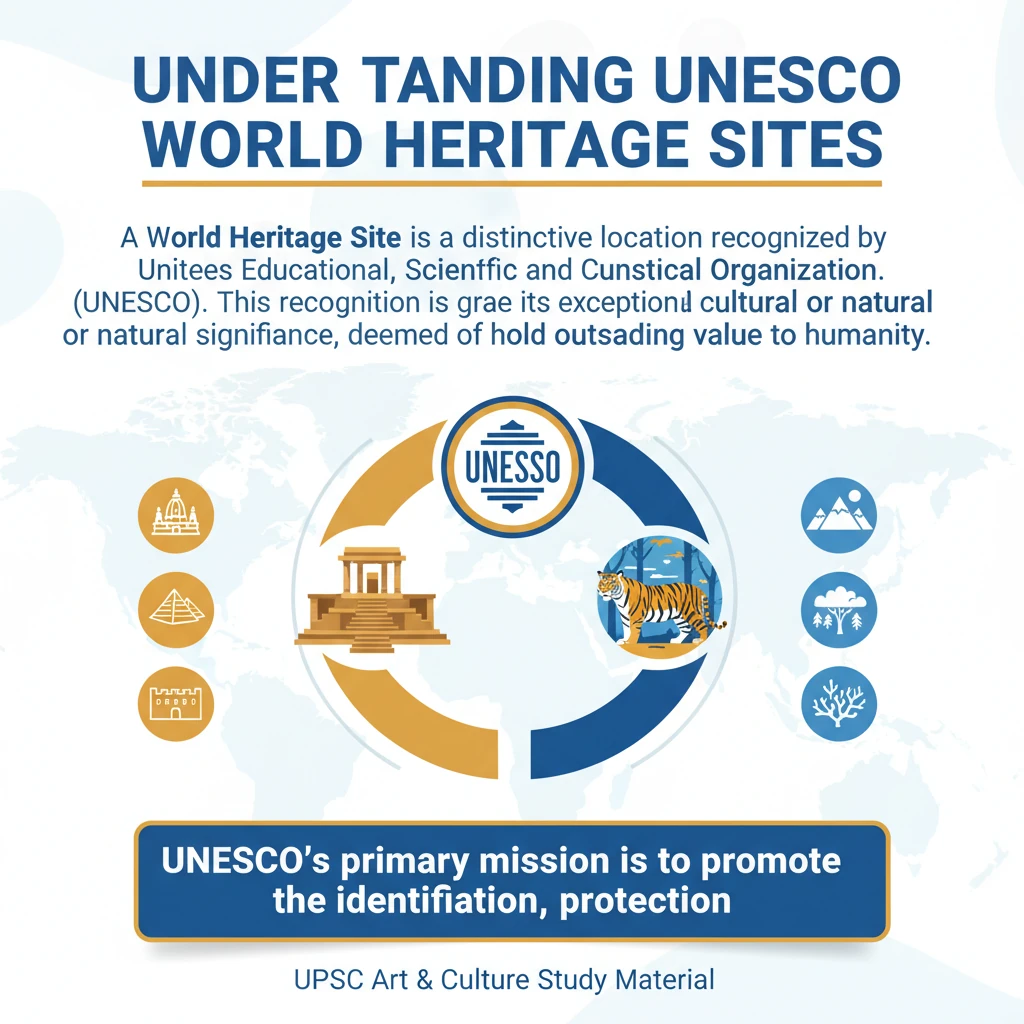
<h4>Understanding UNESCO World Heritage Sites</h4><p>A <strong>World Heritage Site</strong> is a distinctive location recognized by the <strong>United Nations Educational, Scientific and Cultural Organization (UNESCO)</strong>. This recognition is granted due to its exceptional <strong>cultural</strong> or <strong>natural significance</strong>, deemed to hold outstanding value to humanity.</p><div class="key-point-box">UNESCO's primary mission is to promote the <strong>identification, protection, and preservation</strong> of these globally significant cultural and natural heritage sites.</div><h4>India's World Heritage Status</h4><p>As of <strong>September 2024</strong>, India proudly hosts a total of <strong>43 World Heritage Sites</strong>. These sites are categorized based on their unique characteristics and criteria.</p><div class="info-box"><strong>India's World Heritage Sites Breakdown:</strong><ul><li><strong>Cultural Sites:</strong> 35</li><li><strong>Natural Sites:</strong> 7</li><li><strong>Mixed Criteria Site:</strong> 1</li></ul></div><p>The most recent addition to India's prestigious list is the <strong>Mount-Nanda Devi Biosphere Reserve</strong>, recognized for its natural splendor and ecological importance.</p><h4>The Nomination Process: A Step-by-Step Guide</h4><p>The process for nominating a site to UNESCO's World Heritage List is rigorous and involves several stages, ensuring only properties of outstanding universal value are included.</p><ol><li><strong>Tentative List Creation:</strong> Each country first compiles a <strong>Tentative List</strong> of its important cultural and natural heritage sites. This list serves as an inventory of properties that the country intends to nominate in the future.</li><li><strong>Nomination File Preparation:</strong> From its Tentative List, the country then selects specific sites and meticulously prepares detailed <strong>nomination documents</strong>. These files must demonstrate the site's outstanding universal value and meet specific criteria.</li><li><strong>Expert Evaluation:</strong> The nominated property undergoes a thorough evaluation by two advisory bodies: the <strong>International Council on Monuments and Sites (ICOMOS)</strong> for cultural sites, and the <strong>International Union for Conservation of Nature (IUCN)</strong> for natural sites.</li><li><strong>Committee Decision:</strong> The <strong>World Heritage Committee</strong> convenes annually to review the evaluations and recommendations from ICOMOS and IUCN. Based on these expert advisories and the fulfillment of stringent criteria, the Committee decides which sites will be inscribed on the World Heritage List.</li></ol>
💡 Key Takeaways
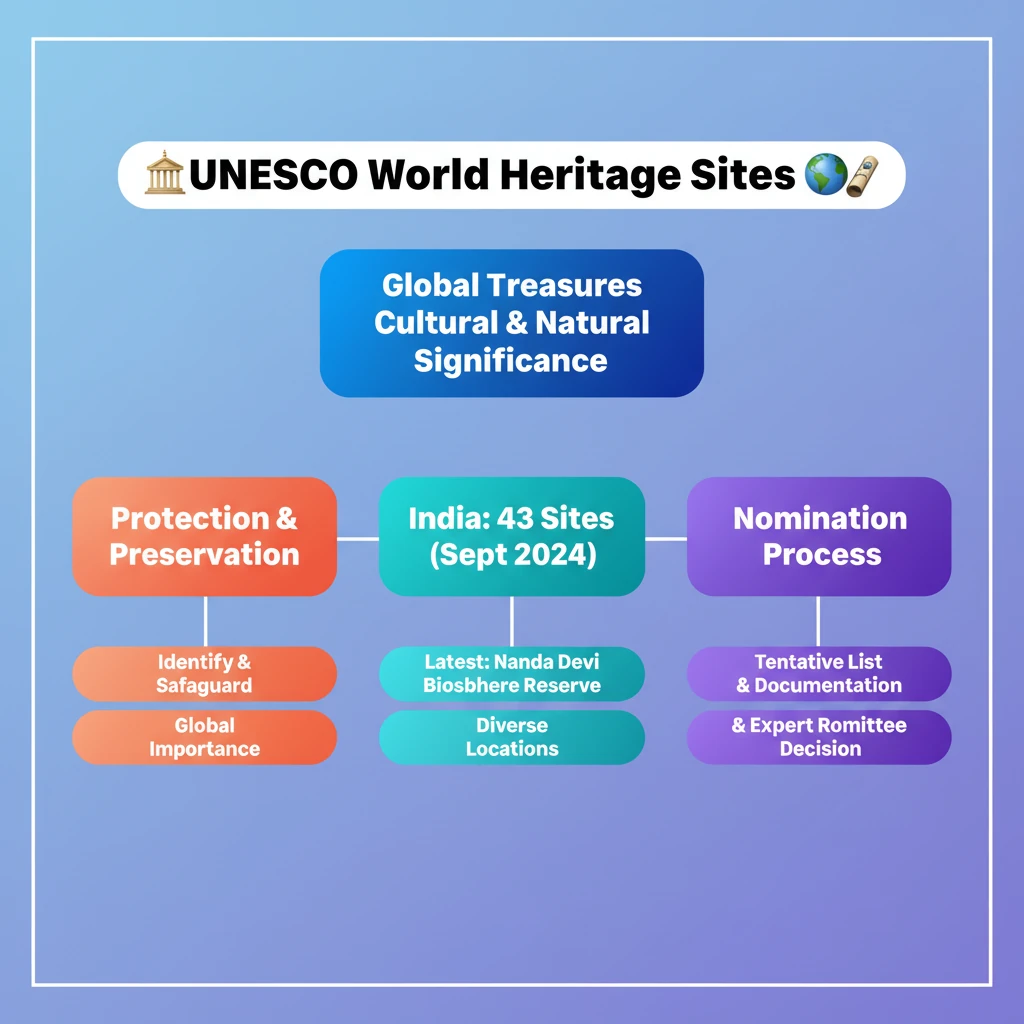
- •UNESCO World Heritage Sites are locations of exceptional cultural or natural significance.
- •UNESCO aims to identify, protect, and preserve these sites globally.
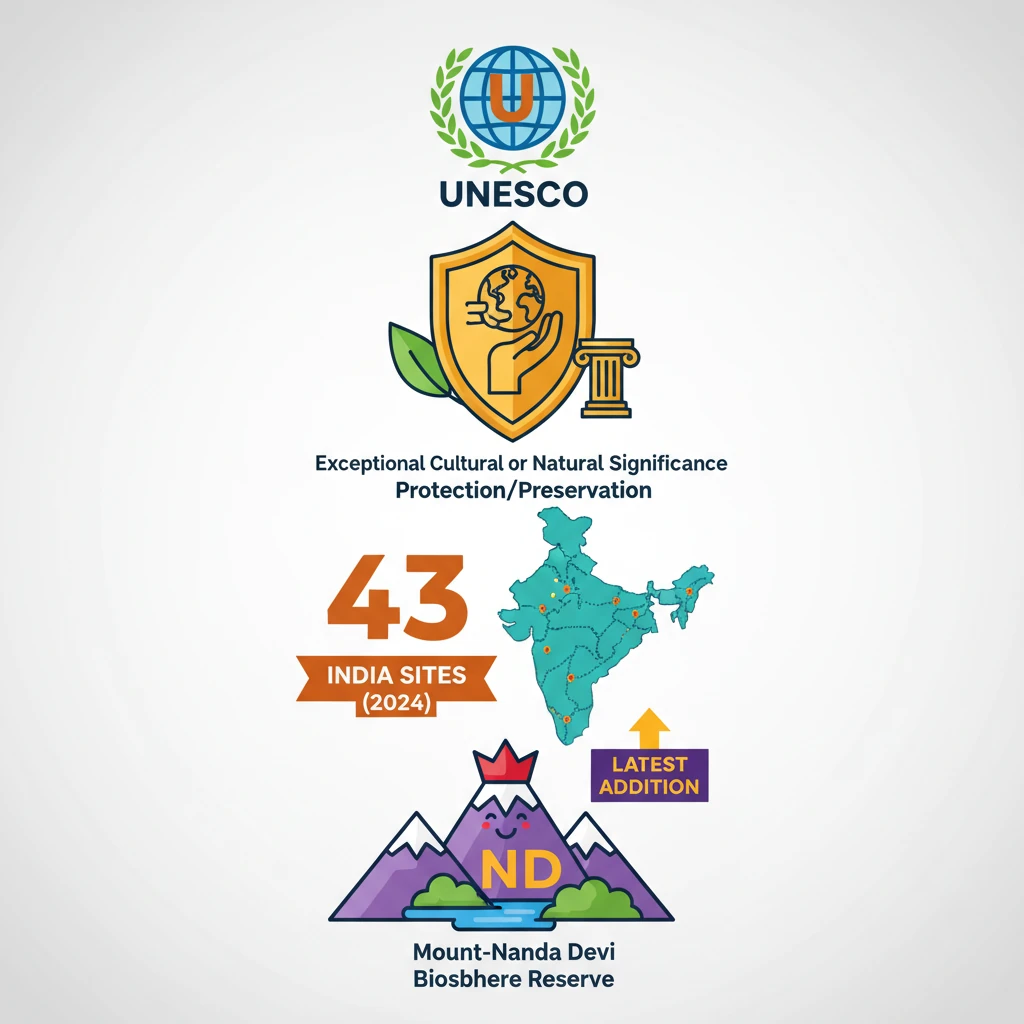
- •As of September 2024, India has 43 World Heritage Sites.
- •The Mount-Nanda Devi Biosphere Reserve is India's latest World Heritage Site addition.
- •The nomination process involves a Tentative List, detailed documentation, expert evaluation, and committee decision.
- •World Heritage status brings enhanced protection, tourism, and cultural pride.
- •The 1972 UNESCO Convention is the foundation for the World Heritage program.
🧠 Memory Techniques
98% Verified Content
📚 Reference Sources
•UNESCO World Heritage Centre official website
•Ministry of Culture, Government of India