What are the Harvest Festivals in India? - Art And Culture | UPSC Learning
Topics
0 topics • 0 completed
🔍
No topics match your search
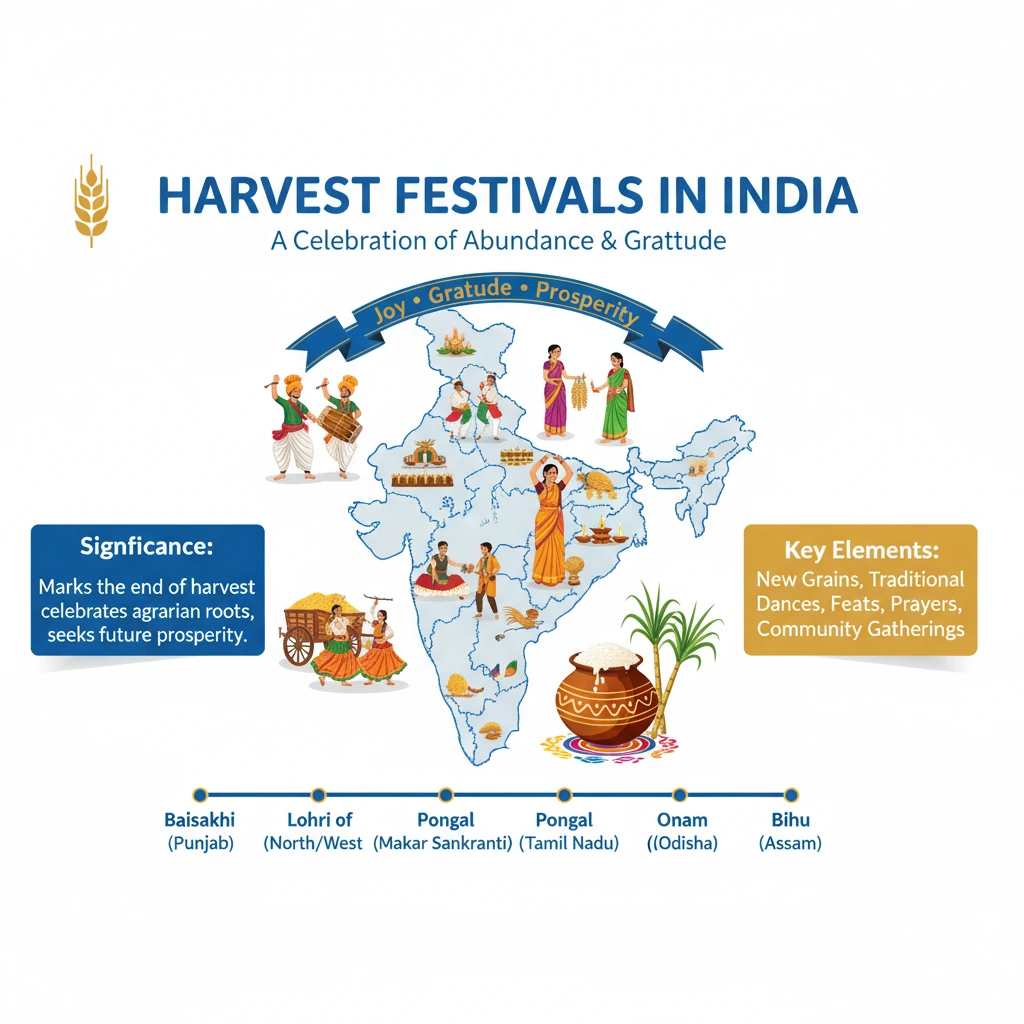
What are the Harvest Festivals in India?
Easy⏱️ 5 min read
art and culture
📖 Introduction
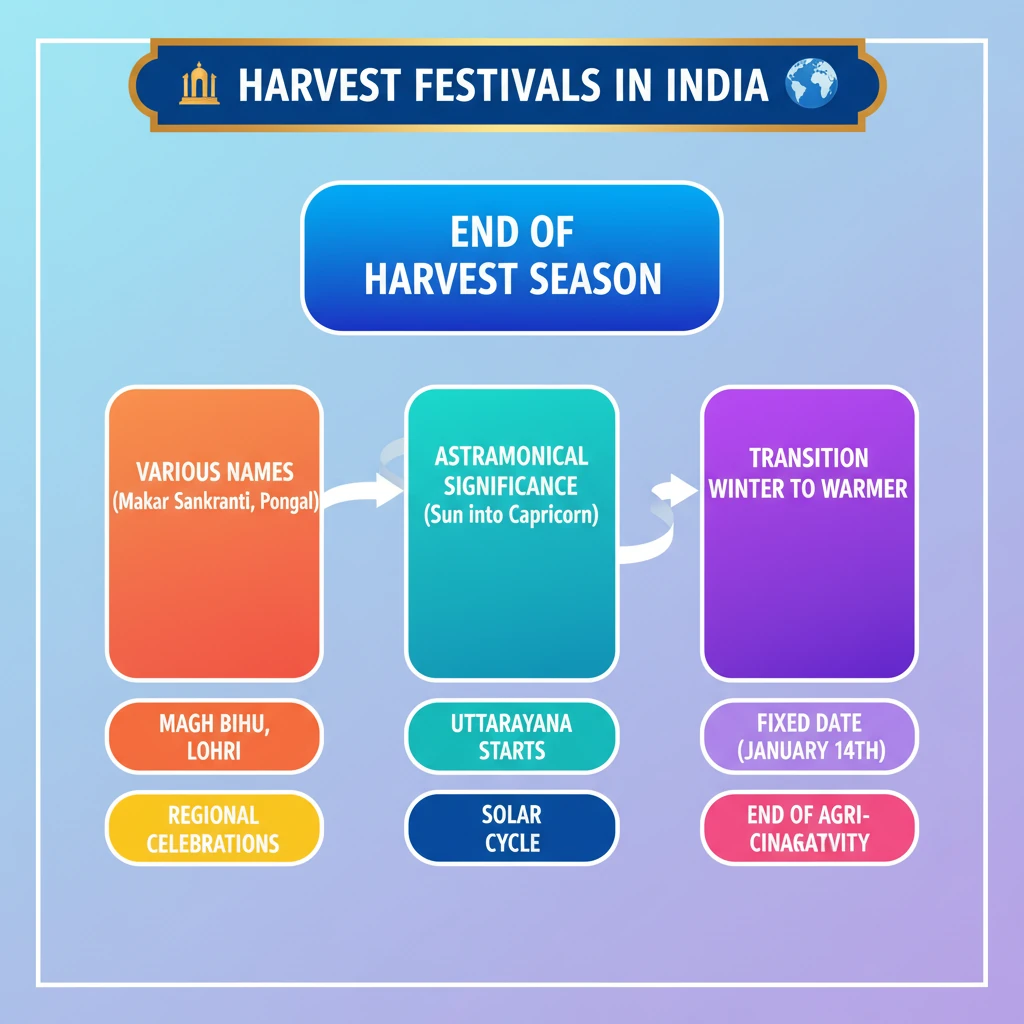
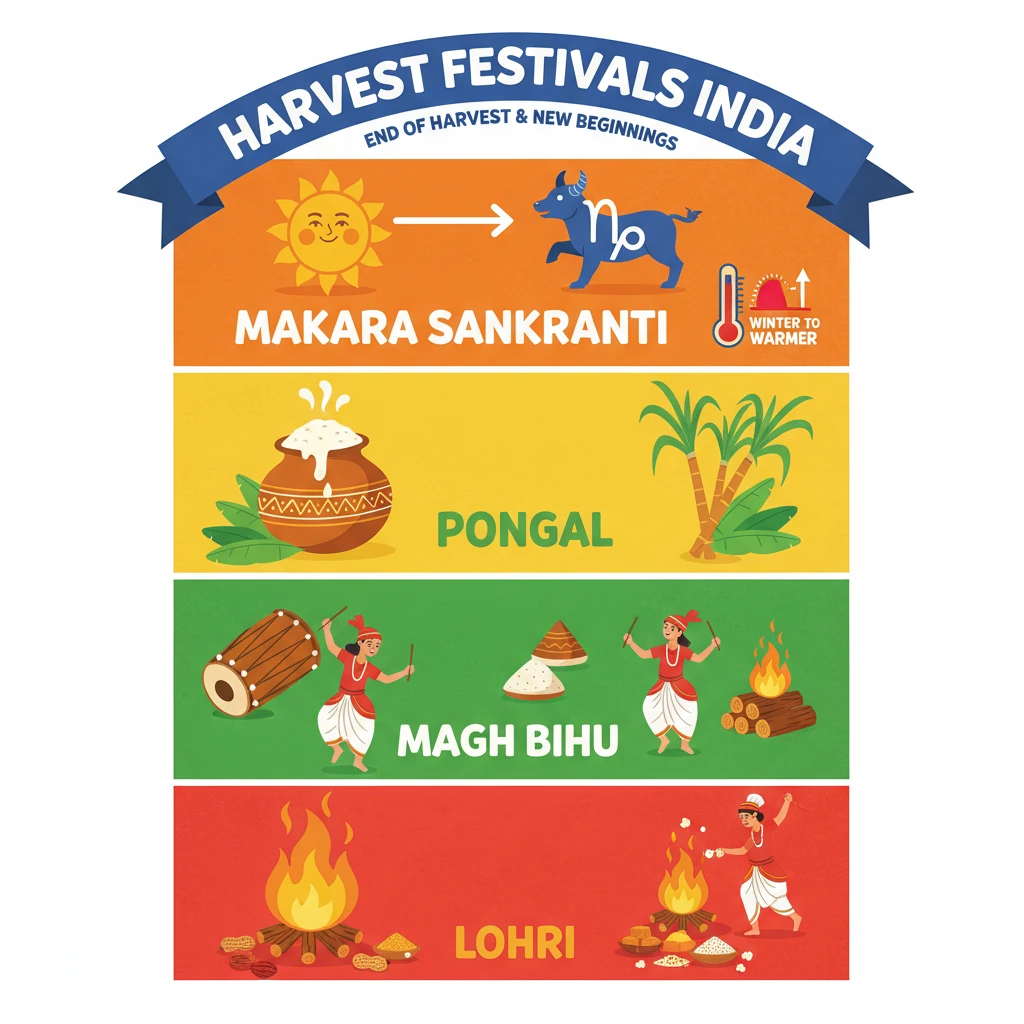
<h4>Introduction to Harvest Festivals in India</h4><p><strong>Harvest festivals</strong> in India are vibrant celebrations that mark the successful conclusion of the <strong>harvest season</strong>. These festivals are observed across the country, albeit under various regional names and traditions.</p><p>They are a time of immense joy and gratitude, reflecting the agrarian roots of Indian society. Farmers celebrate the bounty of their land and pray for prosperity in the coming year.</p><div class="info-box"><strong>Examples of Harvest Festivals:</strong><ul><li><strong>Makar Sankranti</strong></li><li><strong>Pongal</strong></li><li><strong>Magh Bihu</strong></li><li><strong>Lohri</strong></li></ul></div><h4>Astronomical Significance</h4><p>A key aspect of many harvest festivals, particularly those celebrated around mid-January, is their profound <strong>astronomical significance</strong>. These festivals often coincide with a specific celestial event.</p><p>The primary astronomical event is the <strong>transition of the Sun</strong> into the <strong>Capricorn (Makara) zodiac sign</strong>. This marks the beginning of the Sun's northward journey, known as <strong>Uttarayana</strong>.</p><div class="key-point-box"><strong>Uttarayana:</strong> This period signifies the movement of the Sun towards the Northern Hemisphere, leading to longer days and warmer weather. It is considered an auspicious time in Hindu traditions.</div><h4>Seasonal Significance</h4><p>Beyond astronomy, these festivals hold significant <strong>seasonal importance</strong>. They symbolize the shift from the harshness of <strong>winter to the warmer months</strong>, bringing an end to the period of relative inactivity in nature.</p><p>This transition is celebrated as a renewal of life and energy. The change in season is crucial for agricultural cycles and daily life.</p><h4>Fixed Date Observance</h4><p>Unlike many Indian festivals that follow the <strong>lunar calendar</strong>, several prominent harvest festivals, such as <strong>Makar Sankranti</strong>, are based on the <strong>solar cycle</strong>. This results in a consistent and <strong>fixed date of celebration</strong>.</p><div class="info-box"><strong>Fixed Date:</strong> Most solar-based harvest festivals, including Makar Sankranti, are celebrated annually on <strong>January 14th</strong>. In some leap years, it may shift to January 15th.</div><div class="exam-tip-box"><strong>UPSC Insight:</strong> Understanding the distinction between lunar and solar calendar-based festivals is important for <strong>Art and Culture (GS Paper 1)</strong>. Note the specific astronomical terms like <strong>Uttarayana</strong> and their cultural implications.</div>
💡 Key Takeaways
- •Harvest festivals mark the end of the harvest season across India.
- •They are celebrated under various names like Makar Sankranti, Pongal, Magh Bihu, and Lohri.
- •Many have astronomical significance, marking the Sun's transition into Capricorn (Makara) and the start of Uttarayana.
- •They symbolize the shift from winter to warmer months and the end of agricultural inactivity.
- •Unlike lunar festivals, some follow the solar cycle, resulting in a fixed date, typically January 14th.
- •These festivals reflect gratitude towards nature and foster community spirit.
🧠 Memory Techniques
100% Verified Content