Ajrakh Craft and Bela Block Printing - Art And Culture | UPSC Learning
Topics
0 topics • 0 completed
🔍
No topics match your search
Ajrakh Craft and Bela Block Printing
Medium⏱️ 6 min read
art and culture
📖 Introduction
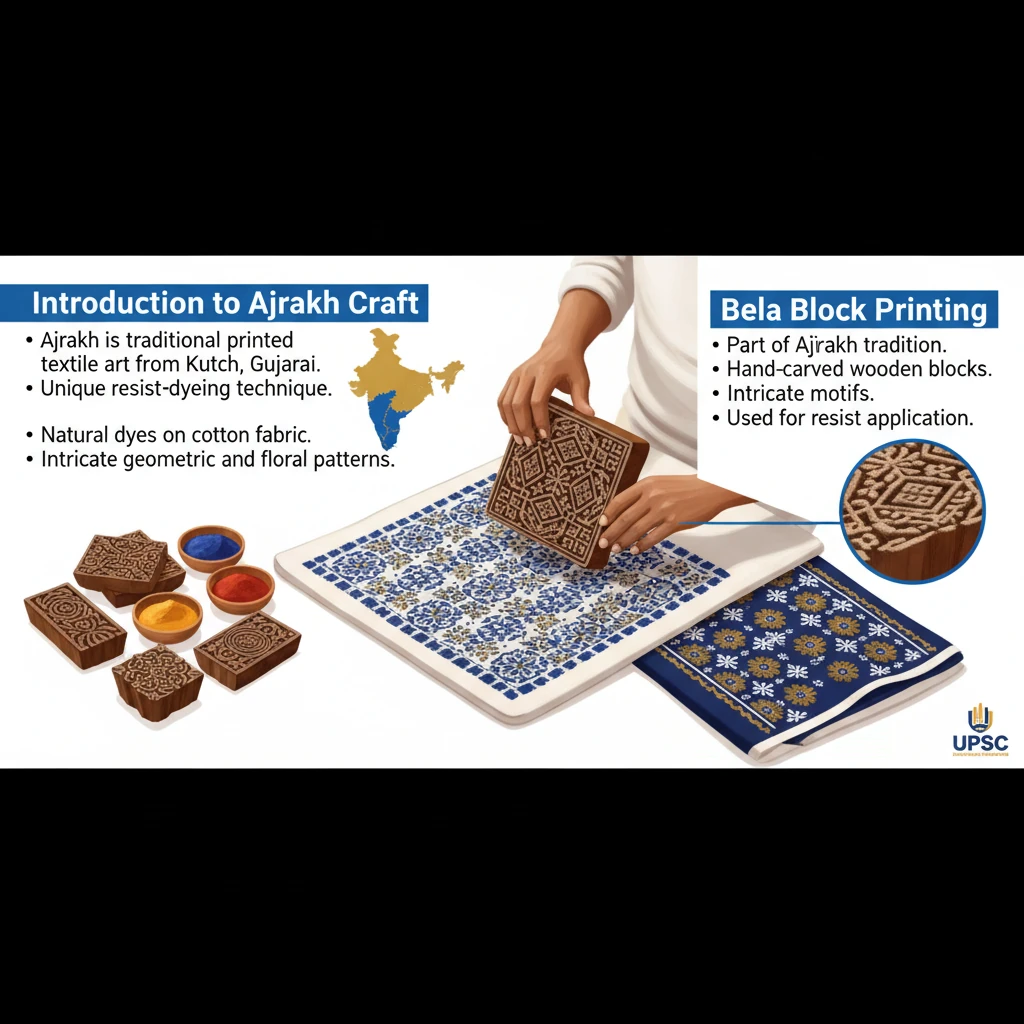
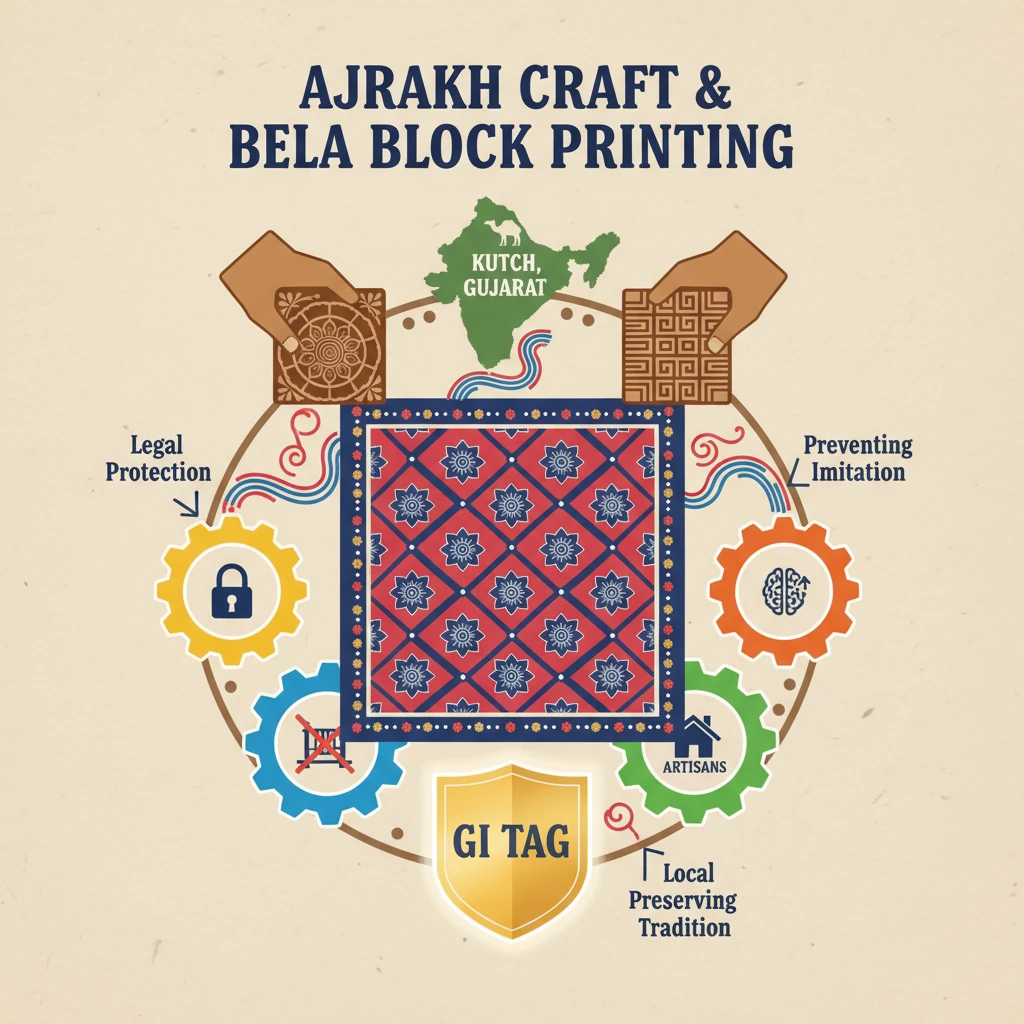
<h4>Introduction to Ajrakh Craft</h4><p><strong>Ajrakh</strong> is a renowned traditional <strong>block-printed textile art</strong> originating from <strong>Kutch, Gujarat</strong>. It is distinguished by its unique <strong>resist-dyeing</strong> technique, a craft perfected over centuries.</p><p>This art form is deeply embedded in the cultural fabric of the region. It primarily utilizes <strong>natural dyes</strong> and is applied to <strong>cotton fabric</strong>, often featuring intricate designs that narrate stories.</p><div class="info-box"><strong>Key Characteristics of Ajrakh:</strong><ul><li><strong>Origin:</strong> Kutch, Gujarat, India</li><li><strong>Technique:</strong> Resist-dyeing, Block Printing</li><li><strong>Materials:</strong> Natural dyes (e.g., indigo, madder), Cotton fabric</li><li><strong>Features:</strong> Intricate geometric and floral designs, symmetrical patterns</li><li><strong>Age:</strong> Centuries-old tradition, passed down through generations</li></ul></div><h4>The Significance of GI Tag for Ajrakh</h4><p>The <strong>Ajrakh craft</strong> has been granted a <strong>Geographical Indication (GI) tag</strong>. This recognition is crucial for the preservation and promotion of this traditional art form, providing it with legal protection.</p><div class="key-point-box">A <strong>GI tag</strong> provides <strong>legal protection</strong> to products that originate from a specific geographical region and possess qualities or a reputation due to that origin. It acts as a form of intellectual property right.</div><p>For <strong>Ajrakh</strong>, the <strong>GI tag</strong> ensures that only products genuinely originating from <strong>Kutch</strong> and adhering to traditional methods can be marketed under its name. This helps prevent imitation and supports the authenticity and livelihoods of local artisans.</p><div class="exam-tip-box">Understanding <strong>GI tags</strong> is vital for <strong>UPSC Art & Culture</strong> (<strong>GS Paper I</strong>) and <strong>Economy</strong> (<strong>GS Paper III</strong>). Questions often focus on their role in protecting indigenous crafts, boosting rural economies, and preserving traditional knowledge.</div>
💡 Key Takeaways
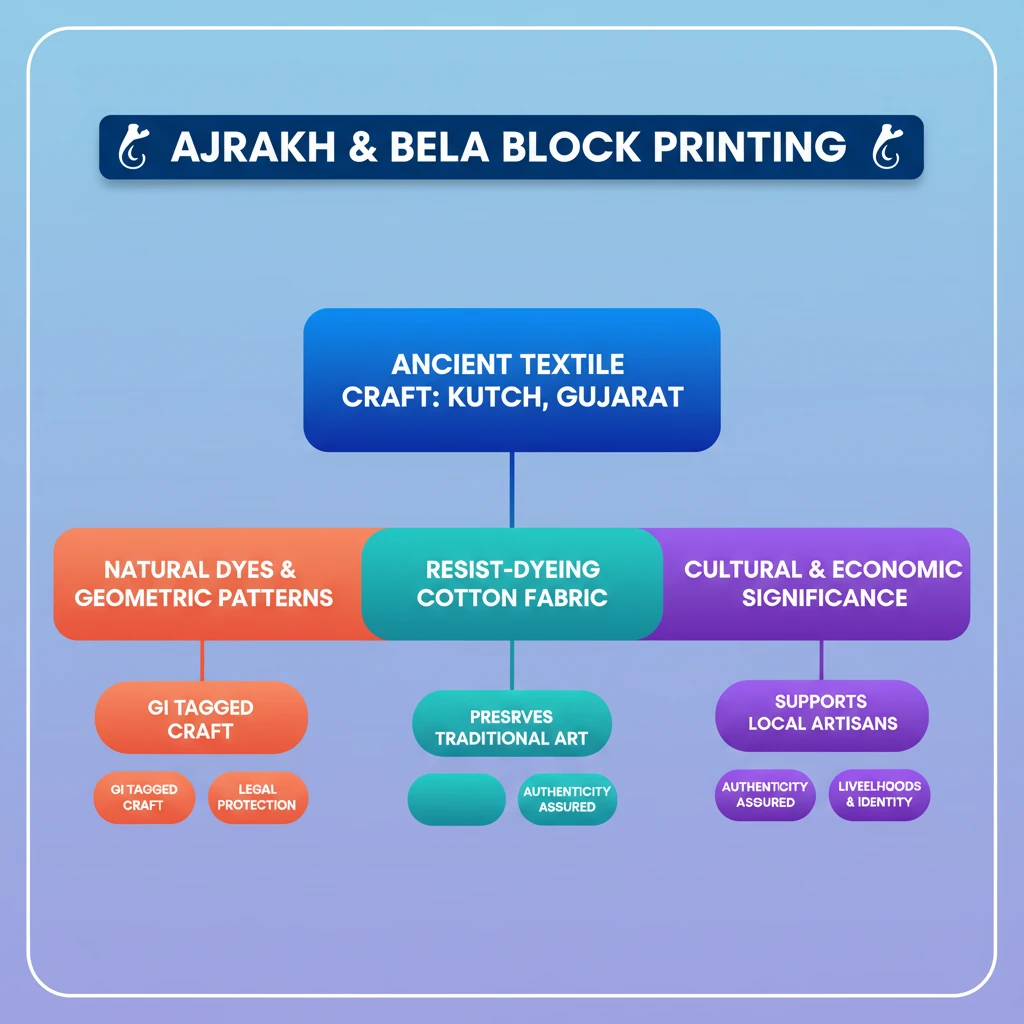
- •Ajrakh is a centuries-old resist-dyeing and block-printing textile craft from Kutch, Gujarat.
- •It is characterized by its use of natural dyes, intricate geometric and floral patterns, and application on cotton fabric.
- •The Ajrakh craft has received a Geographical Indication (GI) tag, providing legal protection and ensuring authenticity.
- •GI tags are crucial for preserving traditional arts, preventing imitation, and supporting local artisan communities.
- •The craft holds significant cultural and economic relevance, contributing to livelihoods and cultural identity.
- •Ajrakh represents sustainable practices through its use of natural dyes and traditional methods.
🧠 Memory Techniques
95% Verified Content
📚 Reference Sources
•Government of India GI Registry (for GI tag information)
•Cultural research articles on Kutch textiles