What is Abhidhamma Pitaka? - Art And Culture | UPSC Learning
Topics
0 topics • 0 completed
🔍
No topics match your search
What is Abhidhamma Pitaka?
Medium⏱️ 10 min read
art and culture
📖 Introduction
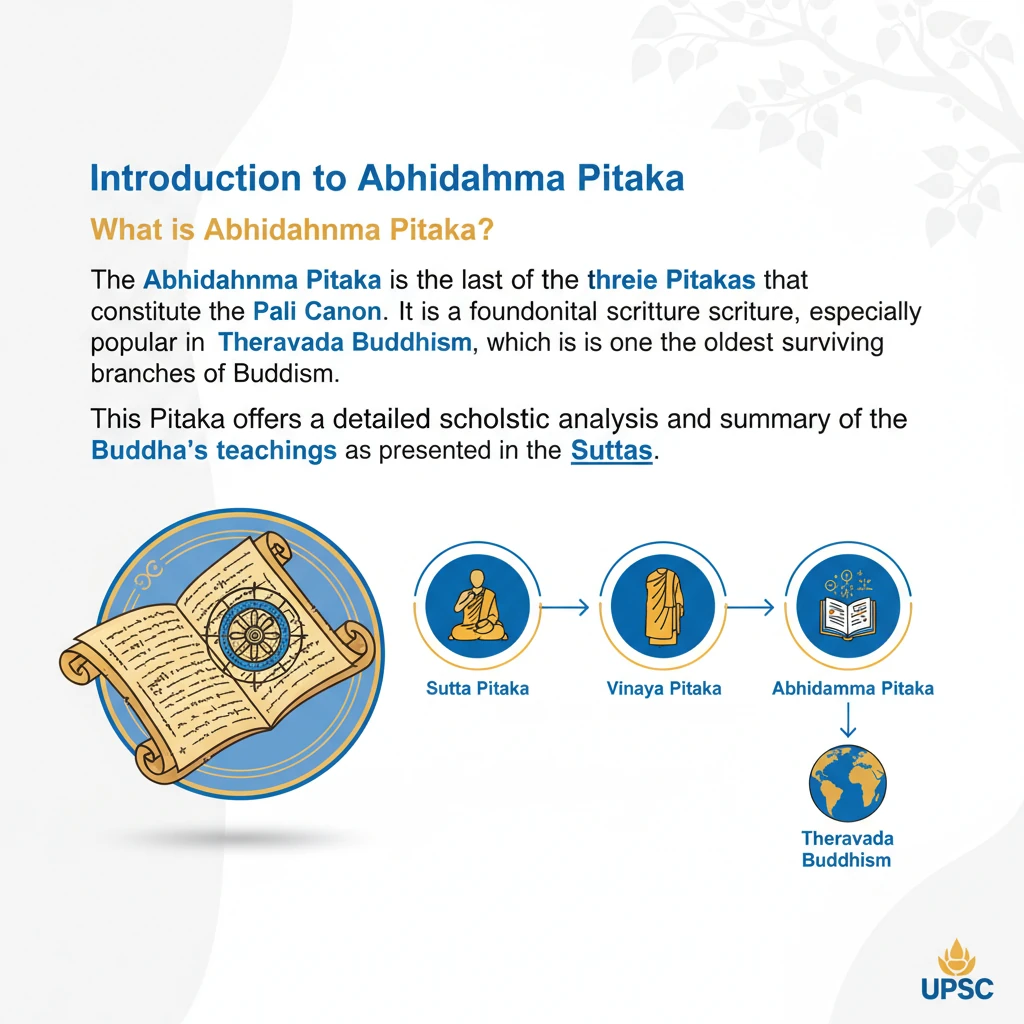
<h4>Introduction to Abhidhamma Pitaka</h4><p>The <strong>Abhidhamma Pitaka</strong> is the last of the three <strong>Pitakas</strong> that constitute the <strong>Pali Canon</strong>. It is a foundational scripture, especially popular in <strong>Theravada Buddhism</strong>, which is one of the oldest surviving branches of Buddhism.</p><p>This Pitaka offers a detailed scholastic analysis and summary of the <strong>Buddha’s teachings</strong> as presented in the <strong>Suttas</strong>. It moves beyond simple discourses to a more systematic and abstract examination of Buddhist doctrines.</p><div class="key-point-box">The <strong>Abhidhamma Pitaka</strong> delves into the core philosophy, doctrine, psychology, metaphysics, ethics, and epistemology of Buddhism. It provides a highly structured framework for understanding reality according to Buddhist principles.</div><h4>Abhidhamma Pitaka within the Tipitaka</h4><p>The <strong>Tipitaka</strong>, also known as the <strong>Pali Canon</strong>, is the traditional collection of scriptures of Theravada Buddhism. It is divided into three main baskets or 'Pitakas', each serving a distinct purpose.</p><p>The other two Pitakas are the <strong>Vinaya Pitaka</strong> and the <strong>Sutta Pitaka</strong>. Understanding their roles helps contextualize the unique contribution of the Abhidhamma Pitaka.</p><div class="info-box"><ul><li><strong>Vinaya Pitaka:</strong> Contains the monastic rules of conduct and discipline for monks and nuns (the <strong>Sangha</strong>). It governs the daily life and organization of the monastic community.</li><li><strong>Sutta Pitaka:</strong> Comprises the main body of teachings and discourses delivered by the <strong>Buddha</strong> and his close disciples. These are often presented in a narrative or conversational style.</li></ul></div><div class="exam-tip-box">For UPSC, remember the distinction: <strong>Vinaya</strong> is about discipline, <strong>Sutta</strong> is about discourses, and <strong>Abhidhamma</strong> is about philosophical analysis. This differentiation is crucial for questions on Buddhist literature.</div><h4>Books of the Abhidhamma Pitaka</h4><p>The <strong>Abhidhamma Pitaka</strong> is further divided into seven distinct books. Each book explores different aspects of Buddhist philosophy and psychology, often categorizing and analyzing phenomena in great detail.</p><ul><li><strong>Dhammasangani (Enumeration of Phenomena):</strong> Categorizes and defines mental states, elements, and other phenomena.</li><li><strong>Vibhanga (Book of Treaties):</strong> Analyzes the concepts introduced in Dhammasangani from different perspectives.</li><li><strong>Dhatukatha (Discussion with Reference to the Elements):</strong> Explores the relationships between various elements (dhatus) and mental states.</li><li><strong>Puggalapanatti (Description of Personality):</strong> Discusses different types of individuals and their characteristics based on their spiritual development.</li><li><strong>Kathavatthu (Points of Controversy):</strong> Addresses and refutes various philosophical views and doctrines that were controversial at the time of its compilation.</li><li><strong>Yamaka (Book of Pairs):</strong> Uses a question-and-answer format to clarify terms and concepts, often presenting them in pairs (e.g., what is X and what is not X?).</li><li><strong>Patthana (Book of Relations):</strong> The longest and most complex book, it details the 24 types of conditional relations (paccaya) that govern all phenomena, explaining the intricate web of causality.</li></ul>
💡 Key Takeaways
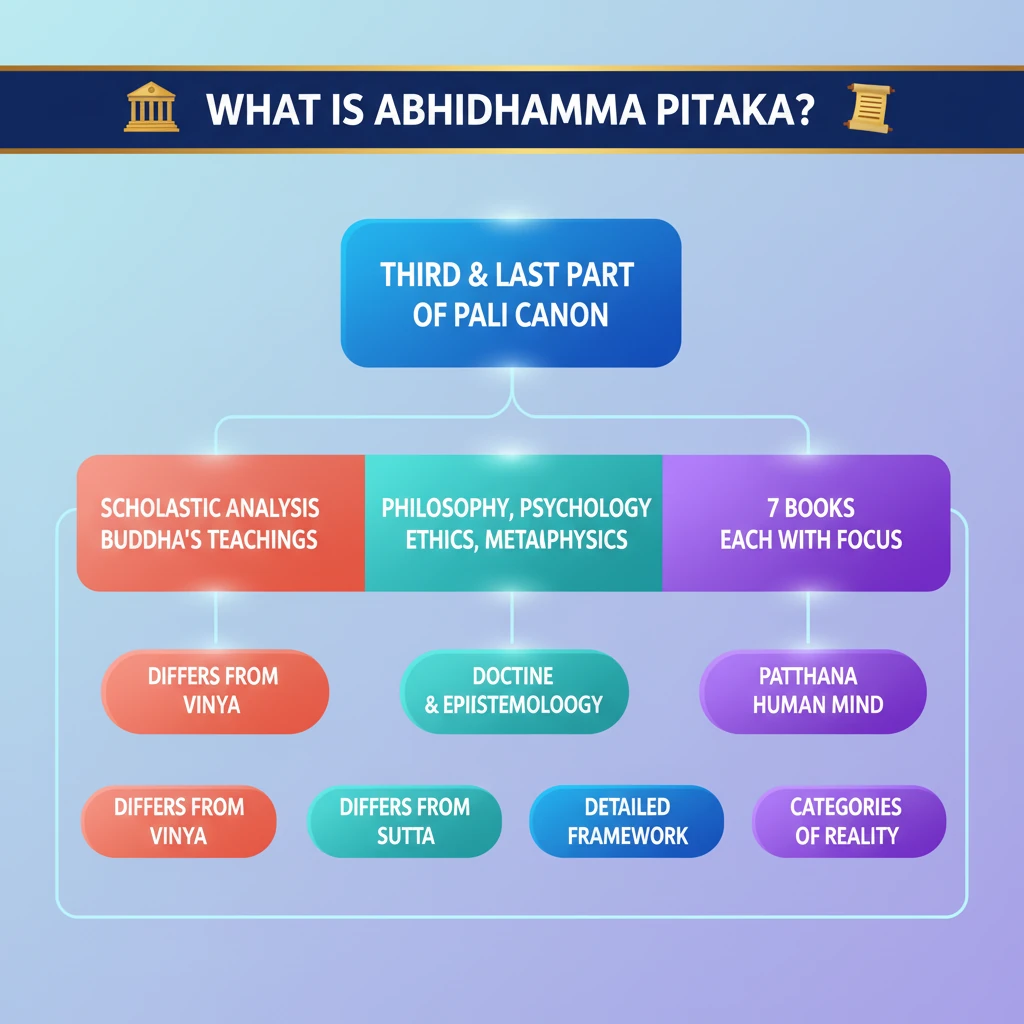
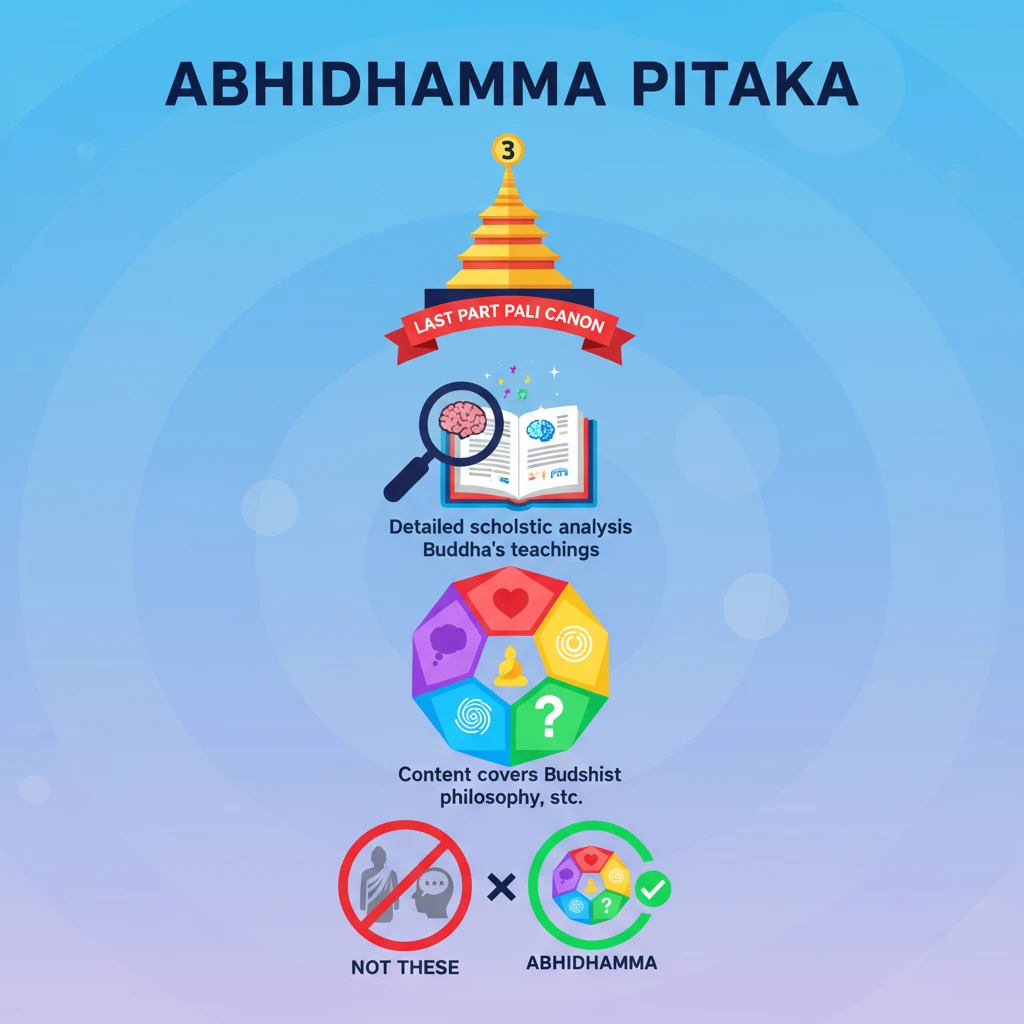
- •Abhidhamma Pitaka is the third and last part of the Pali Canon in Theravada Buddhism.
- •It provides a detailed scholastic analysis of the Buddha's teachings from the Suttas.
- •Its content covers Buddhist philosophy, doctrine, psychology, metaphysics, ethics, and epistemology.
- •It differs from Vinaya Pitaka (monastic rules) and Sutta Pitaka (discourses).
- •The Abhidhamma Pitaka consists of seven distinct books, each with a specific focus.
- •It systematically categorizes phenomena (dharmas) and explains complex causal relations.
- •The Kathavatthu book addresses and refutes various doctrinal controversies within early Buddhism.
🧠 Memory Techniques
98% Verified Content
📚 Reference Sources
•Pali Text Society (PTS) publications on Abhidhamma
•Buddhist dictionary and encyclopedic entries on Abhidhamma Pitaka
•Academic texts on Theravada Buddhist philosophy