Cultural Heritage - Art And Culture | UPSC Learning
Topics
0 topics • 0 completed
🔍
No topics match your search

Cultural Heritage
Medium⏱️ 6 min read
art and culture
📖 Introduction
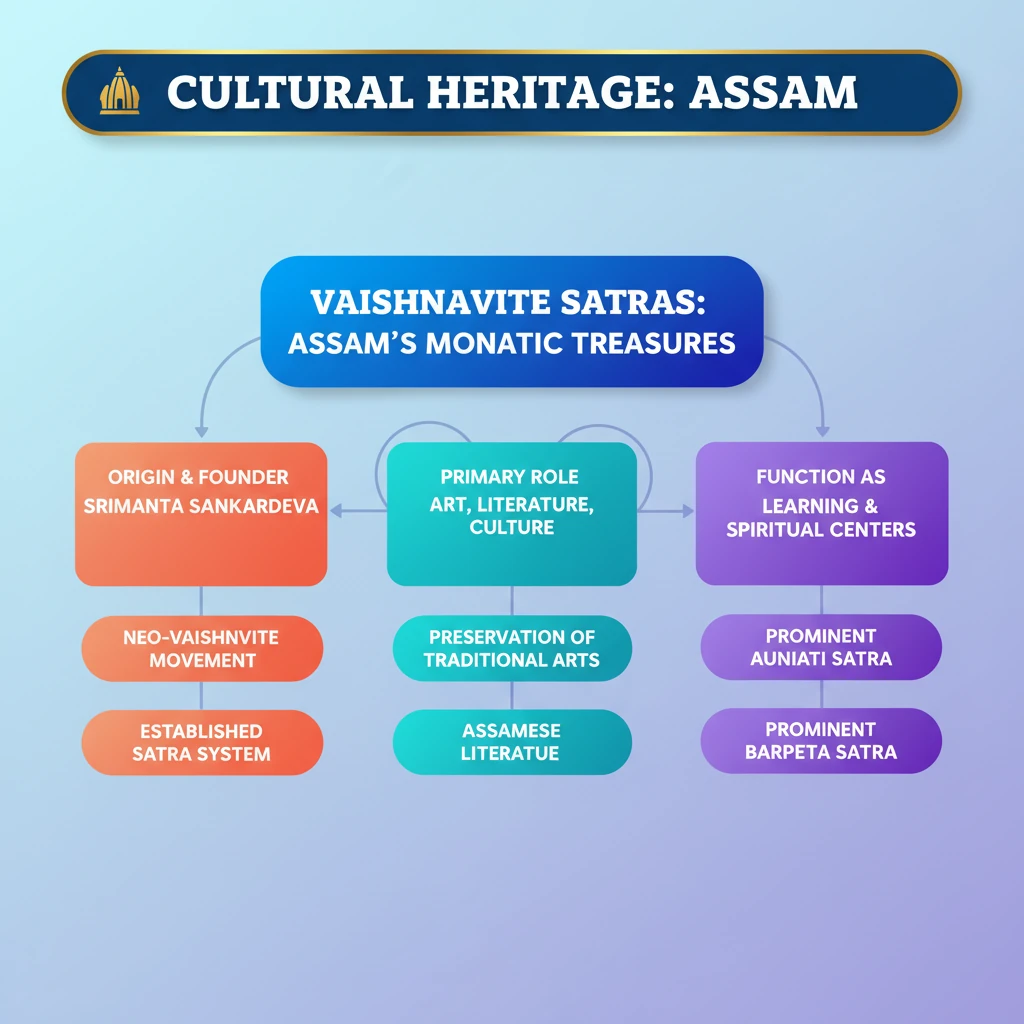
<h4>Introduction to Vaishnavite Satras</h4><p><strong>Vaishnavite Satras</strong> are unique <strong>monasteries</strong> primarily found in Assam, serving as pivotal institutions for religious, social, and cultural life. They are not merely places of worship but comprehensive centers for community engagement and spiritual growth.</p><div class="info-box"><strong>Origin:</strong> Established by <strong>Srimanta Sankardeva</strong> and his disciples in the <strong>15th-16th centuries</strong>.<br><strong>Purpose:</strong> To propagate <strong>Ekasarana Dharma</strong> (Neo-Vaishnavism) and foster community living based on devotional principles.</div><h4>Role in Cultural Preservation</h4><p>These <strong>Satras</strong> are vital custodians of <strong>traditional Assamese art forms</strong>, literature, and cultural practices. They actively work to preserve and promote the region's rich heritage, ensuring its continuity across generations.</p><ul><li><strong>Art Forms:</strong> Preservation of <strong>Bhaona</strong> (traditional theatrical performances), <strong>Ankia Naat</strong> (one-act plays), <strong>Sattriya Dance</strong> (classical dance form), and various musical traditions like <strong>Borgeet</strong>.</li><li><strong>Literature:</strong> Maintenance of ancient manuscripts, scriptures, and compositions by Vaishnavite saints, including the <strong>Kirtan Ghosha</strong>.</li><li><strong>Crafts:</strong> Promotion of indigenous crafts such as traditional mask-making (e.g., for Bhaona), weaving, and the crafting of musical instruments.</li></ul><div class="key-point-box">The <strong>Satras</strong> ensure the continuity of these art forms through regular practice, teaching, and public performances, preventing their decline in the face of modern influences.</div><h4>Centers for Learning and Spirituality</h4><p>Beyond cultural preservation, <strong>Vaishnavite Satras</strong> traditionally serve as fundamental hubs for <strong>learning and spiritual activities</strong>. They provide a structured environment for religious education, contemplation, and community service.</p><ul><li><strong>Religious Studies:</strong> Monks (<strong>Bhokots</strong>) and disciples engage in in-depth study of Vaishnavite scriptures, philosophy, and devotional texts, guided by the Satradhikar (head of the Satra).</li><li><strong>Meditation and Chanting:</strong> Regular practice of meditation, congregational chanting (<strong>Naam Kirtan</strong>), and prayers are central to their spiritual discipline and daily routine.</li><li><strong>Community Service:</strong> Satras also emphasize selfless service (<strong>Seva</strong>) to the community, fostering social harmony, mutual support, and welfare activities.</li></ul><div class="exam-tip-box">When discussing the cultural heritage of Northeast India, particularly Assam, the role of <strong>Vaishnavite Satras</strong> is indispensable for <strong>UPSC Mains GS Paper I (Art & Culture)</strong>. Highlight their multifaceted contributions across art, literature, and spirituality.</div>
💡 Key Takeaways
- •Vaishnavite Satras are unique monastic institutions in Assam.
- •They are crucial for preserving traditional Assamese art forms, literature, and cultural practices.
- •Satras serve as primary centers for learning, religious studies, and spiritual activities.
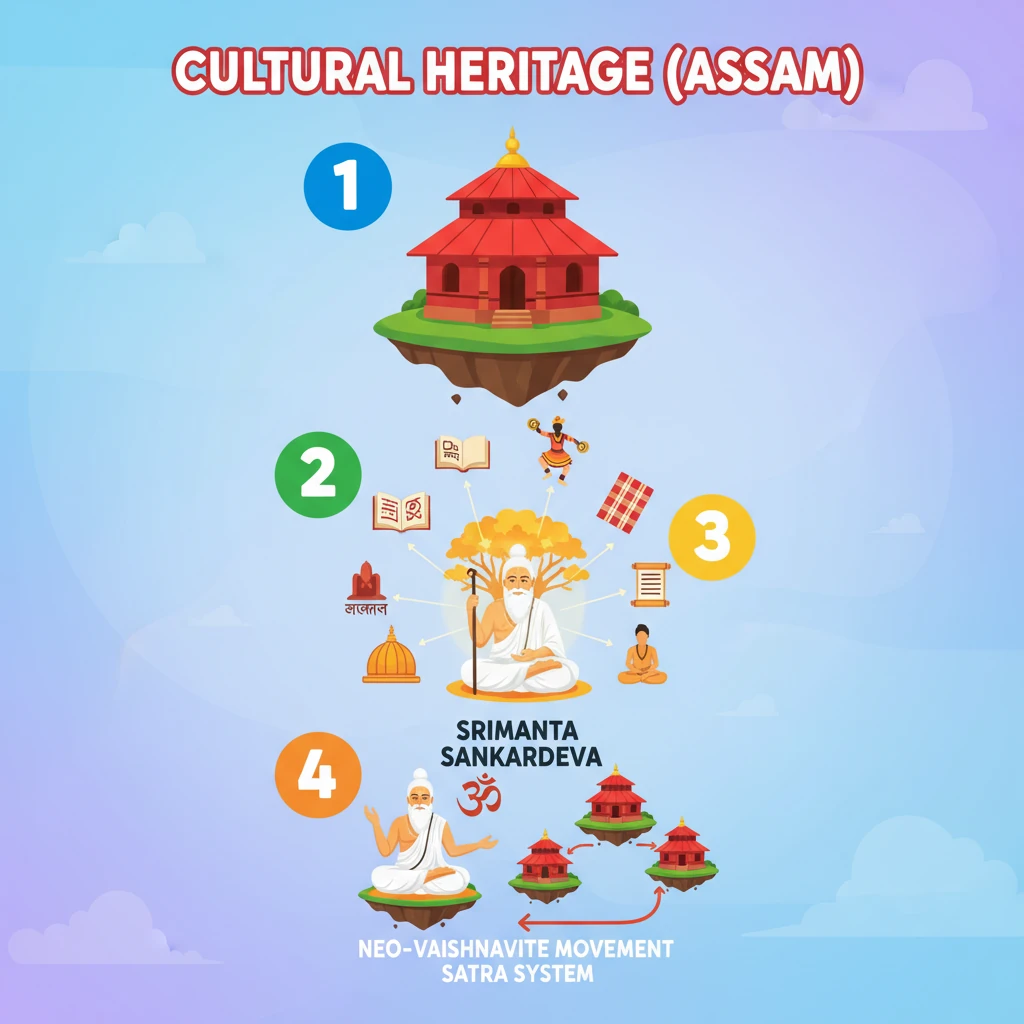
- •Srimanta Sankardeva founded the Neo-Vaishnavite movement and established the Satra system.
- •Prominent examples include Auniati Satra and Barpeta Satra, each with distinct features.
- •Satras emphasize community service, congregational chanting, and devotional practices.
- •They remain significant today for cultural tourism, socio-religious harmony, and heritage conservation.
🧠 Memory Techniques
95% Verified Content
📚 Reference Sources
•General knowledge of Indian Art & Culture (specifically Assamese Satras and the Bhakti Movement)
•Cultural texts on Srimanta Sankardeva and Neo-Vaishnavism