Odisha School (Kalinga Architecture) - Art And Culture | UPSC Learning
Topics
0 topics • 0 completed
🔍
No topics match your search
Odisha School (Kalinga Architecture)
Medium⏱️ 6 min read
art and culture
📖 Introduction
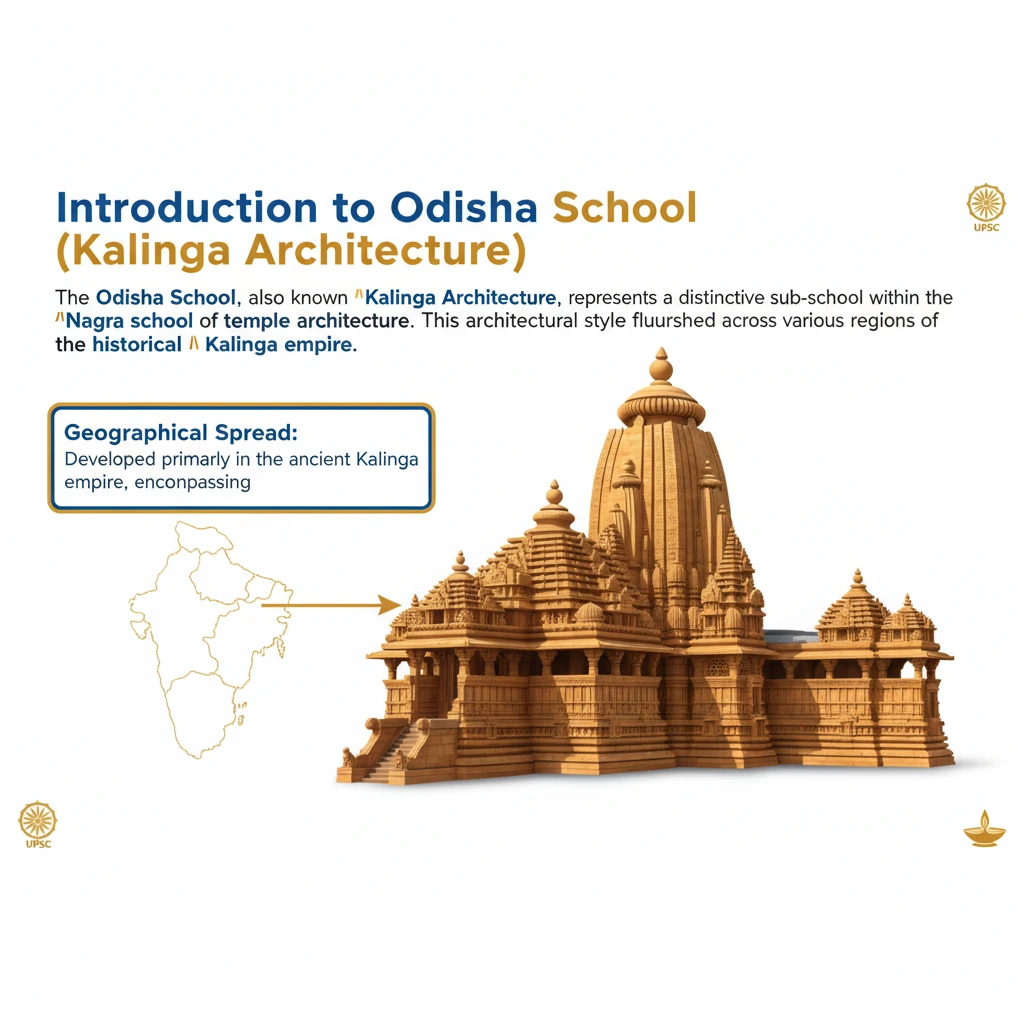
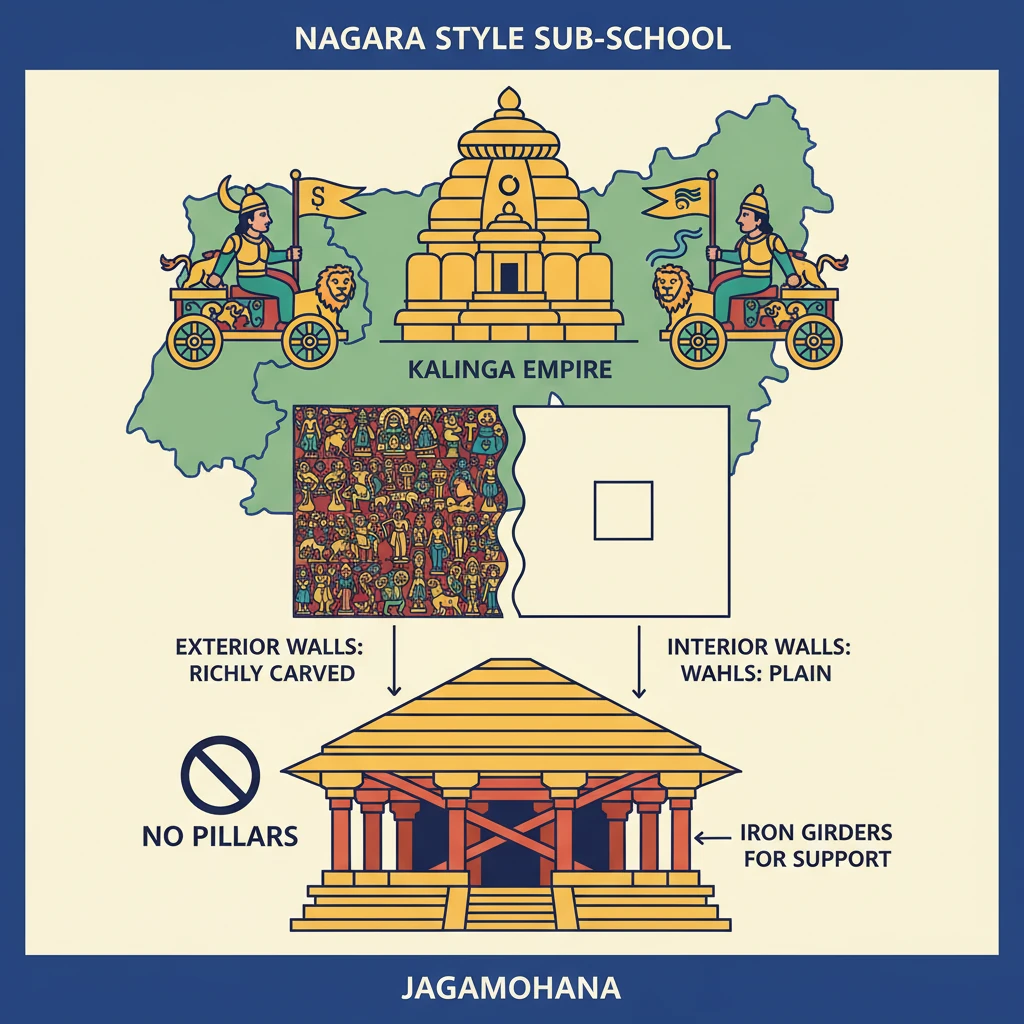
<h4>Introduction to Odisha School (Kalinga Architecture)</h4><p>The <strong>Odisha School</strong>, also known as <strong>Kalinga Architecture</strong>, represents a distinctive sub-school within the broader <strong>Nagara school</strong> of temple architecture. This architectural style flourished across various regions of the historical <strong>Kalinga empire</strong>.</p><div class="info-box"><strong>Geographical Spread:</strong> Developed primarily in the ancient Kalinga empire, encompassing present-day Odisha and parts of Andhra Pradesh and West Bengal.</div><h4>Key Architectural Characteristics</h4><p>The Kalinga architectural style is renowned for its unique set of features that differentiate it from other Nagara sub-schools. These characteristics are consistently observed in temples built under this tradition.</p><div class="key-point-box"><strong>Defining Features:</strong> Distinctive shikhara (rekha deul), lavish exterior carvings, and a pillar-less porch.</div><h4>Exterior and Interior Decoration</h4><p>A striking feature of the Odisha School is the treatment of its walls. The <strong>exterior walls</strong> of the temples were lavishly decorated with intricate carvings, depicting deities, mythological scenes, and floral motifs.</p><p>In stark contrast, the <strong>interior walls</strong> of these temples were kept relatively plain. This design choice focused devotional attention towards the sanctum sanctorum.</p><h4>Absence of Pillars in Porch</h4><p>Unlike many other temple architectures, the <strong>Odisha School</strong> did not utilize <strong>pillars</strong> to support the roof of the <strong>porch</strong> (mandapa). This structural innovation is a significant identifier of the style.</p><p>Instead of traditional pillars, <strong>iron girders</strong> were ingeniously used to provide structural support for the roof. This demonstrates advanced engineering for its time.</p><h4>Shikhara: The Rekha Deul</h4><p>The most iconic element of the <strong>Odisha School</strong> is its unique <strong>shikhara</strong>, which is specifically known as <strong>rekha deul</strong>. This term refers to the curvilinear tower over the sanctum.</p><p>These <strong>rekha deuls</strong> are characterized by their almost <strong>vertical roofs</strong> in the lower sections. They then suddenly <strong>curved inwards sharply</strong> towards the top, culminating in a crowning element.</p><div class="exam-tip-box"><strong>UPSC Insight:</strong> Differentiating the <strong>rekha deul</strong> of the Odisha School from other Nagara shikharas (e.g., Latina, Phamsana) is crucial for both Prelims (identification) and Mains (architectural analysis). Focus on the 'vertical then sharp inward curve' characteristic.</div>

💡 Key Takeaways
- •Odisha School (Kalinga Architecture) is a sub-school of the Nagara style.
- •It flourished in the Kalinga empire, primarily under the Somavamsi and Eastern Ganga dynasties.
- •Exterior walls are richly carved, while interior walls are plain.
- •The porch (jagamohana) typically lacks pillars, using iron girders for support.
- •The shikhara is known as 'rekha deul,' characterized by a vertical ascent and sharp inward curve.
- •Prominent examples include the Konark Sun Temple, Lingaraj Temple, and Jagannath Temple.
- •It represents a unique blend of structural innovation and sculptural artistry.
🧠 Memory Techniques
95% Verified Content
📚 Reference Sources
•Centre for Cultural Resources and Training (CCRT) - Indian Temple Architecture
•Drishti IAS Art and Culture Notes
•Archaeological Survey of India (ASI) official publications