Journey of East Gate of Sanchi Stupa to Europe - Art And Culture | UPSC Learning
Topics
0 topics • 0 completed
🔍
No topics match your search
Journey of East Gate of Sanchi Stupa to Europe
Medium⏱️ 7 min read
art and culture
📖 Introduction
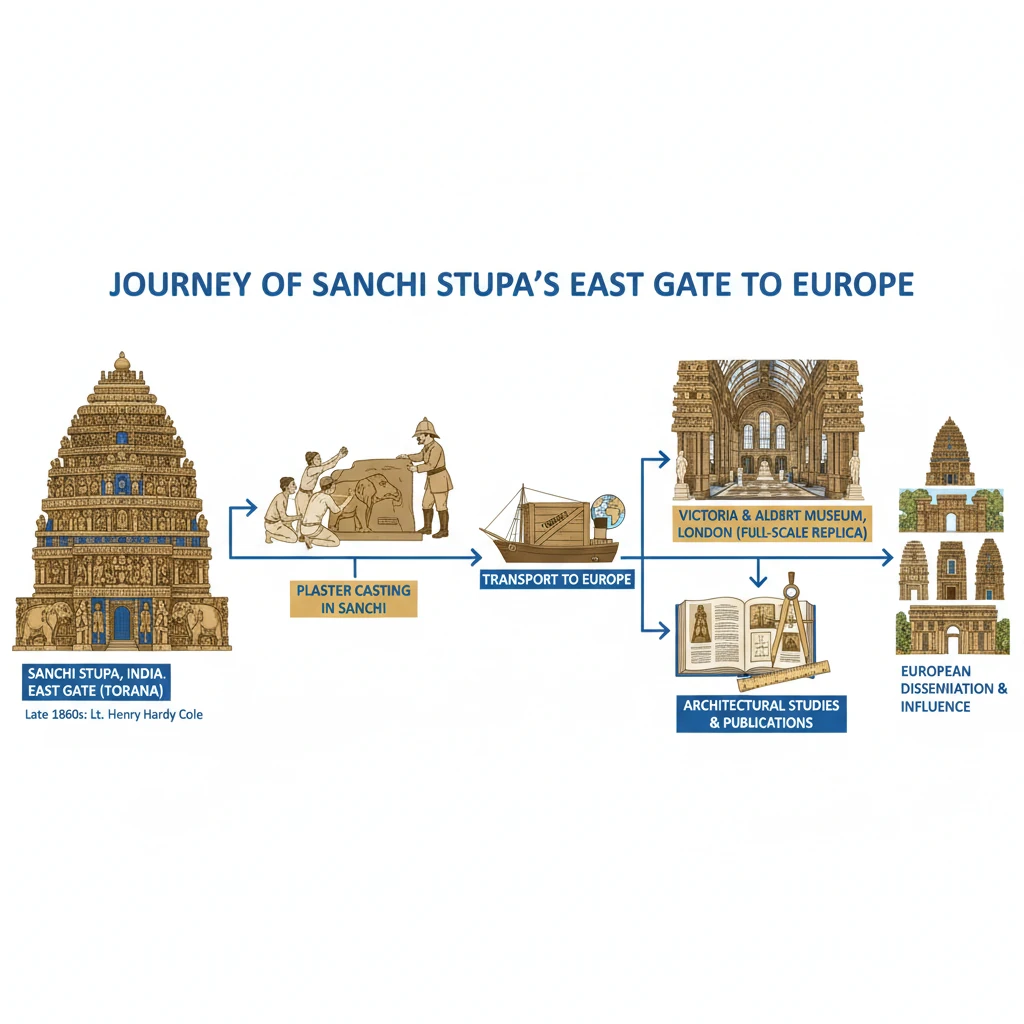
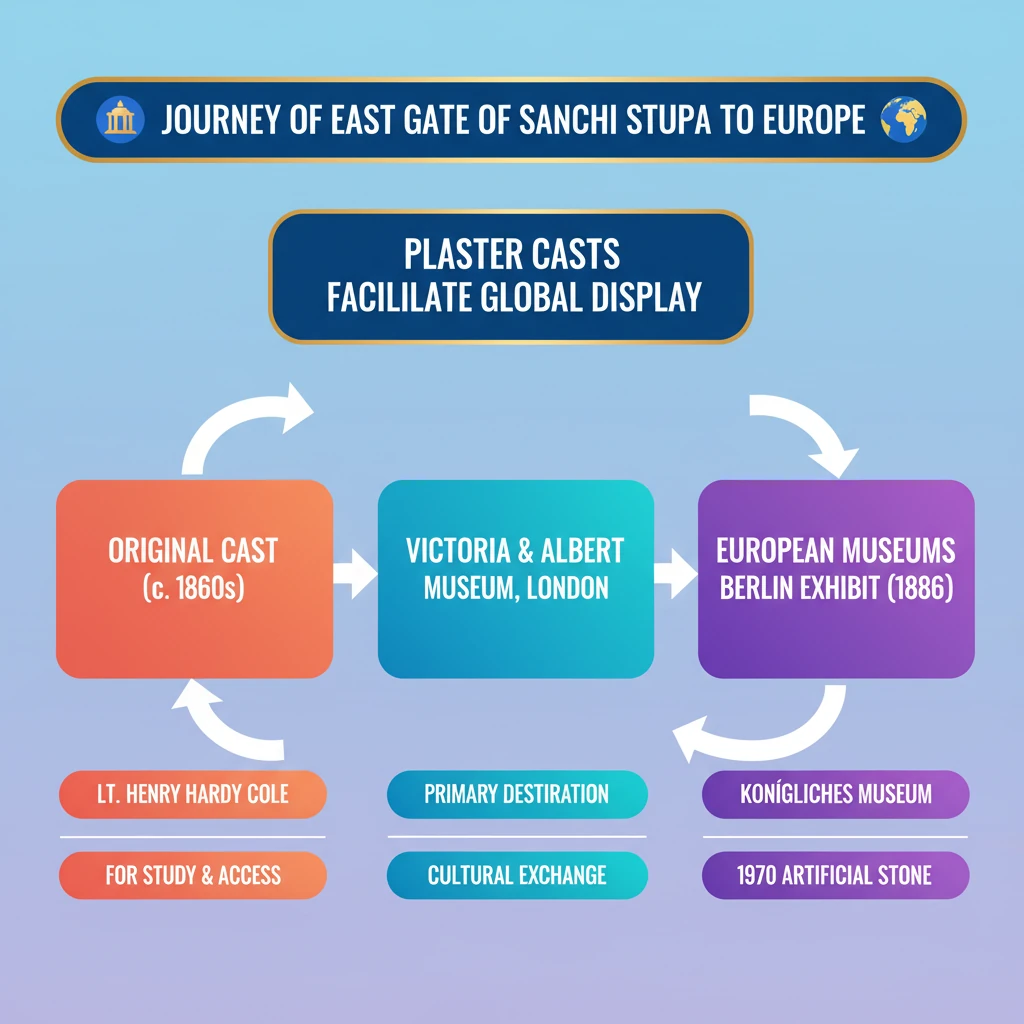
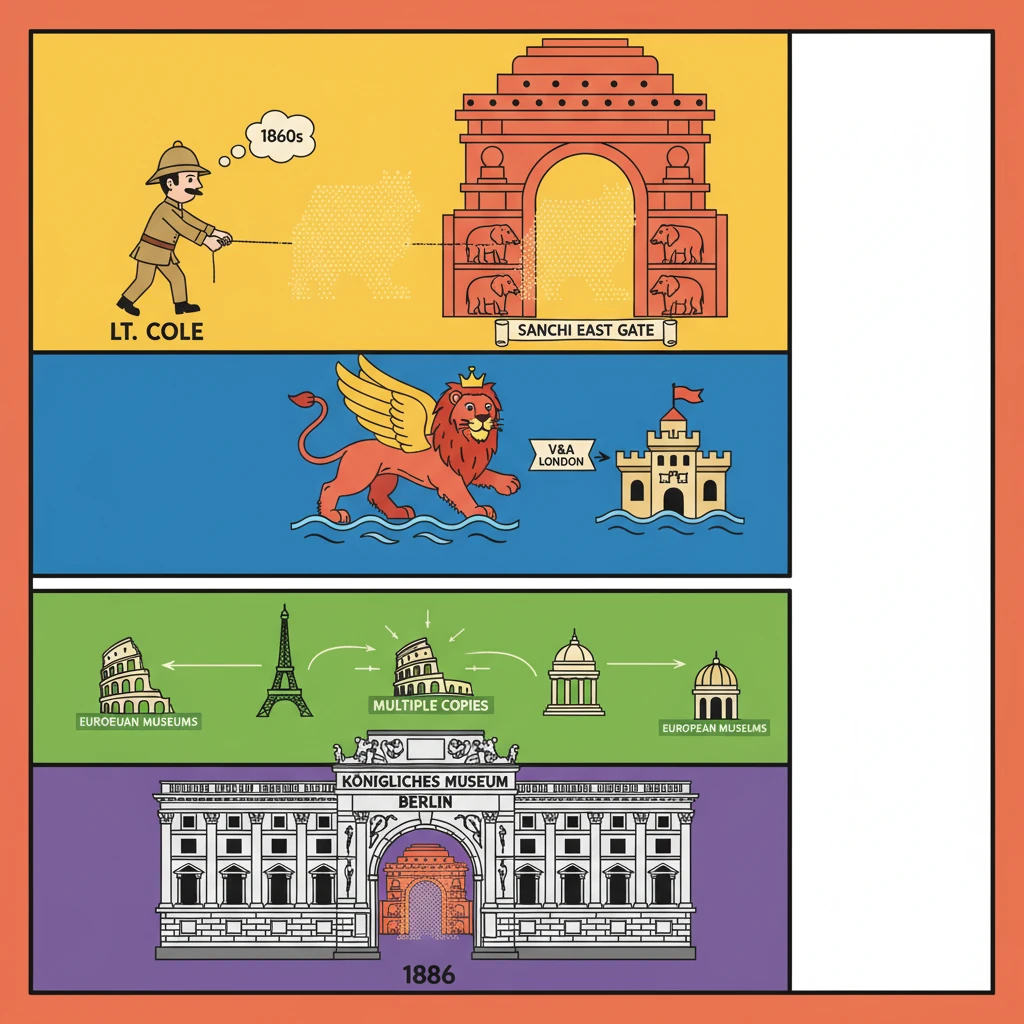
<h4>Journey of Sanchi Stupa's East Gate to Europe</h4><p>The <strong>East Gate</strong>, or <strong>Torana</strong>, of the renowned <strong>Sanchi Stupa</strong> holds significant artistic and historical value. Its journey to Europe, primarily through replicas, showcases a fascinating aspect of cultural exchange and colonial-era documentation.</p><h4>Initial Casting and European Dissemination</h4><p>In the <strong>late 1860s</strong>, <strong>Lieutenant Henry Hardy Cole</strong> undertook the task of casting the <strong>East Gate of Sanchi Stupa</strong>. This initial plaster cast was specifically created for the <strong>Victoria and Albert Museum</strong> in London.</p><div class="info-box"><strong>Key Figure:</strong> Lieutenant Henry Hardy Cole<br><strong>Year:</strong> Late 1860s<br><strong>Recipient Museum:</strong> Victoria and Albert Museum, London<br><strong>Material:</strong> Plaster cast</div><p>Following this initial effort, numerous copies of this plaster cast were produced. These replicas were subsequently displayed across various museums and institutions throughout <strong>Europe</strong>, making the intricate carvings of Sanchi accessible to a wider audience.</p><h4>The Berlin Connection: A Prominent Display</h4><p>One notable display of these copies was at the <strong>Königliches Museum für Völkerkunde Berlin</strong>. A plaster cast of the original gate was prominently exhibited in its entrance hall starting from <strong>1886</strong>.</p><div class="key-point-box">This display in Berlin highlights the widespread European interest in Indian art and architecture during the late 19th century, often facilitated through colonial expeditions and documentation.</div><h4>Evolution of Replicas: From Plaster to 3D Scanning</h4><p>The Berlin collection saw further evolution. In <strong>1970</strong>, a cast was made from this preserved plaster copy, using <strong>artificial stone</strong>. This demonstrates the ongoing efforts to preserve and replicate significant cultural artifacts.</p><p>The latest replica in Berlin is a testament to modern technological advancements. It directly traces its origin back to the original cast and was created using cutting-edge methods.</p><ul><li><strong>Technology Used:</strong> 3D scanning, modern robots</li><li><strong>Human Expertise:</strong> Skilled German and Indian sculptors</li><li><strong>Reference Material:</strong> Enlarged photos of the original <strong>torana</strong></li></ul><div class="exam-tip-box">UPSC often asks about the intersection of technology and heritage preservation. This example of <strong>3D scanning</strong> and <strong>robotics</strong> for replicas is highly relevant for <strong>GS Paper I (Art & Culture)</strong> and <strong>GS Paper III (Science & Technology)</strong>.</div>
💡 Key Takeaways
- •The East Gate of Sanchi Stupa was first cast in plaster by Lt. Henry Hardy Cole in the late 1860s.
- •This original cast was intended for the Victoria and Albert Museum in London.
- •Multiple copies were made and displayed across various European museums.
- •A significant plaster cast was exhibited in the Königliches Museum für Völkerkunde Berlin from 1886.
- •Later replicas in Berlin included an artificial stone cast in 1970.
- •The latest Berlin replica utilized 3D scanning, robots, and skilled sculptors.
- •This journey highlights colonial-era documentation and modern preservation techniques.
🧠 Memory Techniques
95% Verified Content
📚 Reference Sources
•General knowledge on Sanchi Stupa and colonial archaeology