What are the Key Highlights of Humayun’s Tomb Site Museum? - Art And Culture | UPSC Learning
Topics
0 topics • 0 completed
🔍
No topics match your search
What are the Key Highlights of Humayun’s Tomb Site Museum?
Easy⏱️ 6 min read
art and culture
📖 Introduction
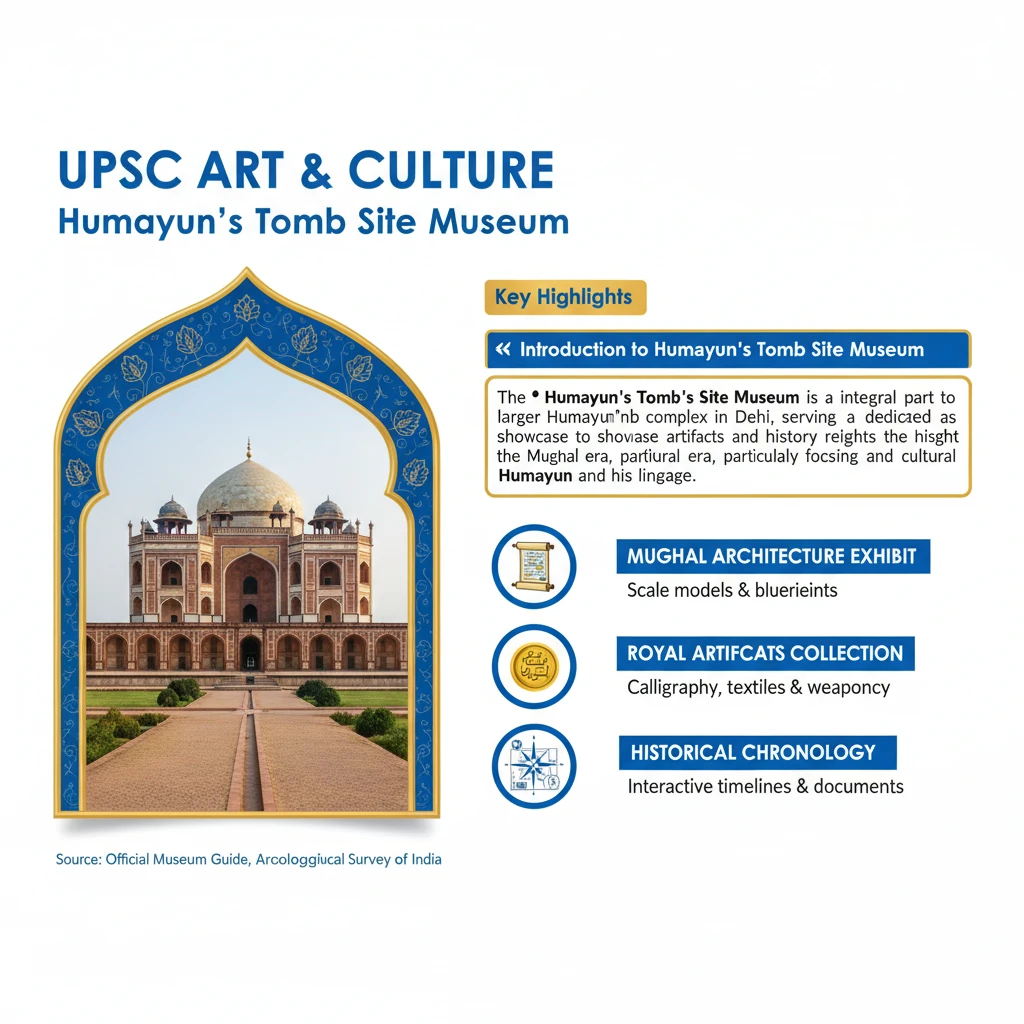
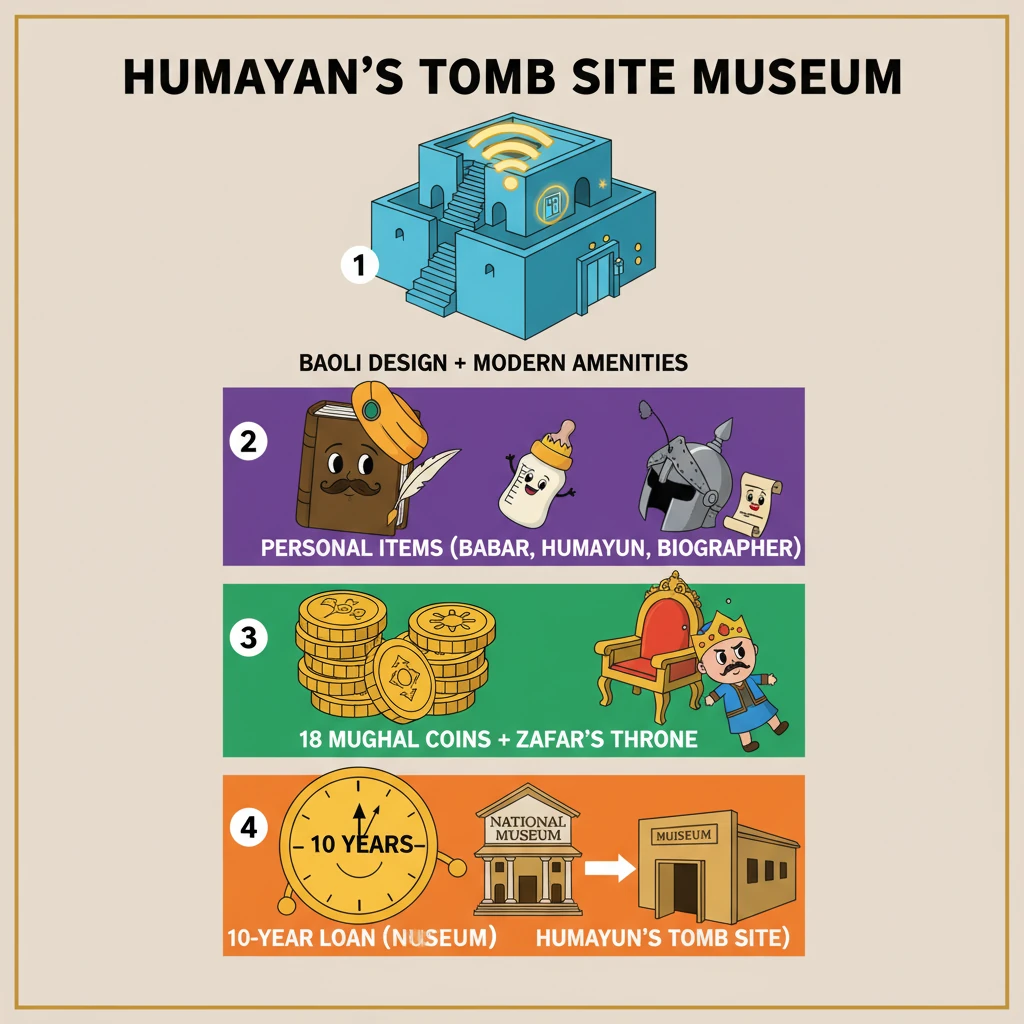
<h4>Introduction to Humayun’s Tomb Site Museum</h4><p>The <strong>Humayun’s Tomb Site Museum</strong> is an integral part of the larger Humayun’s Tomb complex in Delhi, serving as a dedicated space to showcase artifacts and history related to the Mughal era, particularly focusing on <strong>Humayun</strong> and his lineage.</p><div class="key-point-box">This museum aims to enrich the visitor experience by providing deeper insights into the historical and cultural significance of the site.</div><h4>Architectural Design and Facilities</h4><p>The museum features a distinctive <strong>underground design</strong>, drawing inspiration from the traditional Indian <strong>baoli (stepwell)</strong>. This unique architectural choice helps in maintaining a cool environment and offers an immersive experience.</p><div class="info-box"><strong>Key Facilities:</strong><ul><li>A <strong>100-seat auditorium</strong> for presentations and events.</li><li><strong>Temporal galleries</strong> for rotating exhibitions.</li><li><strong>Cafes</strong> for visitor refreshment.</li><li><strong>Meeting rooms</strong> for discussions and workshops.</li><li>A dedicated <strong>library</strong> for research and reference.</li></ul></div><h4>Unique Personal Artifacts Displayed</h4><p>The museum houses several personal and historically significant items, offering a glimpse into the lives of Mughal emperors and their associates. These artifacts provide tangible links to the past.</p><ul><li>A <strong>pear-shaped water vessel</strong> believed to have belonged to <strong>Babar</strong>, the founder of the Mughal Empire.</li><li>Personal effects of <strong>Afghani</strong>, a notable biographer of <strong>Humayun</strong>.</li><li>A unique <strong>helmet</strong> used by <strong>Humayun</strong> as a cooking vessel during his travels to <strong>Persia</strong>, highlighting his resourcefulness during exile.</li></ul><h4>Mughal Numismatic and Imperial Relics</h4><p>The museum also boasts a rich collection of items related to the broader Mughal Empire, showcasing its vast reach and the legacy of its rulers.</p><ul><li><strong>Coins</strong> from the reigns of <strong>18 different Mughal-era kings</strong>, providing a chronological understanding of the empire's economic and political history.</li><li>The actual <strong>throne of Bahadur Shah Zafar</strong>, the <strong>last Mughal emperor</strong>, symbolizing the end of a powerful dynasty.</li></ul><h4>Strategic Artifact Loan from National Museum</h4><p>To ensure a dynamic and comprehensive display, the artifacts exhibited in the <strong>Humayun’s Tomb Site Museum</strong> are on loan from the <strong>National Museum</strong>. This collaboration enhances the museum's collection significantly.</p><div class="info-box"><strong>Loan Details:</strong> The artifacts are on loan for a period of <strong>10 years</strong>, ensuring a rich and varied display for visitors over an extended period.</div>
💡 Key Takeaways
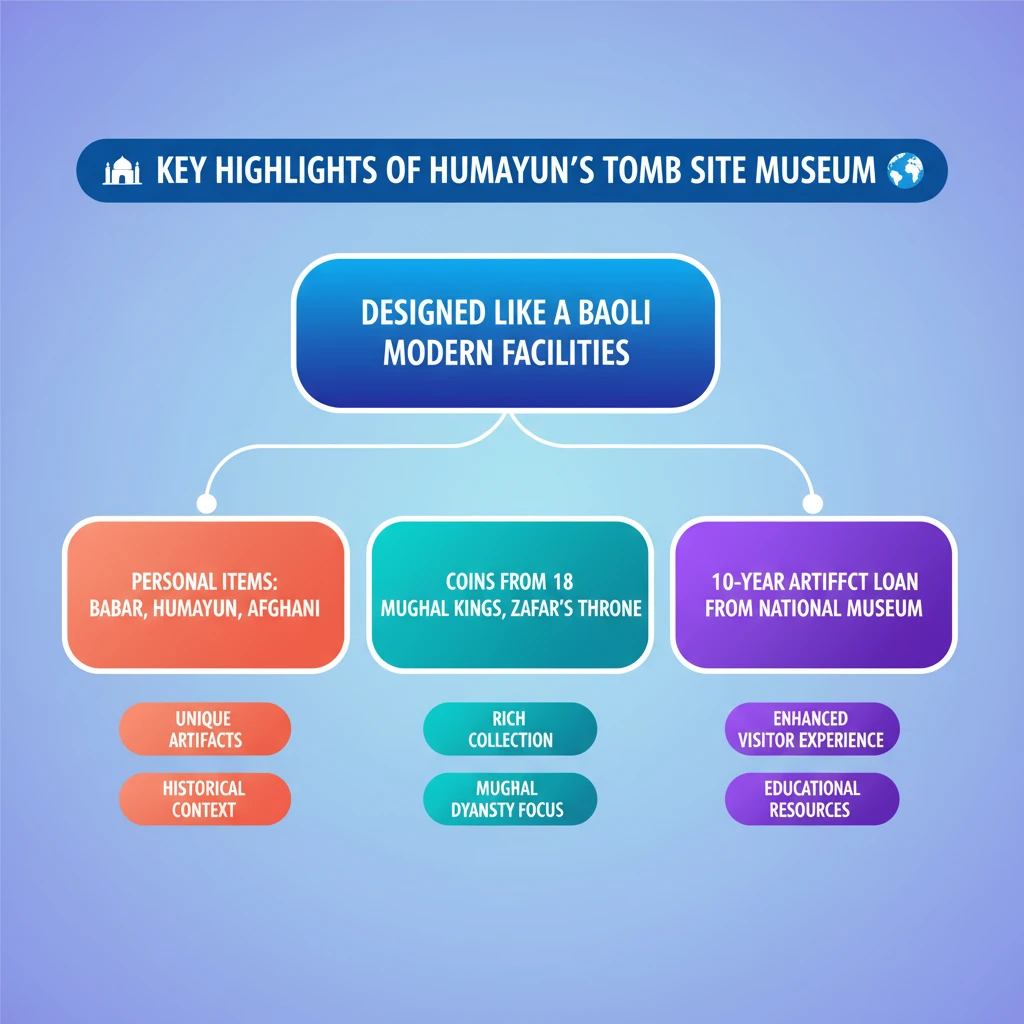
- •The Humayun's Tomb Site Museum is designed like a baoli, featuring modern facilities.
- •It houses unique personal items of Babar, Humayun, and Humayun's biographer, Afghani.
- •The museum displays coins from 18 Mughal kings and the throne of Bahadur Shah Zafar.
- •Artifacts are on a 10-year loan from the National Museum, ensuring a rich display.
- •The museum enhances the visitor experience by providing historical context and educational resources.
- •Its underground design is a blend of traditional Indian architecture and contemporary museum planning.
🧠 Memory Techniques
95% Verified Content