What is Vaishnavism? - Art And Culture | UPSC Learning
Topics
0 topics • 0 completed
🔍
No topics match your search
What is Vaishnavism?
Medium⏱️ 8 min read
art and culture
📖 Introduction
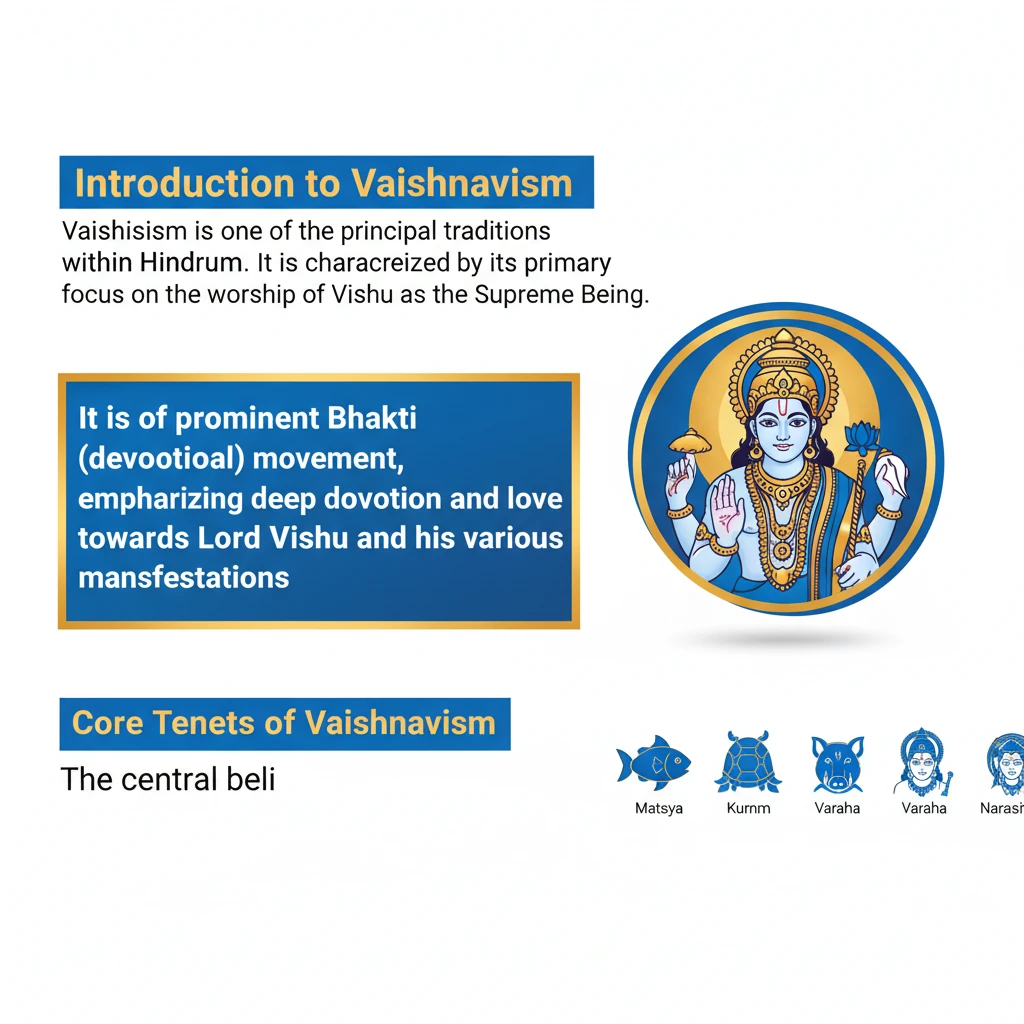
<h4>Introduction to Vaishnavism</h4><p><strong>Vaishnavism</strong> is one of the principal traditions within <strong>Hinduism</strong>. It is characterized by its primary focus on the worship of <strong>Vishnu</strong> as the Supreme Being.</p><div class="key-point-box">It is a prominent <strong>Bhakti</strong> (devotional) movement, emphasizing deep devotion and love towards <strong>Lord Vishnu</strong> and his various manifestations.</div><h4>Core Tenets of Vaishnavism</h4><p>The central belief in Vaishnavism revolves around <strong>Vishnu</strong> as the preserver and protector of the universe. Adherents believe he periodically descends to Earth in various forms to restore <strong>Dharma</strong> (righteousness) and save humanity.</p><div class="info-box"><strong>Key Concept:</strong> The concept of <strong>avatars</strong> or <strong>incarnations</strong> is fundamental. Vishnu takes on different forms to combat evil and maintain cosmic order.</div><h4>The Concept of Avatars</h4><p>Vaishnavites believe that <strong>Vishnu</strong> has manifested in numerous forms throughout cosmic history. The most famous are the <strong>Dashavatara</strong>, the ten primary incarnations.</p><ul><li><strong>Rama:</strong> The protagonist of the epic <strong>Ramayana</strong>, embodying ideal kingship and righteousness.</li><li><strong>Krishna:</strong> A central figure in the <strong>Mahabharata</strong> and the speaker of the <strong>Bhagavad Gita</strong>, revered as a divine lover, warrior, and philosopher.</li><li><strong>Buddha:</strong> Sometimes included as an avatar, signifying Vishnu's role in guiding beings towards enlightenment.</li></ul><div class="exam-tip-box">Understanding the <strong>Dashavatara</strong> is crucial for <strong>UPSC Art & Culture</strong>, as it connects to iconography, temple architecture, and philosophical developments.</div><h4>Bhakti and Devotion</h4><p><strong>Bhakti</strong>, or devotional worship, is the cornerstone of Vaishnava practice. It involves cultivating a personal relationship with <strong>Vishnu</strong> through prayer, chanting (<strong>kirtan</strong>), meditation, and ritual.</p><p>This path of devotion is seen as a direct means to attain spiritual liberation (<strong>moksha</strong>) and union with the divine.</p>
💡 Key Takeaways
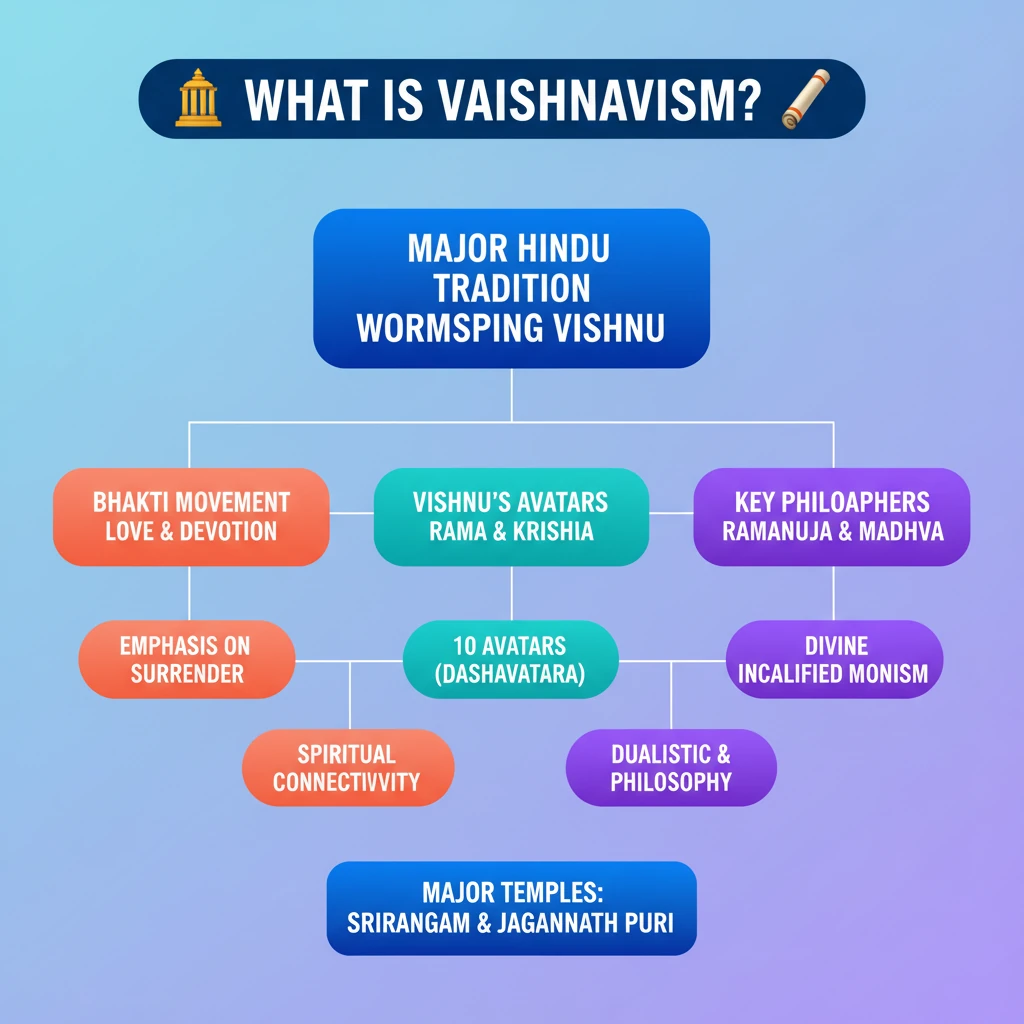
- •Vaishnavism is a major Hindu tradition centered on the worship of Vishnu.
- •It is a prominent Bhakti movement emphasizing deep devotion and love.
- •The concept of Vishnu's avatars (incarnations) like Rama and Krishna is central.
- •Key Vaishnava philosophers include Ramanuja and Madhvacharya.
- •Major Vaishnava temples include Srirangam and Jagannath Puri.
- •Gaudiya Vaishnavism, founded by Chaitanya Mahaprabhu, emphasizes Radha-Krishna devotion and chanting.
- •Vaishnavism has a rich historical background, flourishing during the Gupta and medieval Bhakti periods.
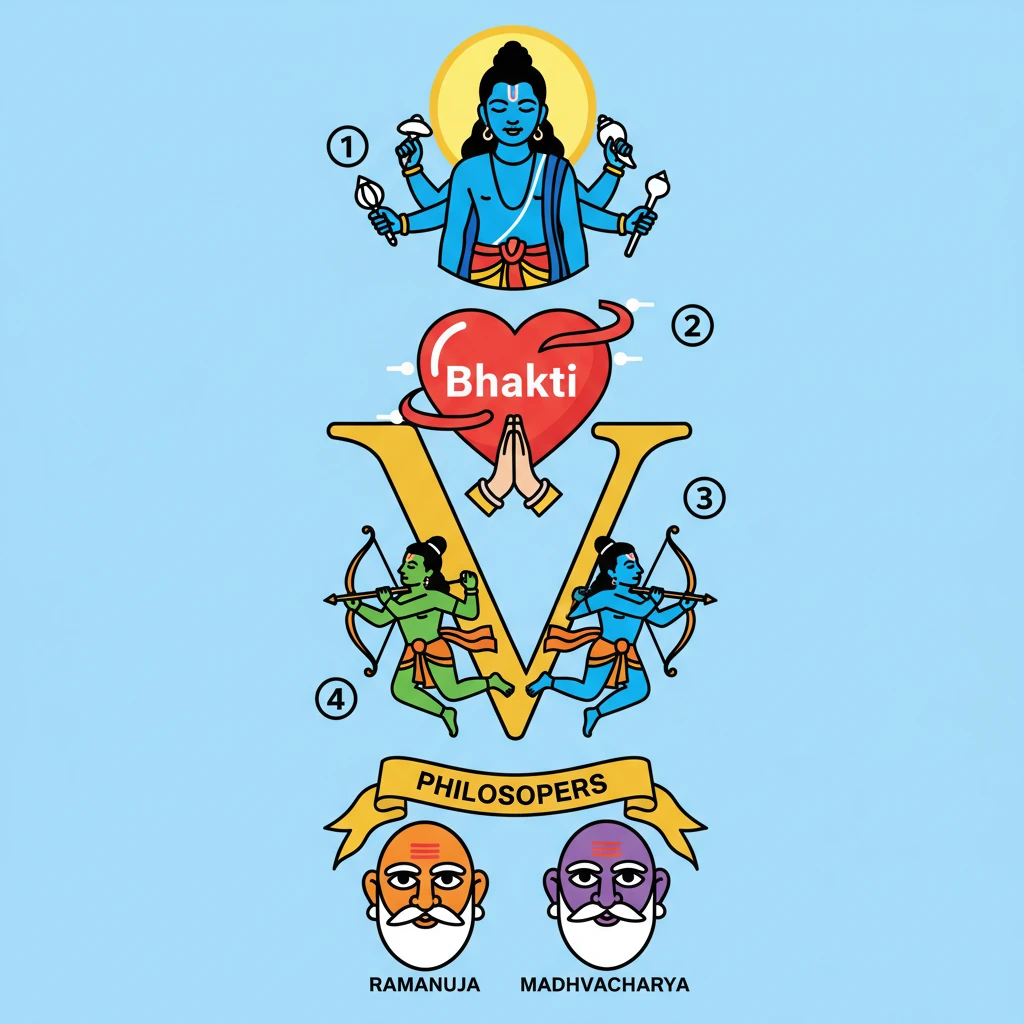
🧠 Memory Techniques
95% Verified Content
📚 Reference Sources
•NCERT Textbooks (Ancient and Medieval India)
•The Wonder That Was India by A.L. Basham
•History of Indian Philosophy by Surendranath Dasgupta
•Wikipedia (for cross-referencing specific details like temple names and founders)