Gingee Fort Nominated for UNESCO World Heritage Site - Art And Culture | UPSC Learning
Topics
0 topics • 0 completed
🔍
No topics match your search

Gingee Fort Nominated for UNESCO World Heritage Site
Medium⏱️ 8 min read
art and culture
📖 Introduction
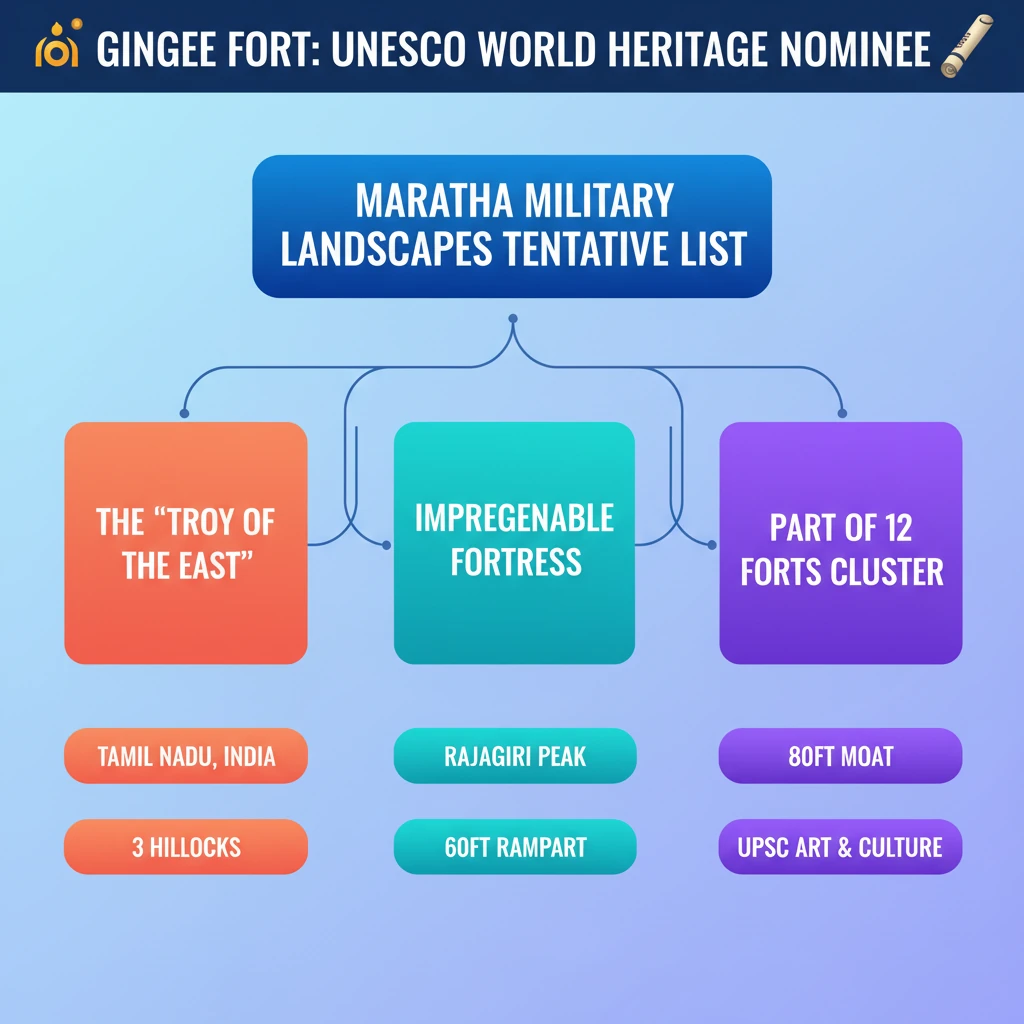
<h4>Gingee Fort: UNESCO Nomination and Strategic Significance</h4><p>The <strong>Gingee Fort</strong>, located in <strong>Tamil Nadu’s Villupuram district</strong>, has been nominated for <strong>UNESCO’s World Heritage Site</strong> list. This nomination is part of the broader <strong>Maratha Military Landscapes</strong> proposal.</p><p>This proposal includes <strong>12 other forts</strong>, highlighting a significant network of historical military architecture across India. The recognition underscores the strategic and cultural importance of these sites.</p><div class="info-box"><strong>Location:</strong> Villupuram district, Tamil Nadu<br><strong>Nomination:</strong> UNESCO World Heritage Site list<br><strong>Part of:</strong> Maratha Military Landscapes proposal (includes 12 other forts)</div><h4>Geographical Features and Impregnability</h4><p><strong>Gingee Fort</strong> is highly renowned for its historical importance and its exceptionally strategic location. It is built atop <strong>three prominent hillocks</strong>, which naturally enhance its defensive capabilities.</p><p>These three hillocks are named <strong>Rajagiri</strong>, <strong>Krishnagiri</strong>, and <strong>Chandragiri</strong>. This multi-hill structure contributes significantly to its reputation as an impregnable fortress.</p><div class="key-point-box"><strong>Known as:</strong> “Troy of the East”<br><strong>Reason:</strong> One of the most impregnable fortresses in peninsular India<br><strong>Key Features:</strong> Strategic location atop three hillocks (Rajagiri, Krishnagiri, Chandragiri)</div><h4>Robust Defenses and Carnatic Wars</h4><p>The fort's strategic location was complemented by its robust defensive structures. These included a formidable <strong>60-foot-wide rampart</strong> and an expansive <strong>80-foot-wide moat</strong>.</p><p>These defenses made <strong>Gingee Fort</strong> a vital stronghold during critical historical conflicts. Its strategic importance was particularly evident during the <strong>Carnatic Wars</strong>, where it played a crucial role in the struggles between the <strong>French and British</strong> forces.</p><div class="exam-tip-box"><strong>UPSC Insight:</strong> The term “Troy of the East” and the fort's role in the <strong>Carnatic Wars</strong> are important for <strong>GS Paper 1 (History)</strong>. Understanding the strategic significance of such forts is key.</div>
💡 Key Takeaways
- •Gingee Fort in Tamil Nadu is nominated for UNESCO World Heritage Site status.
- •It is part of the larger Maratha Military Landscapes proposal, including 12 other forts.
- •Known as the “Troy of the East” due to its impregnable nature.
- •Strategically located atop three hillocks: Rajagiri, Krishnagiri, and Chandragiri.
- •Features robust defenses, including a 60-foot-wide rampart and an 80-foot-wide moat.
- •Played a vital role in the Carnatic Wars and Maratha resistance against the Mughals.
- •Historically controlled by various powers: Konar Dynasty, Vijayanagar, Marathas, Mughals, Arcot Nawabs, French, and British.
🧠 Memory Techniques

98% Verified Content