Vaishnavism: Vishnu, Avatars, and the Dashavatara - Art And Culture | UPSC Learning
Topics
0 topics • 0 completed
🔍
No topics match your search
Vaishnavism: Vishnu, Avatars, and the Dashavatara
Medium⏱️ 7 min read
art and culture
📖 Introduction
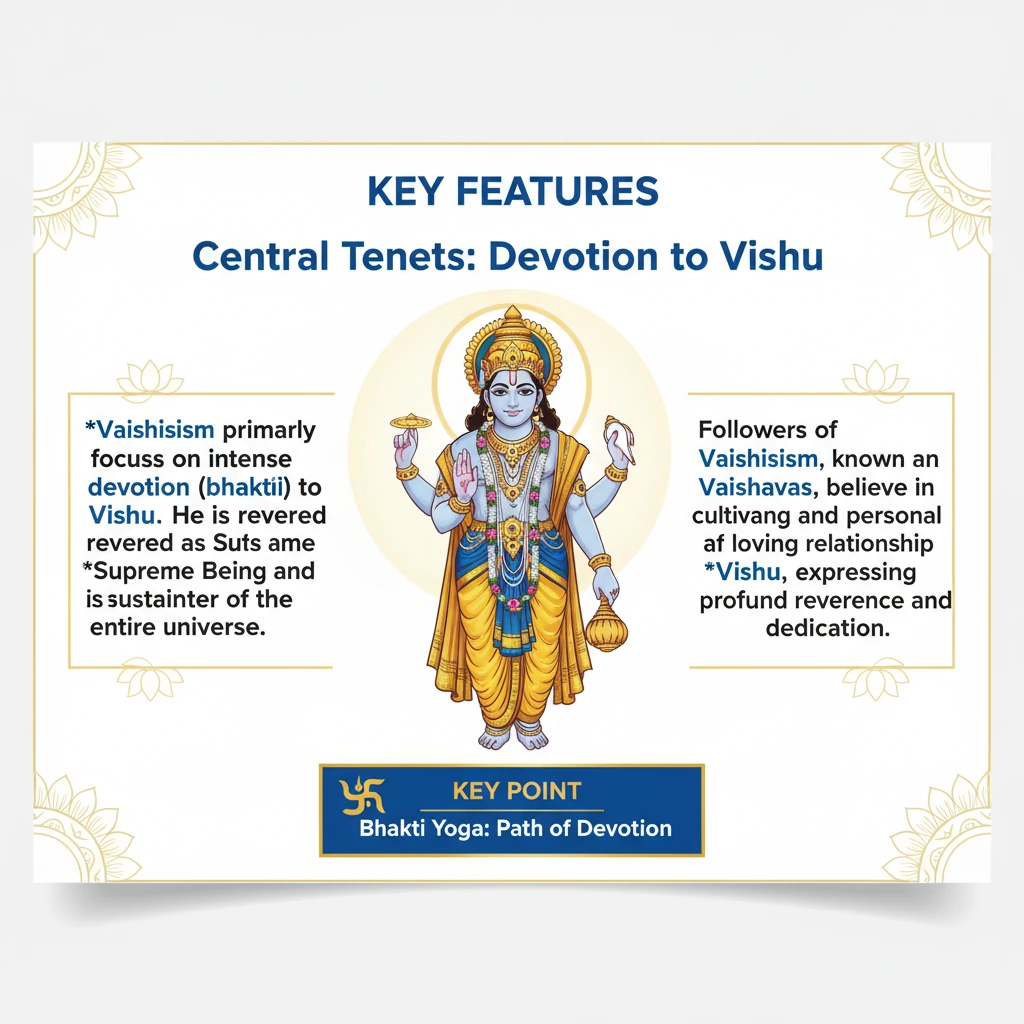
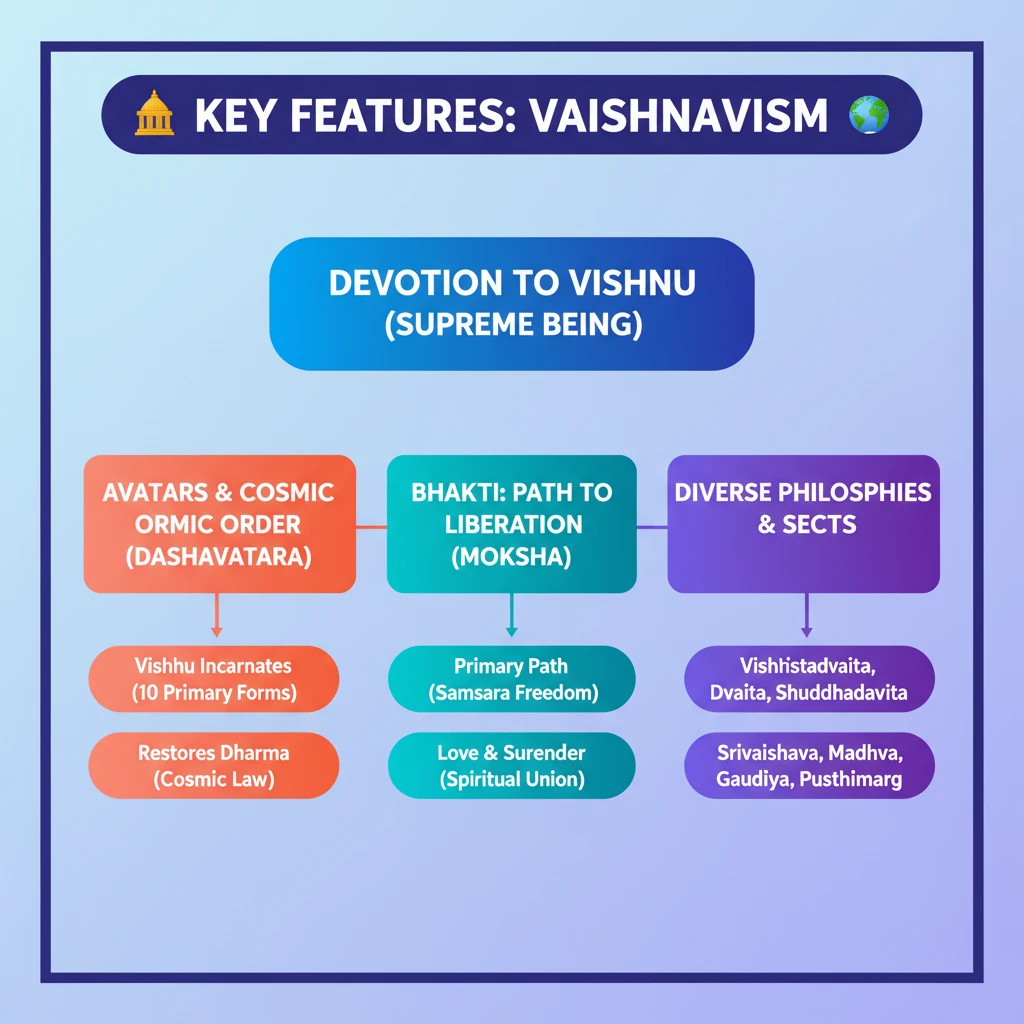
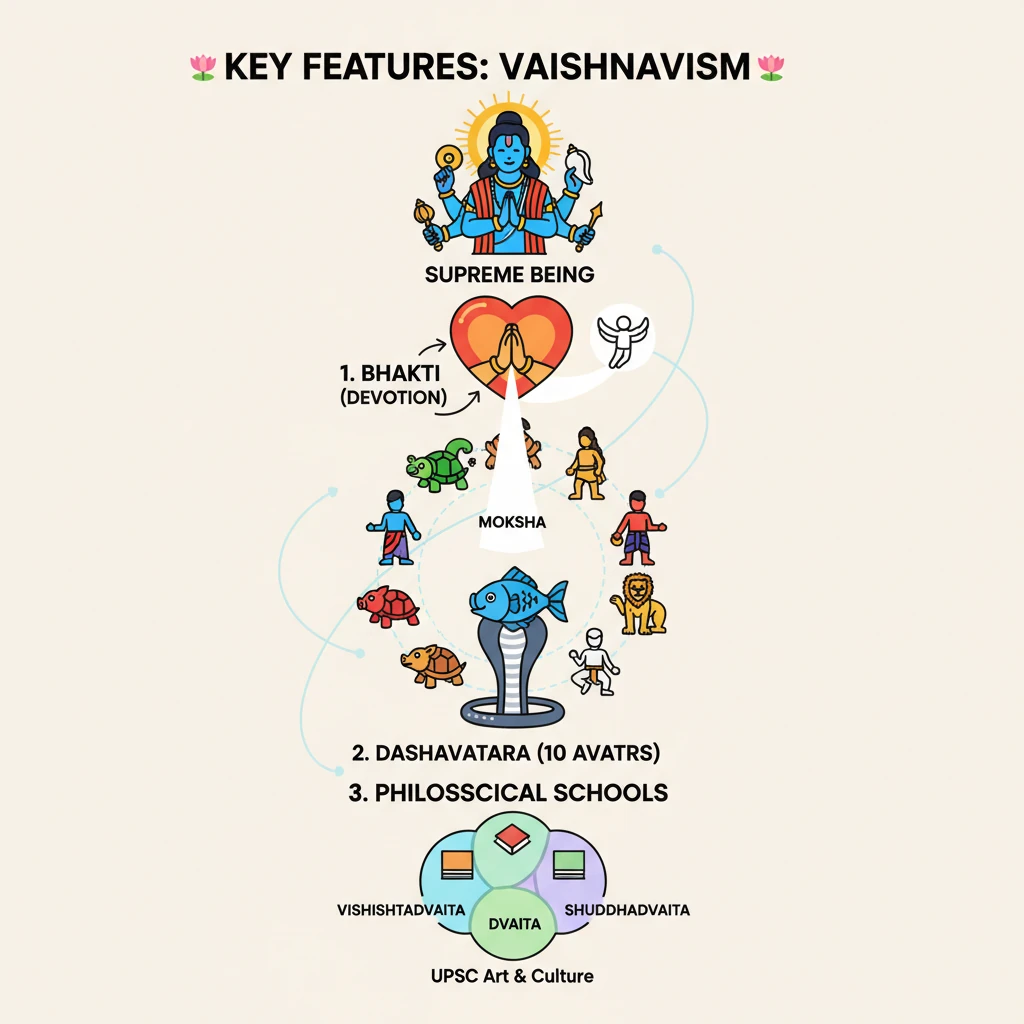
<h4>Central Tenets: Devotion to Vishnu</h4><p><strong>Vaishnavism</strong> primarily focuses on intense <strong>devotion (bhakti)</strong> to <strong>Vishnu</strong>. He is revered as the <strong>Supreme Being</strong> and the sustainer of the entire universe.</p><p>Followers of Vaishnavism, known as <strong>Vaishnavas</strong>, believe in cultivating a personal and loving relationship with <strong>Vishnu</strong>, expressing profound reverence and dedication.</p><div class="key-point-box"><strong>Key Concept:</strong> <strong>Bhakti</strong> involves a deep emotional connection and surrender to the deity, forming the core of Vaishnava practice.</div><h4>Avatars: Divine Incarnations</h4><p><strong>Vishnu</strong> is believed to manifest on Earth in various forms, known as <strong>avatars</strong>. These incarnations occur to restore <strong>cosmic order</strong> and uphold righteousness in times of crisis.</p><p>The ten primary avatars are collectively known as the <strong>Dashavatara</strong>. Among these, <strong>Rama</strong> and <strong>Krishna</strong> are particularly popular and widely worshipped incarnations.</p><div class="info-box"><strong>The Dashavatara:</strong><ul><li><strong>Matsya</strong> (fish)</li><li><strong>Kurma</strong> (turtle)</li><li><strong>Varaha</strong> (boar)</li><li><strong>Narasimha</strong> (half-man, half-lion)</li><li><strong>Vamana</strong> (dwarf)</li><li><strong>Parashurama</strong> (warrior with an axe)</li><li><strong>Rama</strong> (prince of Ayodhya)</li><li><strong>Krishna</strong> (divine cowherd)</li><li><strong>Buddha</strong> (the enlightened one)</li><li><strong>Kalki</strong> (future warrior on a white horse)</li></ul></div><h4>Path to Liberation: Bhakti and Moksha</h4><p><strong>Vaishnavism</strong> places significant emphasis on the path of <strong>bhakti</strong>. This involves intense devotion and love directed towards <strong>Vishnu</strong> as the means to spiritual realization.</p><p>For many <strong>Vaishnavas</strong>, the ultimate spiritual goal is <strong>liberation (moksha)</strong>. This signifies freedom from the continuous cycle of birth and death, known as <strong>samsara</strong>, and achieving union with <strong>Vishnu</strong>.</p><div class="exam-tip-box">Understanding <strong>Bhakti</strong> as a path to <strong>Moksha</strong> is crucial for UPSC, especially in topics related to the <strong>Bhakti Movement</strong> and Indian philosophical traditions (<strong>GS Paper I</strong>).</div><h4>Diverse Philosophical Schools (Sects)</h4><p><strong>Vaishnavism</strong> is not monolithic; it encompasses a variety of sects and groups. These groups hold different interpretations regarding the relationship between the individual soul (<strong>jiva</strong>) and God.</p><p>Some prominent philosophical stances within Vaishnavism include <strong>qualified nondualism (Vishishtadvaita)</strong>, <strong>dualism (Dvaita)</strong>, and <strong>pure nondualism (Shuddhadvaita)</strong>.</p><div class="info-box"><strong>Key Vaishnava Sects and their Philosophies:</strong><ul><li><strong>Srivaishnava Sect:</strong> Emphasizes <strong>qualified nondualism (Vishishtadvaita)</strong>, based on the teachings of <strong>Ramanuja</strong>.</li><li><strong>Madhva Sect:</strong> Professes <strong>dualism (Dvaita)</strong>, asserting the separate existence of God and the soul, following the philosophy of <strong>Madhvacharya</strong>.</li><li><strong>Pushtimarg Sect:</strong> Maintains <strong>pure nondualism (Shuddhadvaita)</strong>, according to <strong>Vallabhacharya’s</strong> teachings.</li><li><strong>Gaudiya Sect:</strong> Founded by <strong>Chaitanya</strong>, teaches <strong>inconceivable duality and nonduality (Achintya Bheda Abheda)</strong>.</li></ul></div>
💡 Key Takeaways
- •Vaishnavism focuses on devotion (bhakti) to Vishnu as the Supreme Being.
- •Vishnu incarnates as avatars to restore cosmic order, with Dashavatara being the ten primary forms.
- •Bhakti is considered the primary path to liberation (moksha) from the cycle of samsara.
- •Diverse philosophical schools like Vishishtadvaita, Dvaita, and Shuddhadvaita exist within Vaishnavism.
- •Prominent sects include Srivaishnava (Ramanuja), Madhva (Madhvacharya), Pushtimarg (Vallabhacharya), and Gaudiya (Chaitanya).
- •The Dashavatara includes popular avatars like Rama, Krishna, and Buddha.
- •Vaishnava tenets continue to influence Indian culture, festivals, and ethical thought today.
🧠 Memory Techniques
95% Verified Content
📚 Reference Sources
•General knowledge on Indian Philosophy and Bhakti Movement