What are the Key Facts about Kumbh Mela? - Art And Culture | UPSC Learning
Topics
0 topics • 0 completed
🔍
No topics match your search
What are the Key Facts about Kumbh Mela?
Medium⏱️ 8 min read
art and culture
📖 Introduction
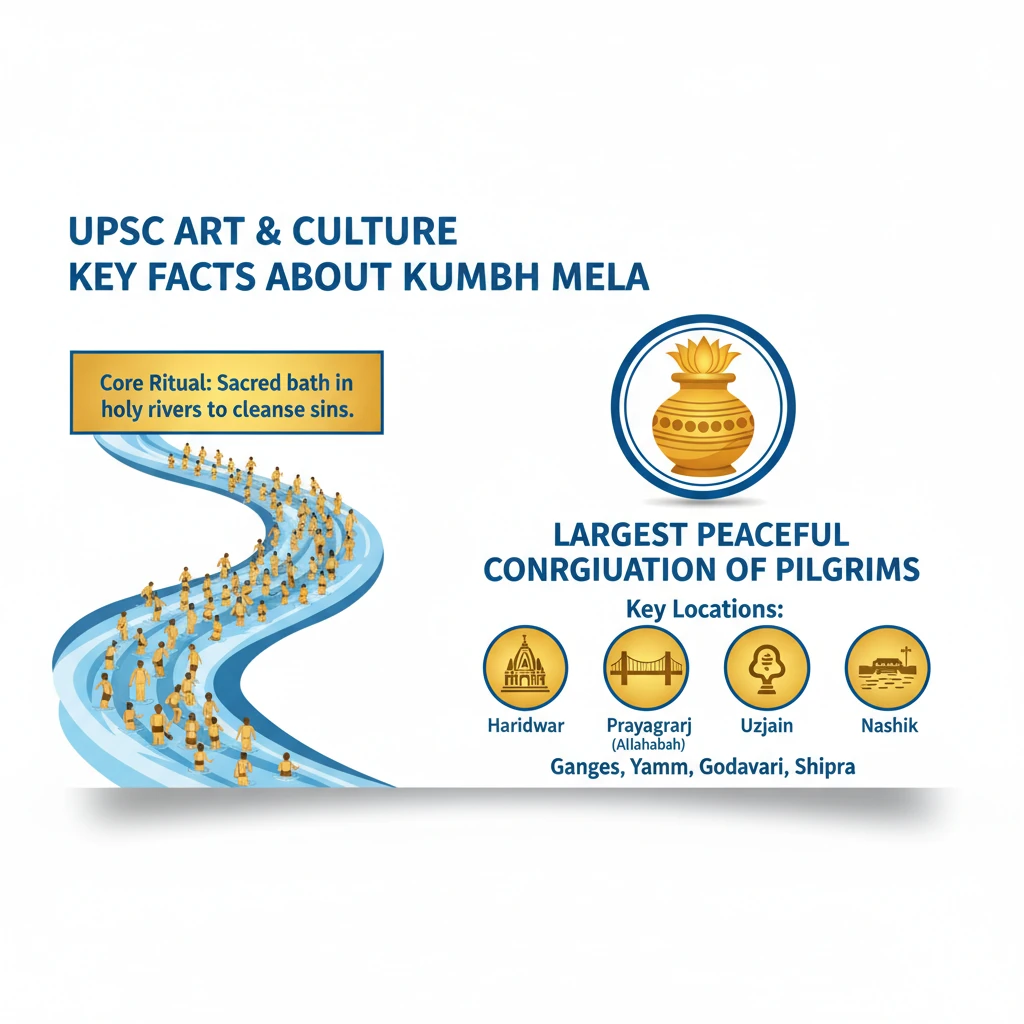
<h4>Introduction to Kumbh Mela</h4><p>The <strong>Kumbh Mela</strong> is renowned globally as the <strong>largest peaceful congregation of pilgrims</strong> on Earth. This ancient Hindu pilgrimage attracts millions of devotees from across the world.</p><div class="key-point-box"><strong>Core Ritual:</strong> Participants undertake a sacred bath or dip in holy rivers, believed to cleanse sins and attain spiritual merit.</div><h4>Key Locations of Kumbh Mela</h4><p>The gathering rotates among <strong>four sacred sites</strong> in India. Each location holds unique spiritual significance and is associated with a specific holy river.</p><ul><li><strong>Haridwar:</strong> Located on the banks of the sacred <strong>River Ganges</strong> in Uttarakhand.</li><li><strong>Ujjain:</strong> Situated on the banks of the holy <strong>River Shipra</strong> in Madhya Pradesh.</li><li><strong>Nashik:</strong> Found on the banks of the <strong>River Godavari</strong> (also known as <strong>Dakshin Ganga</strong>) in Maharashtra.</li><li><strong>Prayagraj (Allahabad):</strong> Held at the auspicious <strong>Triveni Sangam</strong>, the confluence of the <strong>River Ganges</strong>, <strong>River Yamuna</strong>, and the mythical invisible <strong>River Saraswati</strong> in Uttar Pradesh.</li></ul><div class="exam-tip-box">For UPSC, remember the <strong>four locations</strong> and their associated <strong>rivers</strong>. Questions often test direct factual recall or the cultural significance of these sites.</div>
💡 Key Takeaways
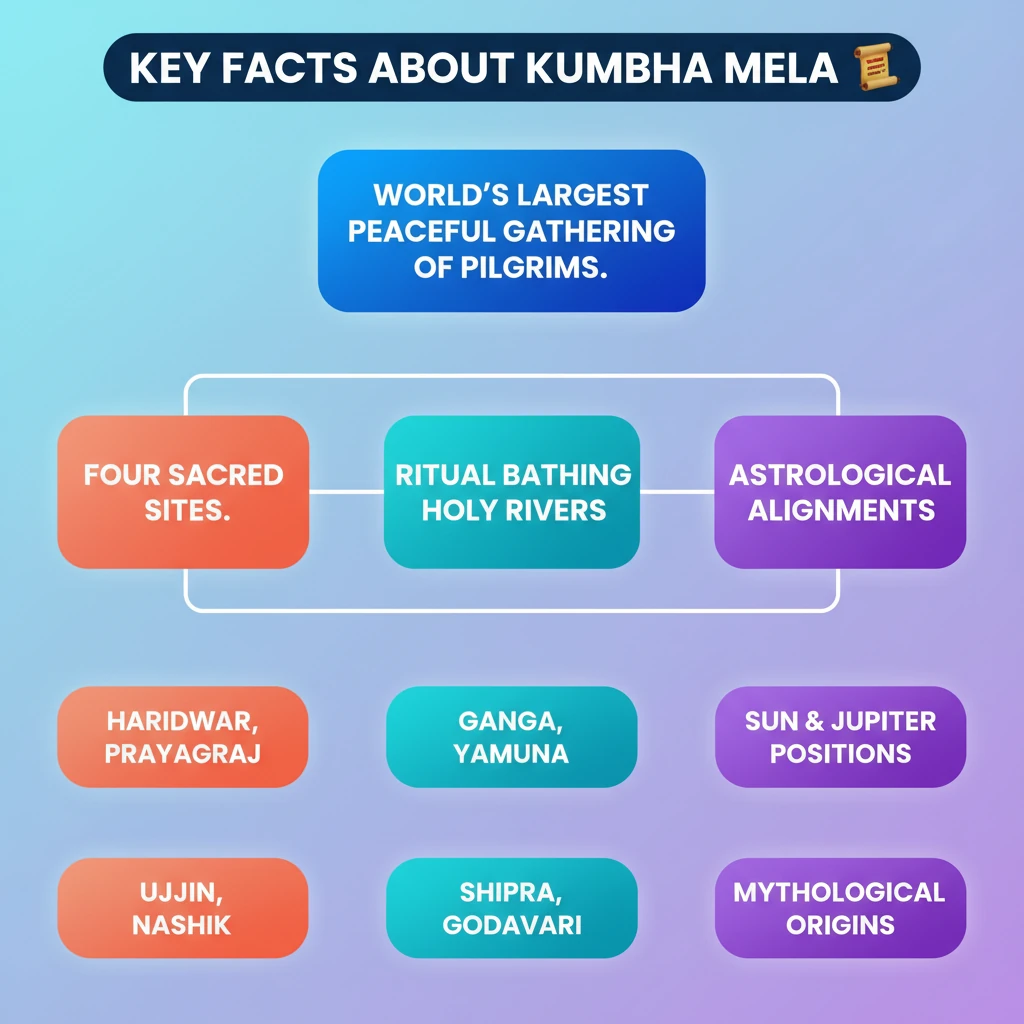
- •Kumbh Mela is the world's largest peaceful gathering of pilgrims.
- •It rotates among four sacred sites: Haridwar, Ujjain, Nashik, and Prayagraj.
- •Each site is associated with a specific holy river for ritual bathing.
- •The Mela's timing is determined by specific astrological alignments.
- •It holds mythological origins linked to the Samudra Manthan.
- •Historically documented by Hiuen Tsang during King Harshavardhana's reign.
- •Recognized as UNESCO Intangible Cultural Heritage in 2017.
🧠 Memory Techniques

98% Verified Content
📚 Reference Sources
•UNESCO Intangible Cultural Heritage website
•Ministry of Culture, Government of India publications
•Academic articles on Kumbh Mela and Indian pilgrimages