What are Majuli Masks and Majuli Manuscript Painting? - Art And Culture | UPSC Learning
Topics
0 topics • 0 completed
🔍
No topics match your search
What are Majuli Masks and Majuli Manuscript Painting?
Easy⏱️ 8 min read
art and culture
📖 Introduction
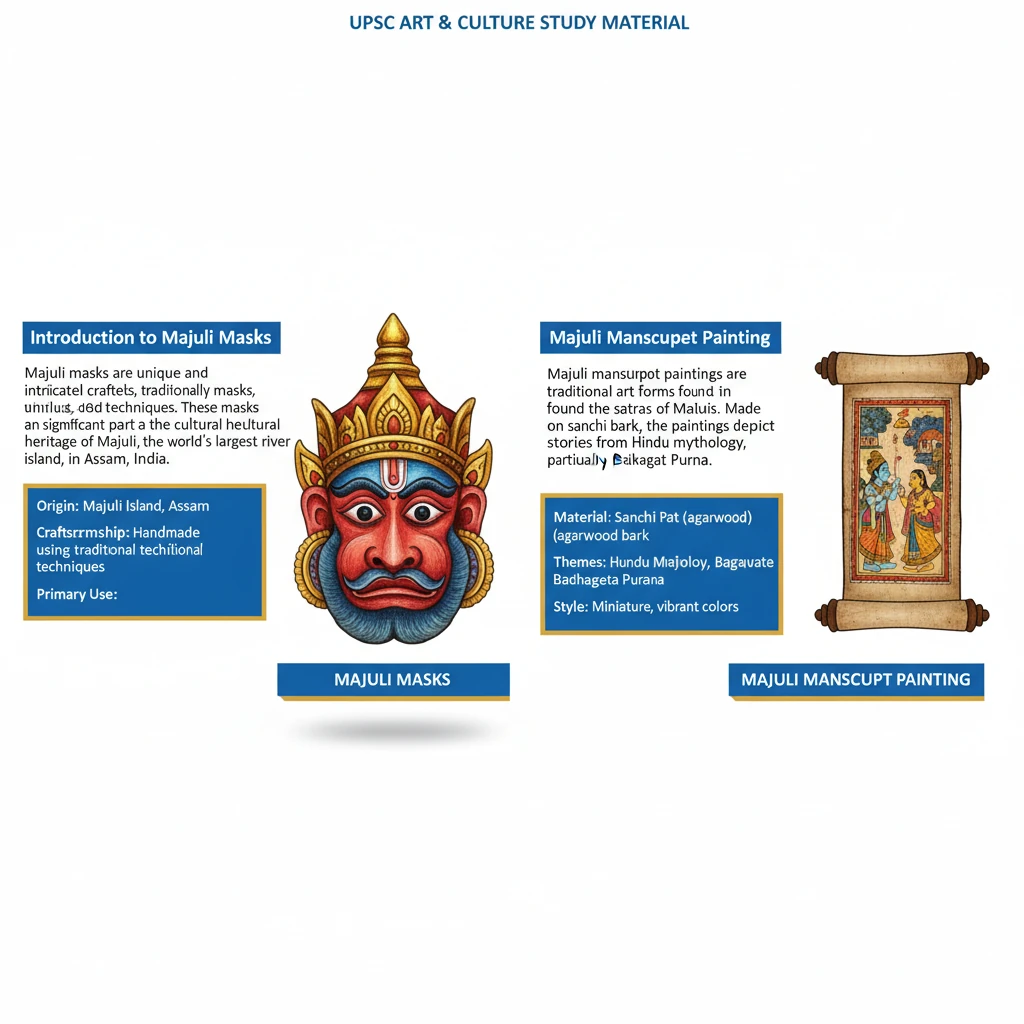
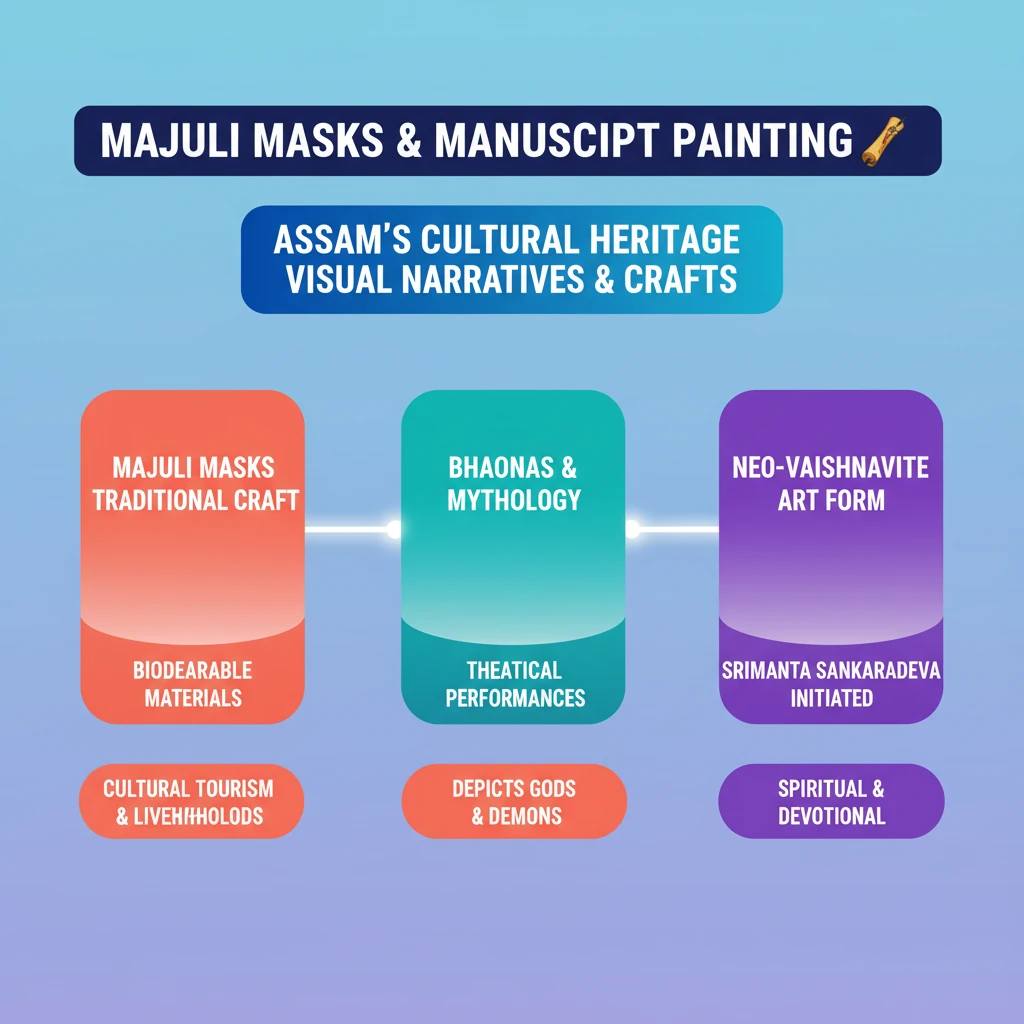
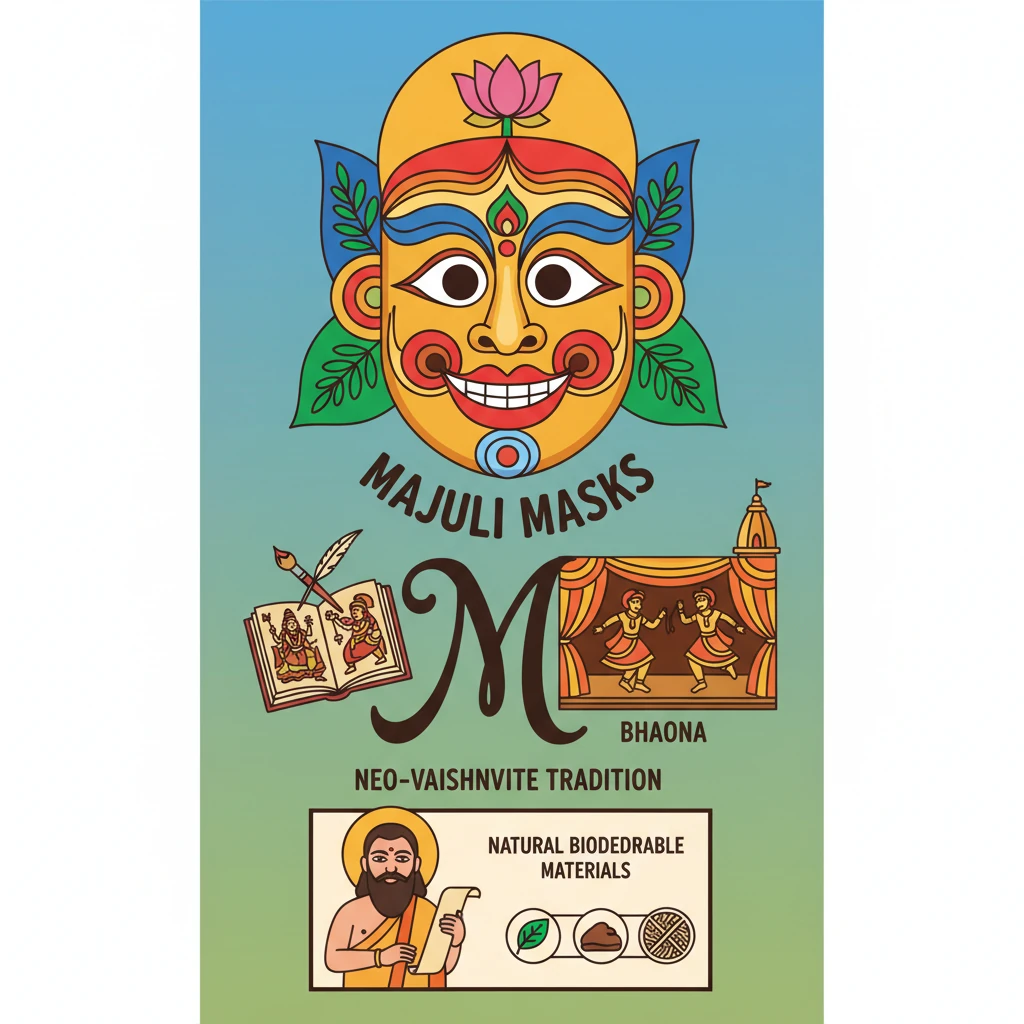
<h4>Introduction to Majuli Masks</h4><p><strong>Majuli masks</strong> are a unique form of traditional art, intricately crafted by hand. These masks are central to the cultural and religious life of <strong>Majuli</strong>, the world's largest river island, located in <strong>Assam</strong>.</p><div class="info-box"><strong>Craftsmanship:</strong> Handmade using traditional, time-honored techniques.<br><strong>Materials:</strong> Typically involve bamboo, clay, cloth, and natural colors.</div><h4>Traditional Use in Bhaonas</h4><p>The primary purpose of these masks is to depict various characters in <strong>bhaonas</strong>. A <strong>bhaona</strong> is a traditional form of entertainment that carries profound religious messages.</p><div class="key-point-box"><strong>Bhaonas:</strong> Theatrical performances with devotional messages, integral to the <strong>neo-Vaishnavite tradition</strong>.</div><p>These performances are not merely theatrical but serve as a medium for spiritual instruction and community engagement, propagating the teachings of <strong>Vaishnavism</strong>.</p><h4>Connection to Neo-Vaishnavite Tradition</h4><p>The use of <strong>Majuli masks</strong> is deeply rooted in the <strong>neo-Vaishnavite tradition</strong>. This religious and cultural movement was introduced in Assam by the 15th-16th century saint-reformer <strong>Srimanta Sankaradeva</strong>.</p><p>The masks help bring to life characters from epics and Puranas, such as <strong>Rama</strong>, <strong>Krishna</strong>, <strong>Ravana</strong>, and various demons or animals, making the devotional narratives accessible and engaging for the audience.</p>
💡 Key Takeaways
- •Majuli masks are handmade, intricately crafted masks from Assam.
- •They are traditionally used in Bhaonas, which are theatrical performances with devotional messages.
- •The art form is integral to the neo-Vaishnavite tradition introduced by Srimanta Sankaradeva.
- •Masks depict characters from Hindu mythology, making spiritual narratives accessible.
- •Majuli island is a vital center for the preservation and practice of this unique cultural heritage.
- •The tradition faces challenges but is being revived through tourism and community efforts.
🧠 Memory Techniques
95% Verified Content
📚 Reference Sources
•General knowledge on Assamese Neo-Vaishnavite tradition and Majuli cultural heritage