Geographical Indication (GI) Tag - Art And Culture | UPSC Learning
Topics
0 topics • 0 completed
🔍
No topics match your search
Geographical Indication (GI) Tag
Medium⏱️ 8 min read
art and culture
📖 Introduction
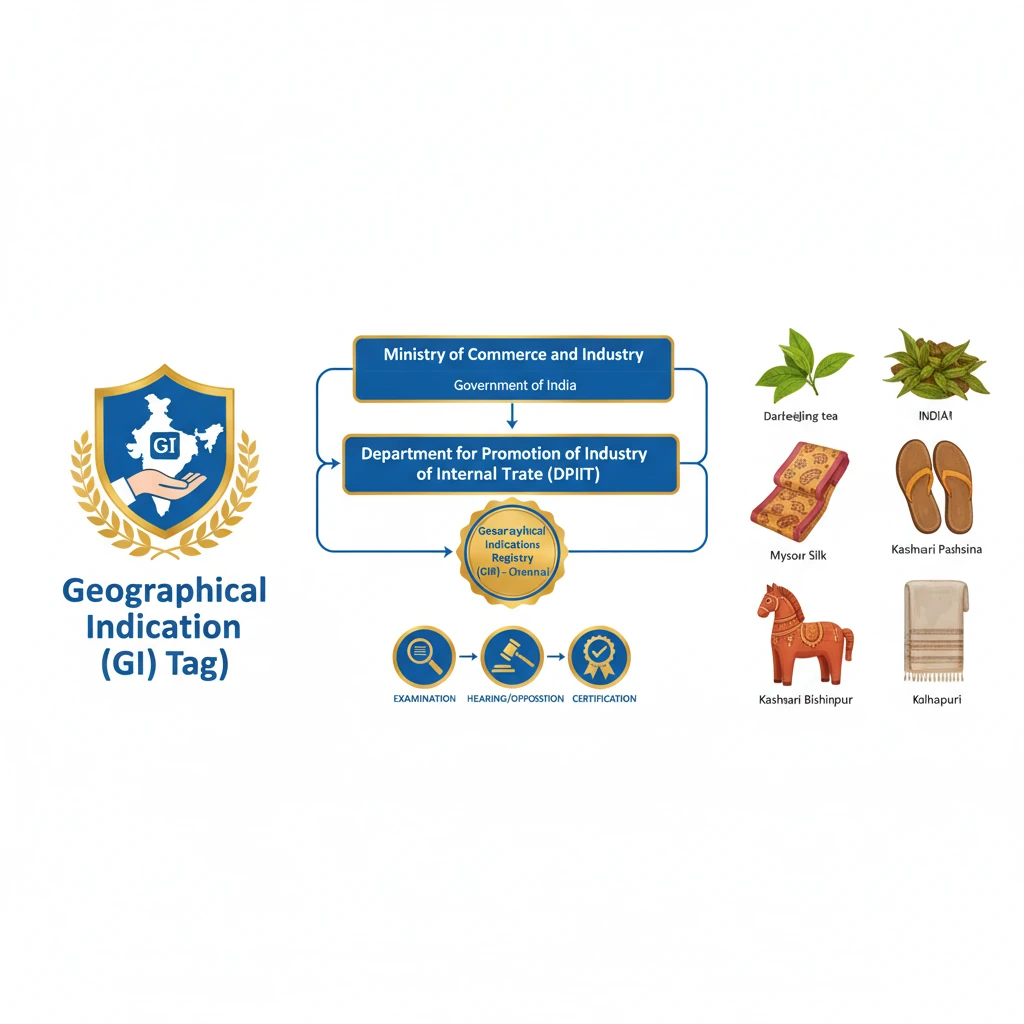
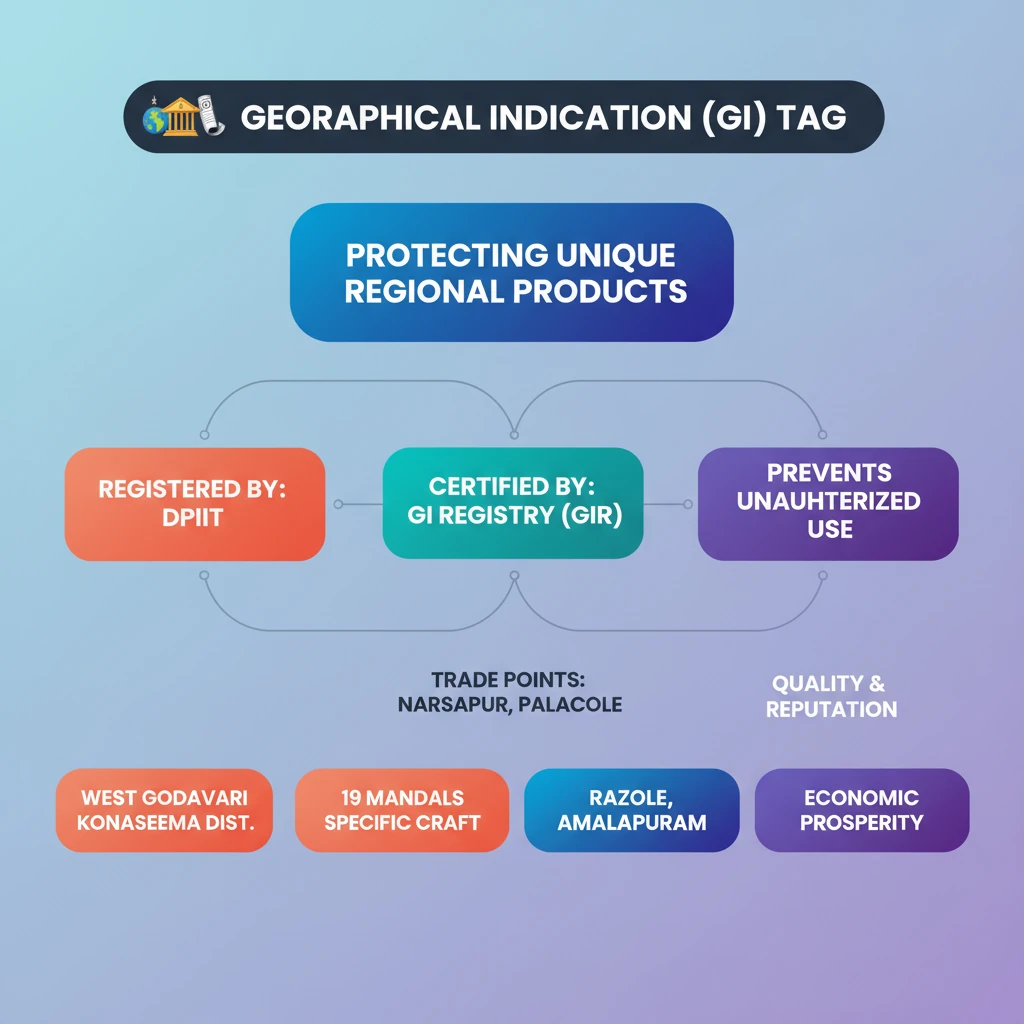
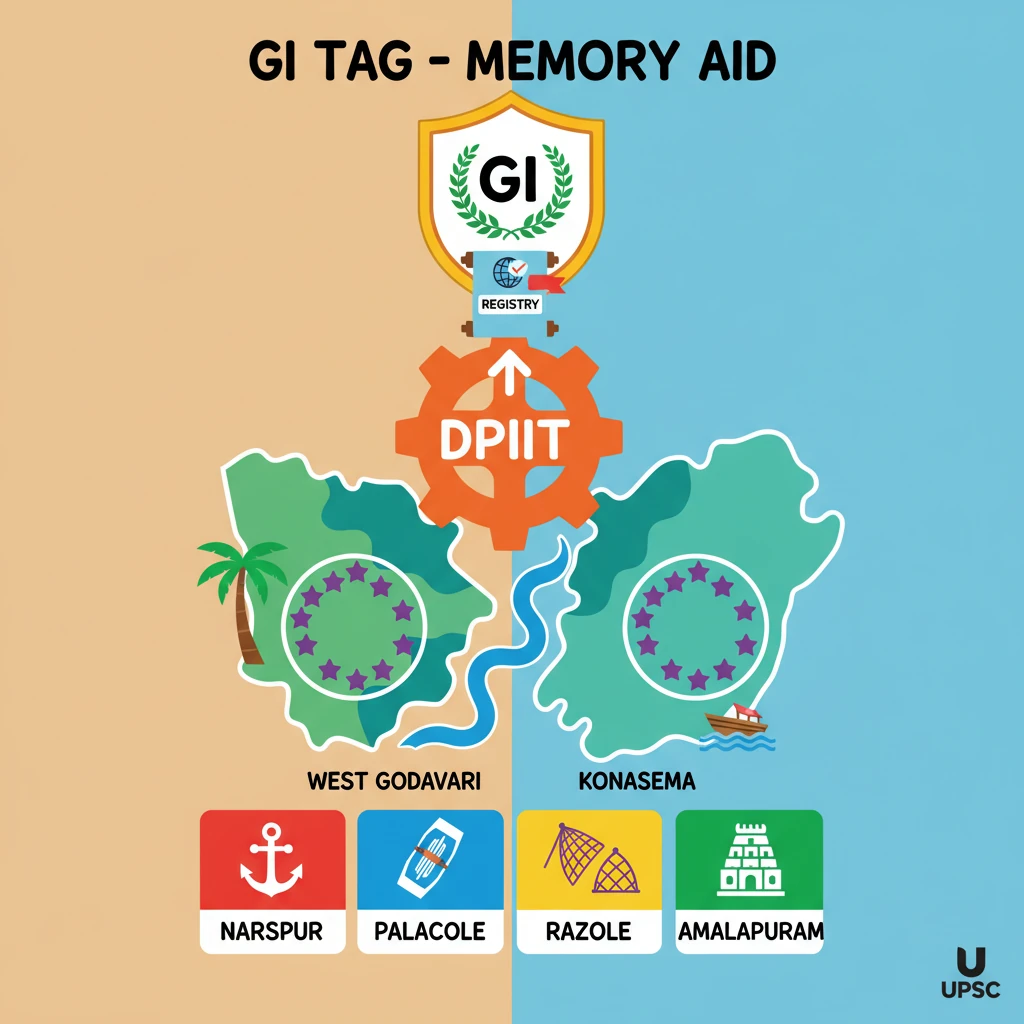
<h4>GI Registration Authority and Process</h4><p>The registration of <strong>Geographical Indication (GI)</strong> tags in India is managed by the <strong>Department of Promotion of Industry and Internal Trade (DPIIT)</strong>. This department functions under the administrative control of the <strong>Ministry of Commerce and Industry</strong>.</p><p>The actual certification process takes place at the <strong>Geographical Indications Registry (GIR)</strong>. This registry is responsible for examining applications and granting GI status, thereby certifying a product's unique geographical origin.</p><div class="key-point-box"><strong>Key Function:</strong> The <strong>GIR</strong> provides legal protection to products, ensuring that their name and reputation are exclusively linked to their place of origin and preventing unauthorized use.</div><h4>Geographical Scope: West Godavari and Konaseema Districts</h4><p>For the specific craft referred to in the source, the <strong>GI tag</strong> certifies its production as geographically limited to <strong>19 Mandals</strong>. These mandals are spread across two distinct districts within the broader <strong>Godavari region</strong>.</p><ul><li><strong>West Godavari District:</strong> Within this district, significant trade points and production hubs for the lace products include <strong>Narsapur</strong> and <strong>Palacole</strong>.</li><li><strong>Dr. B.R. Ambedkar Konaseema District:</strong> This region is also recognized for the craft, with prominent centers such as <strong>Razole</strong> and <strong>Amalapuram</strong>.</li></ul><div class="info-box"><strong>Certified Geographical Area:</strong> The craft's production is restricted to <strong>19 Mandals</strong> located in <strong>West Godavari</strong> and <strong>Dr. B.R. Ambedkar Konaseema</strong> districts of the <strong>Godavari region</strong>.</div><div class="exam-tip-box"><strong>UPSC Insight:</strong> Understanding the registering authority (<strong>DPIIT</strong>, <strong>GIR</strong>) and the concept of geographical limitation is vital for <strong>Prelims</strong>. For <strong>Mains</strong>, focus on the implications of such geographical specificity for local economies and cultural preservation.</div>
💡 Key Takeaways
- •The Department of Promotion of Industry and Internal Trade (DPIIT) registers GI tags.
- •The Geographical Indications Registry (GIR) certifies products based on their geographical origin.
- •The specific craft discussed is limited to 19 Mandals in West Godavari and Dr. B.R. Ambedkar Konaseema districts.
- •Key trade points for the craft include Narsapur, Palacole, Razole, and Amalapuram.
- •GI tags protect unique regional products from unauthorized use and help maintain their quality and reputation.
- •India's GI Act of 1999 was enacted in compliance with the WTO's TRIPS Agreement.
- •GI tags are crucial for rural development, cultural preservation, and boosting local economies.
🧠 Memory Techniques
98% Verified Content
📚 Reference Sources
•Geographical Indications of Goods (Registration and Protection) Act, 1999
•World Trade Organization (WTO) TRIPS Agreement
•Official website of the Geographical Indications Registry, India