What Does it Mean When the ASI Declares a Monument “Untraceable”? - Art And Culture | UPSC Learning
Topics
0 topics • 0 completed
🔍
No topics match your search
What Does it Mean When the ASI Declares a Monument “Untraceable”?
Medium⏱️ 8 min read
art and culture
📖 Introduction
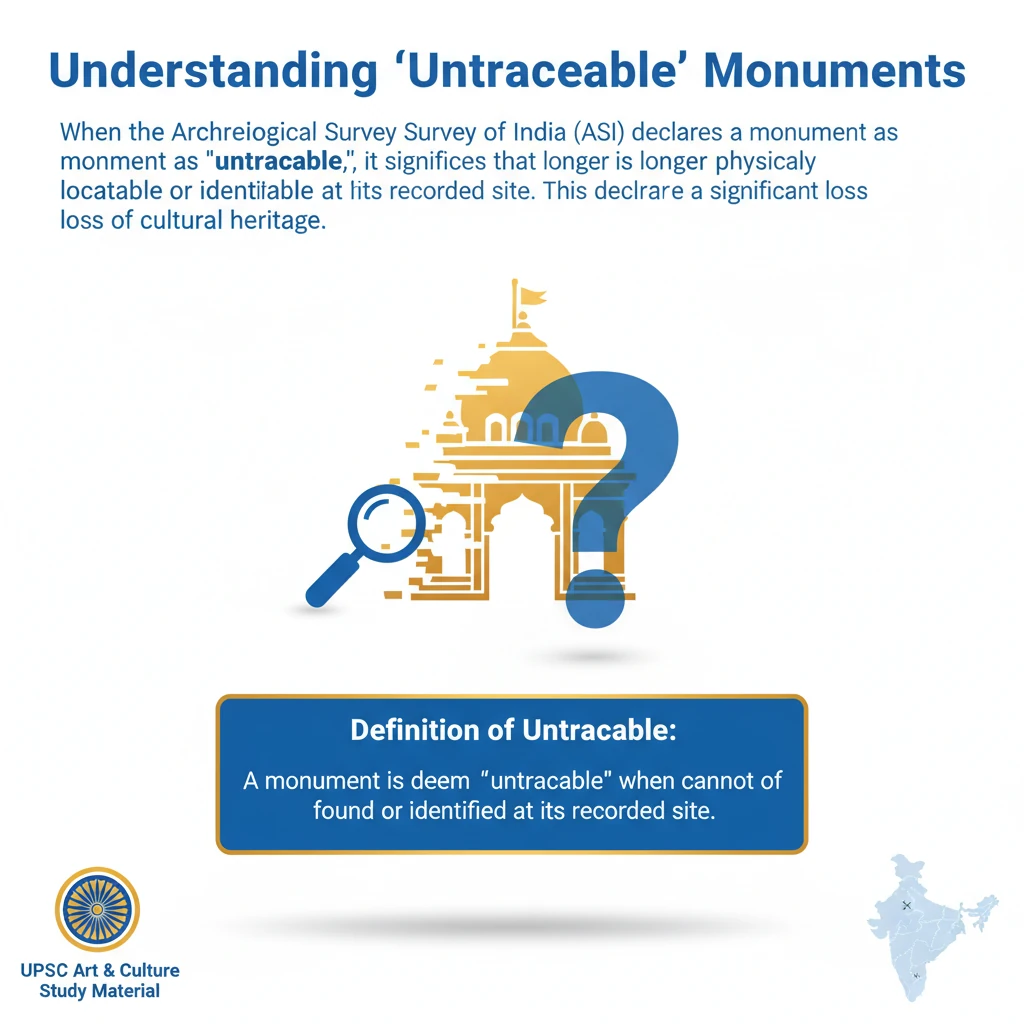
<h4>Understanding 'Untraceable' Monuments</h4><p>When the <strong>Archaeological Survey of India (ASI)</strong> declares a monument as "<strong>untraceable</strong>," it signifies that the monument is no longer physically locatable or identifiable at its recorded site. This declaration underscores a significant loss of cultural heritage.</p><div class="info-box"><strong>Definition of Untraceable:</strong> A monument is deemed "<strong>untraceable</strong>" when it cannot be found or identified at its documented location, implying its physical disappearance or severe deterioration.</div><h4>Factors Leading to Monument Loss</h4><p>Several critical factors contribute to monuments becoming <strong>untraceable</strong> and subsequently lost:</p><ul><li><strong>Urbanisation:</strong> Rapid expansion of cities often leads to the demolition or burying of smaller heritage structures during development.</li><li><strong>Encroachments:</strong> Illegal occupation of land around monuments can obscure or destroy them over time, making them difficult to locate.</li><li><strong>Construction Activities:</strong> Large-scale infrastructure projects like <strong>dams</strong>, <strong>reservoirs</strong>, and roads can submerge or displace heritage sites, rendering them inaccessible.</li><li><strong>Neglect:</strong> Prolonged lack of maintenance and conservation efforts causes monuments to deteriorate, collapse, or become completely covered by natural growth.</li><li><strong>Loss of Public Memory:</strong> Smaller or lesser-known monuments often lack surviving public memory of their existence, making their rediscovery challenging.</li></ul><h4>Implications of Declaring Monuments Untraceable</h4><p>The declaration of a monument as <strong>untraceable</strong> carries significant implications for India's cultural heritage and governance:</p><div class="key-point-box">It represents an irreplaceable loss of valuable <strong>cultural heritage</strong> and historical records. These monuments often embody unique architectural styles, artistic traditions, and historical narratives that are permanently lost.</div><p>Despite the mandate of the <strong>Ancient Monuments and Archaeological Sites and Remains (AMASR) Act</strong>, the effectiveness of conservation efforts has been inconsistent. The Act requires the <strong>ASI</strong> to regularly inspect and conserve protected monuments.</p><div class="exam-tip-box">This issue highlights critical gaps in heritage management, resource allocation, and the need for more robust <strong>conservation strategies</strong>. It is a recurring theme in <strong>UPSC GS Paper I (Art and Culture)</strong> and can also be linked to <strong>GS Paper III (Environment and Disaster Management, Urbanisation Challenges)</strong>.</div>
💡 Key Takeaways
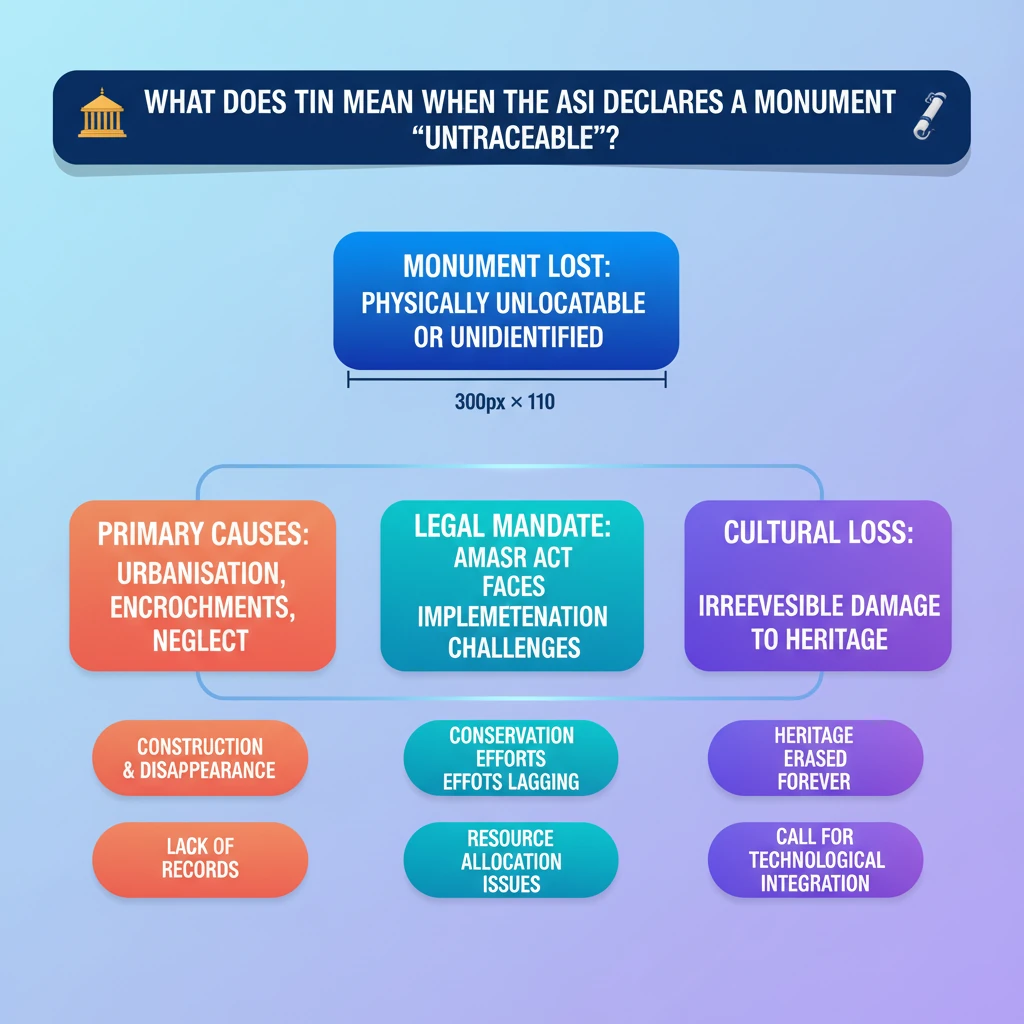
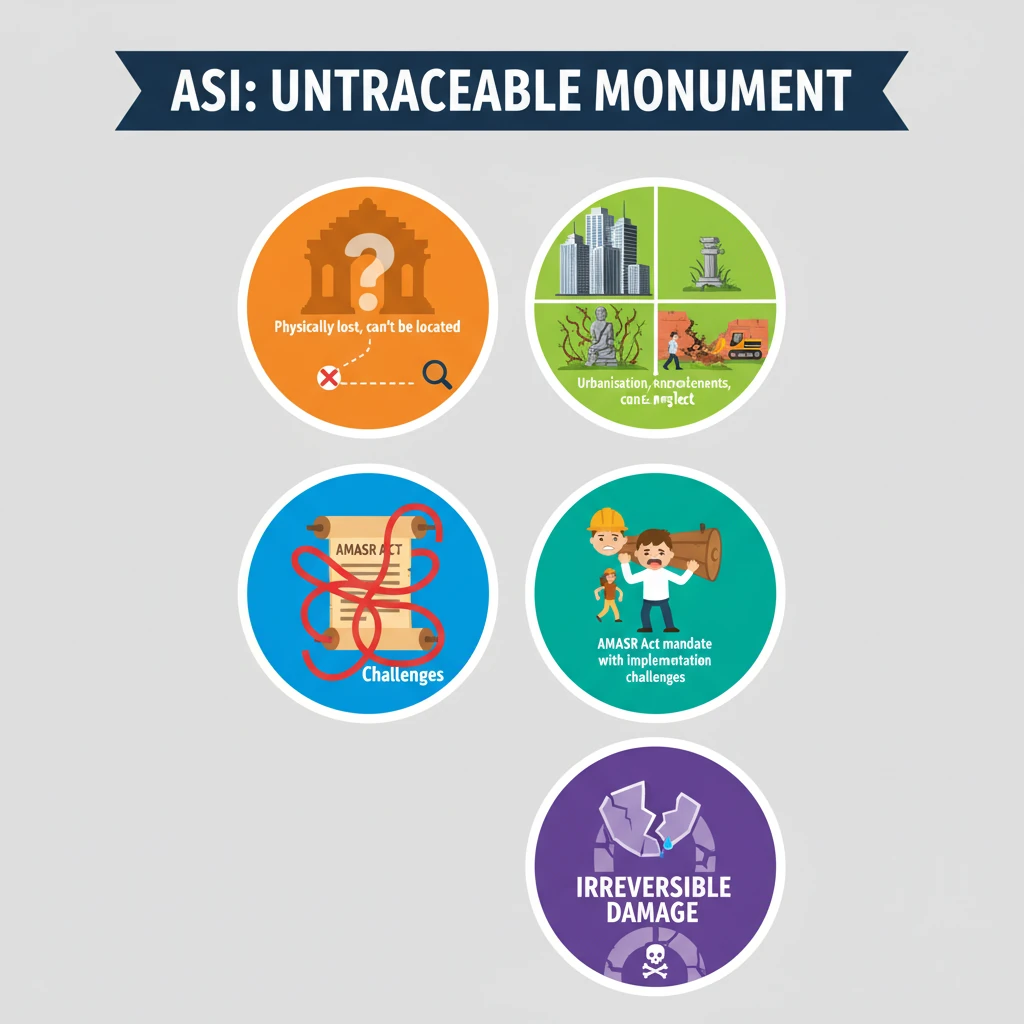
- •An untraceable monument is one that can no longer be physically located or identified.
- •Urbanisation, encroachments, construction, and neglect are primary reasons for monuments becoming untraceable.
- •The AMASR Act mandates ASI to conserve protected monuments, but its implementation faces challenges.
- •The loss of untraceable monuments signifies an irreversible damage to India's cultural heritage.
- •Better conservation efforts, adequate resource allocation, and technological integration are crucial for prevention.
- •Public awareness and active community involvement are key to identifying and protecting vulnerable heritage sites.
🧠 Memory Techniques
95% Verified Content