India's World Heritage Sites: Recent Additions (Shantiniketan & Hoysalas) - Art And Culture | UPSC Learning
Topics
0 topics • 0 completed
🔍
No topics match your search
India's World Heritage Sites: Recent Additions (Shantiniketan & Hoysalas)
Medium⏱️ 7 min read
art and culture
📖 Introduction
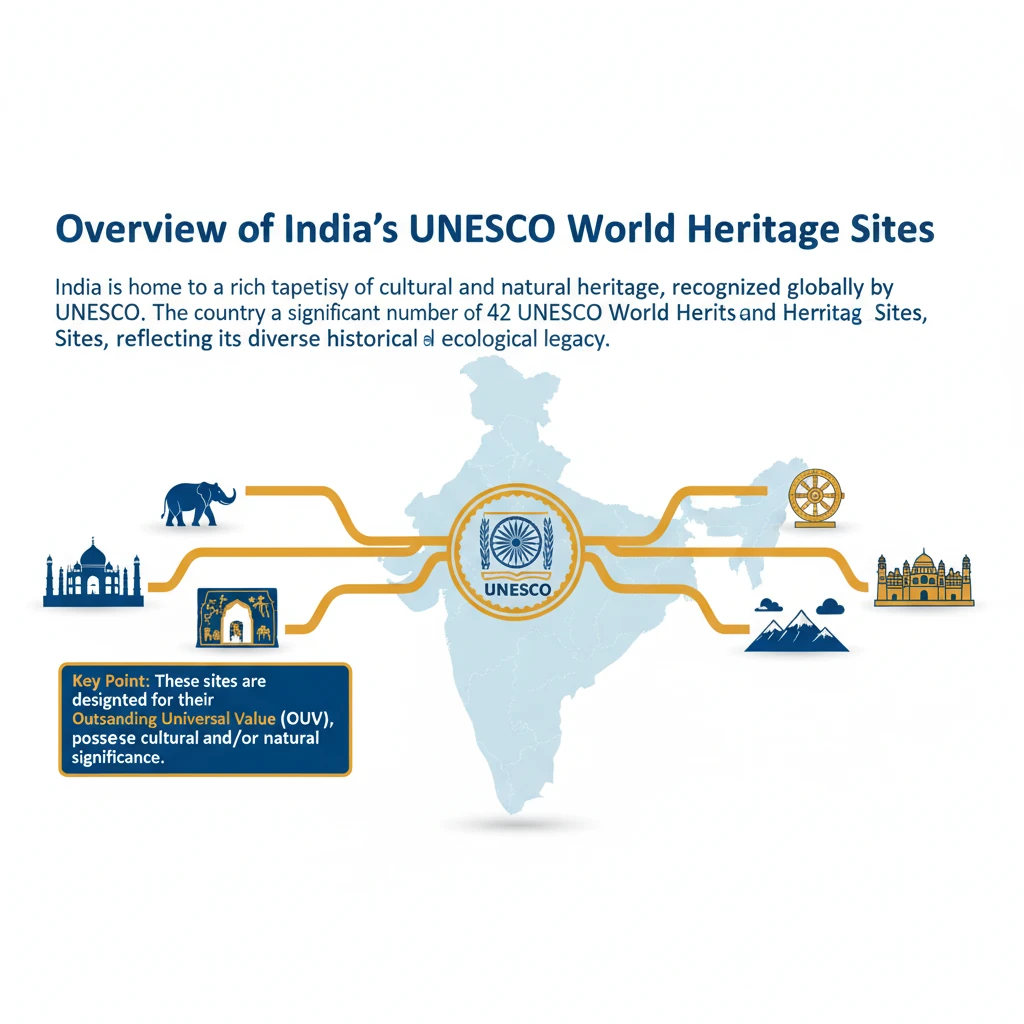
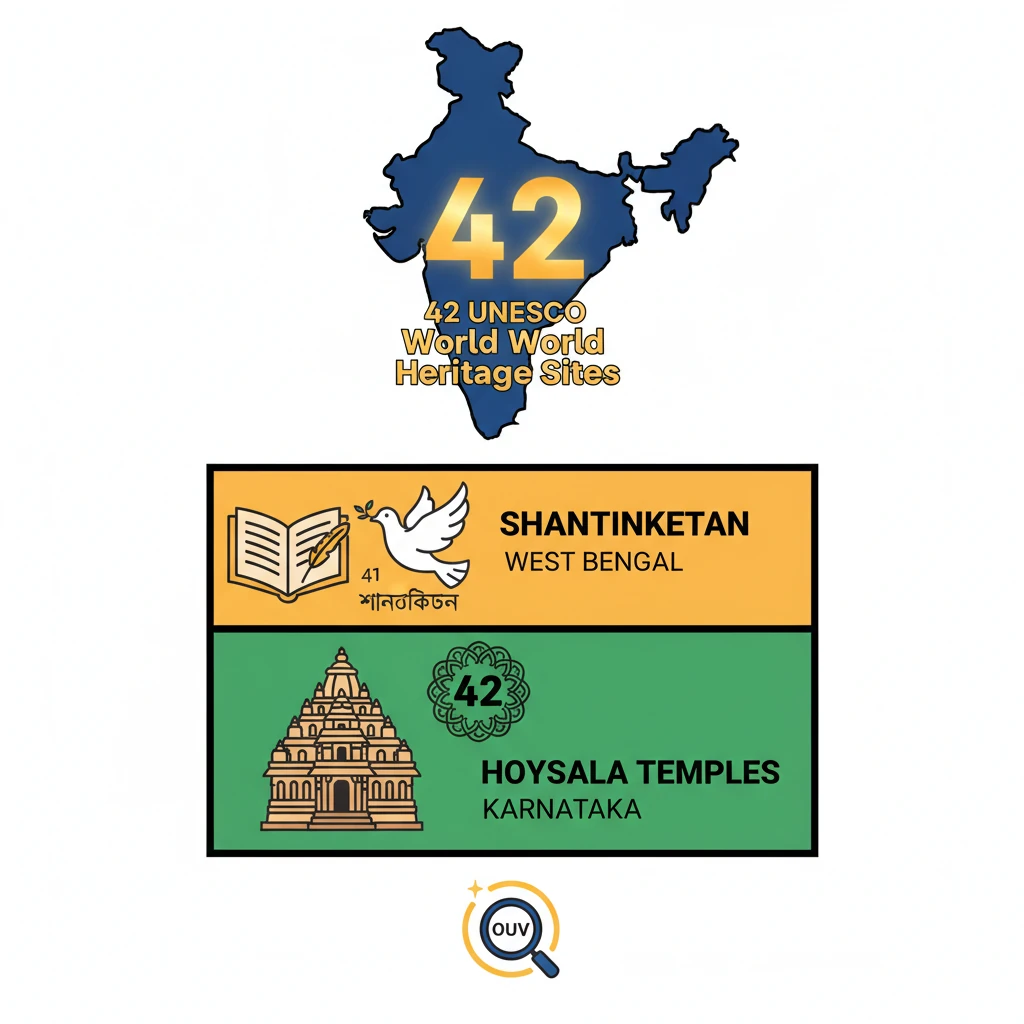
<h4>Overview of India's UNESCO World Heritage Sites</h4><p>India is home to a rich tapestry of cultural and natural heritage, recognized globally by <strong>UNESCO</strong>. The country currently boasts a significant number of <strong>42 UNESCO World Heritage Sites</strong>, reflecting its diverse historical and ecological legacy.</p><div class="key-point-box">These sites are designated for their <strong>Outstanding Universal Value (OUV)</strong>, meaning they possess cultural and/or natural significance that is so exceptional it transcends national boundaries and is of common importance for present and future generations of humanity.</div><h4>Recent Additions: The 41st Site - Shantiniketan</h4><p>The <strong>41st UNESCO World Heritage Site</strong> to be inscribed from India is <strong>Shantiniketan</strong>, located in <strong>West Bengal</strong>. This unique institution was established by the revered Nobel laureate <strong>Rabindranath Tagore</strong>.</p><div class="info-box"><strong>Site Number:</strong> 41st<br><strong>Location:</strong> Birbhum district, West Bengal<br><strong>Founder:</strong> Rabindranath Tagore<br><strong>Significance:</strong> A pioneering residential school and centre for art, culture, and humanistic education, embodying Tagore's vision of universal humanism.</div><p><strong>Shantiniketan</strong> represents a living heritage, evolving from a traditional ashram into a university (Visva-Bharati) that promoted a unique blend of Indian traditions and modern global perspectives.</p><div class="exam-tip-box"><strong>UPSC Insight:</strong> Recent additions to the World Heritage List are crucial for both <strong>Prelims (facts)</strong> and <strong>Mains (cultural significance, educational philosophy)</strong>. Be prepared to discuss Tagore's philosophy and Shantiniketan's contribution to Indian education and art.</div><h4>Recent Additions: The 42nd Site - Sacred Ensembles of the Hoysalas</h4><p>The <strong>42nd UNESCO World Heritage Site</strong> is the <strong>Sacred Ensembles of the Hoysalas</strong>, situated in <strong>Karnataka</strong>. This designation recognizes a group of exquisite temples from the <strong>Hoysala era</strong>.</p><div class="info-box"><strong>Site Number:</strong> 42nd<br><strong>Location:</strong> Belur, Halebid, Somanathpur, Karnataka<br><strong>Period:</strong> Hoysala Empire (10th-14th centuries)<br><strong>Significance:</strong> Renowned for their intricate carvings, stellate plans, and unique architectural style, showcasing the pinnacle of Hoysala art and craftsmanship.</div><p>These ensembles, including the famous <strong>Chennakeshava Temple at Belur</strong>, <strong>Hoysaleswara Temple at Halebid</strong>, and <strong>Keshava Temple at Somanathpur</strong>, are celebrated for their sculptural richness and detailed narratives from Hindu mythology.</p><div class="key-point-box">The <strong>Hoysala architecture</strong> is characterized by its soft soapstone medium, intricate friezes, and highly ornate sculptures, often depicting episodes from epics like the Ramayana and Mahabharata.</div>
💡 Key Takeaways
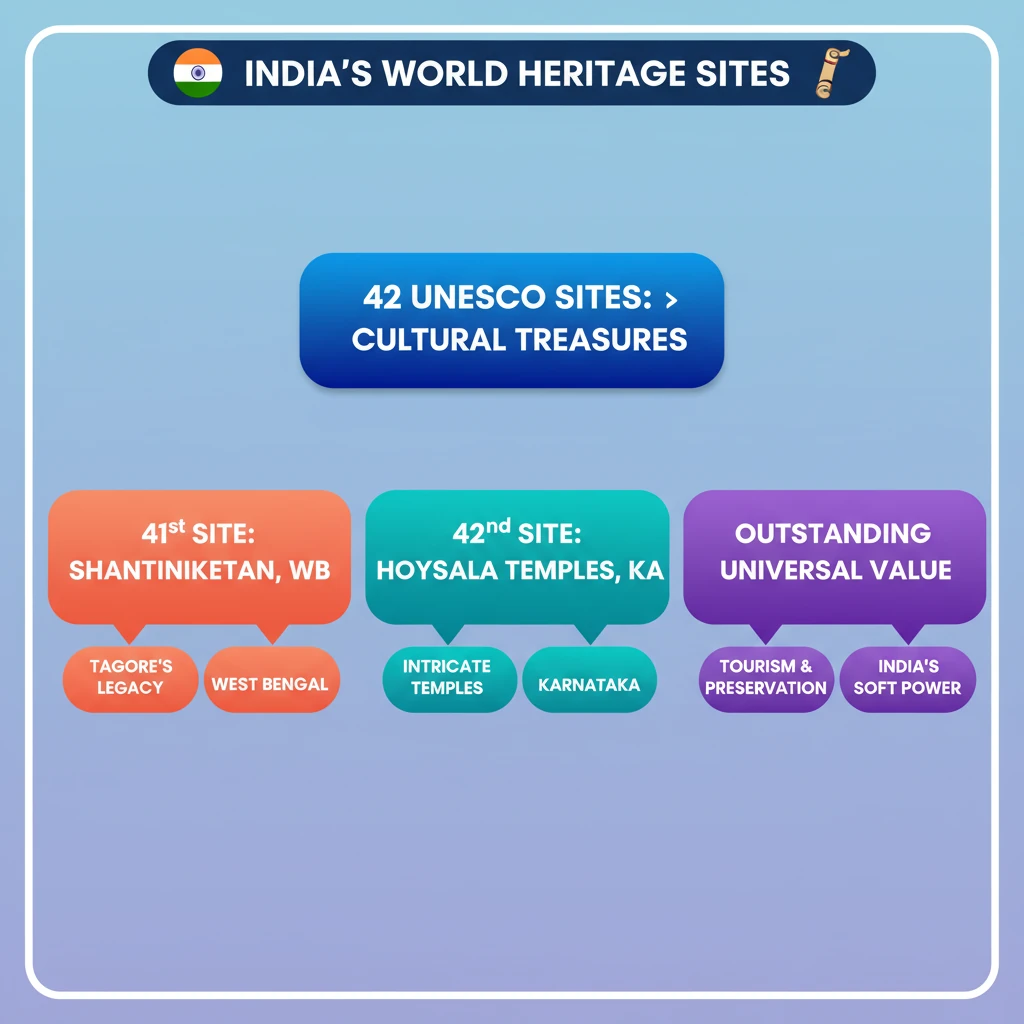
- •India currently has 42 UNESCO World Heritage Sites.
- •The 41st site is Shantiniketan in West Bengal, founded by Rabindranath Tagore.
- •The 42nd site is the Sacred Ensembles of the Hoysalas in Karnataka, known for intricate temples.
- •World Heritage Sites are recognized for their Outstanding Universal Value (OUV).
- •These sites contribute significantly to India's tourism, cultural preservation, and soft power.
- •Recent additions highlight both architectural grandeur and unique cultural-educational legacies.
- •Understanding these sites is crucial for UPSC Art and Culture, History, and current affairs.
🧠 Memory Techniques
98% Verified Content
📚 Reference Sources
•UNESCO World Heritage Centre Official Website (whc.unesco.org)
•Archaeological Survey of India (ASI) publications
•NCERT Textbooks on Indian History and Art & Culture