GI Tag to Majuli Masks, Manuscript and Narasapur Crochet Lace Craft - Art And Culture | UPSC Learning
Topics
0 topics • 0 completed
🔍
No topics match your search
GI Tag to Majuli Masks, Manuscript and Narasapur Crochet Lace Craft
Medium⏱️ 8 min read
art and culture
📖 Introduction
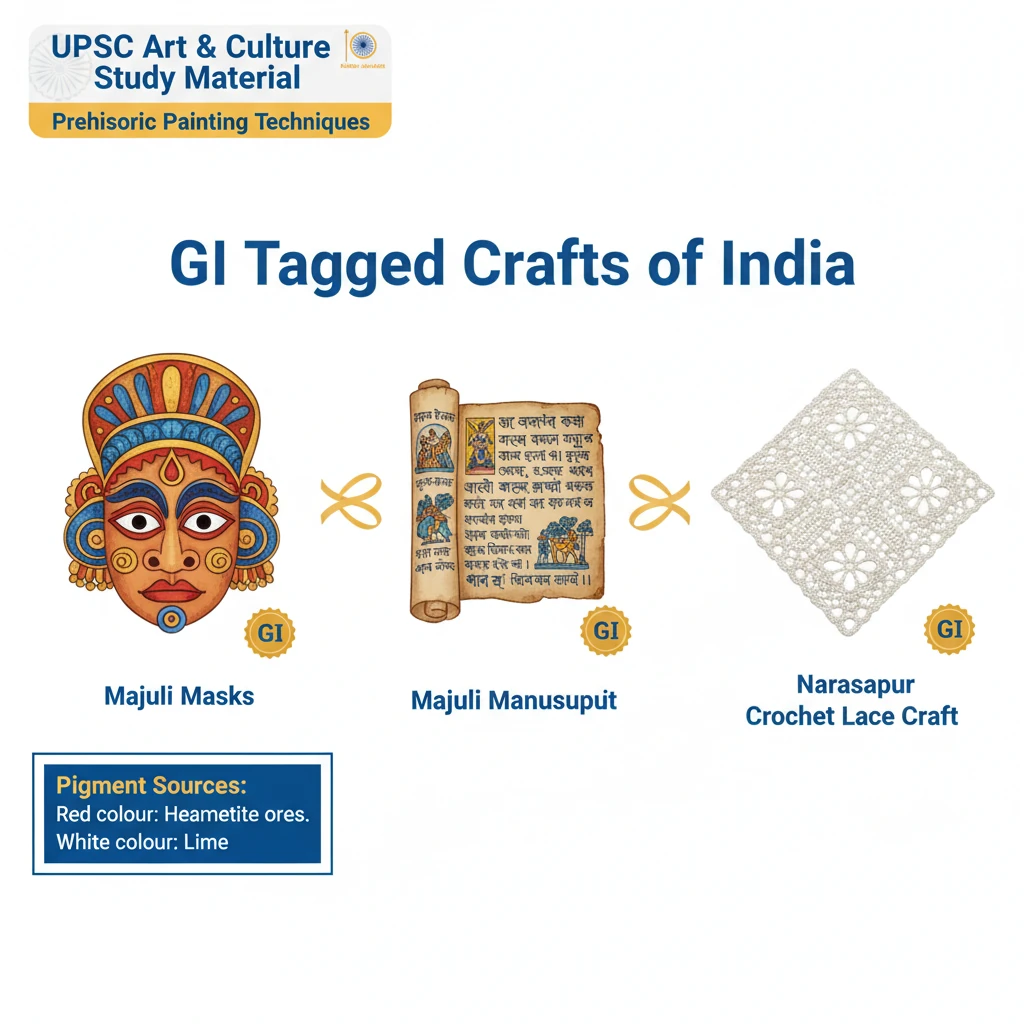
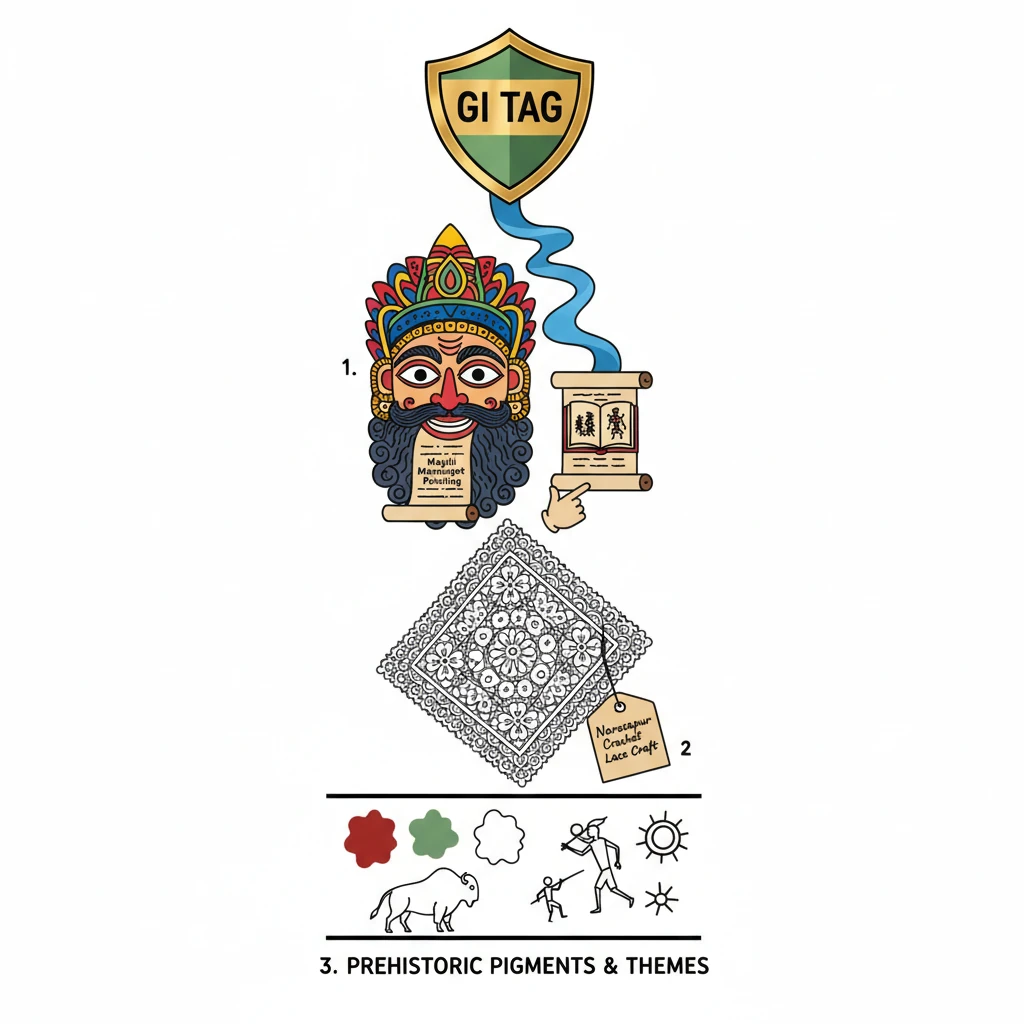
<h4>Prehistoric Painting Techniques</h4><p>Prehistoric paintings utilized a variety of natural pigments. These included colours like <strong>red ochre</strong>, <strong>purple</strong>, <strong>brown</strong>, <strong>white</strong>, <strong>yellow</strong>, and <strong>green</strong>.</p><div class="info-box"><strong>Pigment Sources:</strong><ul><li><strong>Red colour:</strong> Derived from <strong>haematite ores</strong>.</li><li><strong>White colour:</strong> Likely obtained from <strong>limestone</strong>.</li><li><strong>Green colour:</strong> Prepared from a specific green rock called <strong>Chalcedony</strong>.</li></ul></div><p>The brushes used by prehistoric artists were ingeniously crafted from <strong>plant fibre</strong>, showcasing early human ingenuity in tool-making.</p><h4>Themes of Prehistoric Paintings</h4><p>The themes of these ancient artworks predominantly depicted the <strong>everyday life</strong> of prehistoric humans. Figures were often rendered in a distinctive <strong>stick-like human form</strong>.</p><p>A wide array of animals featured prominently, including <strong>elephants</strong>, <strong>bisons</strong>, <strong>deer</strong>, <strong>peacocks</strong>, and <strong>snakes</strong>. These depictions often reflected the fauna prevalent in their environment.</p><p>Scenes of <strong>hunting</strong> and <strong>war</strong> were also common, illustrating armed men engaged in conflict or the pursuit of game. Additionally, paintings incorporated <strong>simple geometric designs</strong> and various <strong>symbols</strong>, hinting at early forms of abstract thought or communication.</p><h4>Geographical Indication (GI) Tag Recognition</h4><p>The <strong>Geographical Indication (GI) Tag</strong> is a crucial tool for preserving the unique identity of traditional Indian crafts. Recently, several significant crafts have received this recognition.</p><div class="key-point-box"><strong>Newly GI-Tagged Crafts:</strong><ul><li><strong>Majuli Masks</strong> (Assam)</li><li><strong>Majuli Manuscript Painting</strong> (Assam)</li><li><strong>Narasapur Crochet Lace Craft</strong> (Andhra Pradesh)</li></ul></div><h4>Significance of GI Tags for Traditional Crafts</h4><p>The traditional <strong>crochet lace craft of Narasapur</strong> in <strong>Andhra Pradesh</strong> has been granted a GI tag. This recognition is vital for safeguarding its unique identity, especially amidst intense competition from <strong>machine-made lace from China</strong>.</p><p>Similarly, the traditional arts of <strong>Majuli masks</strong> and <strong>manuscript painting</strong> from <strong>Assam</strong> have also gained GI recognition. This enhances their cultural significance and provides protection against potential decline.</p><div class="exam-tip-box">These GI tags serve a dual purpose: they aim to <strong>rejuvenate</strong> and <strong>promote</strong> traditional crafts. This ensures their continued legacy and contributes significantly to <strong>heritage preservation</strong>, making them important for UPSC <strong>Art & Culture</strong> and <strong>Economy</strong> papers.</div>
💡 Key Takeaways
- •Prehistoric paintings used natural pigments like red ochre, white from limestone, and green from Chalcedony.
- •Themes included daily life, animals, hunting, war, and simple geometric designs.
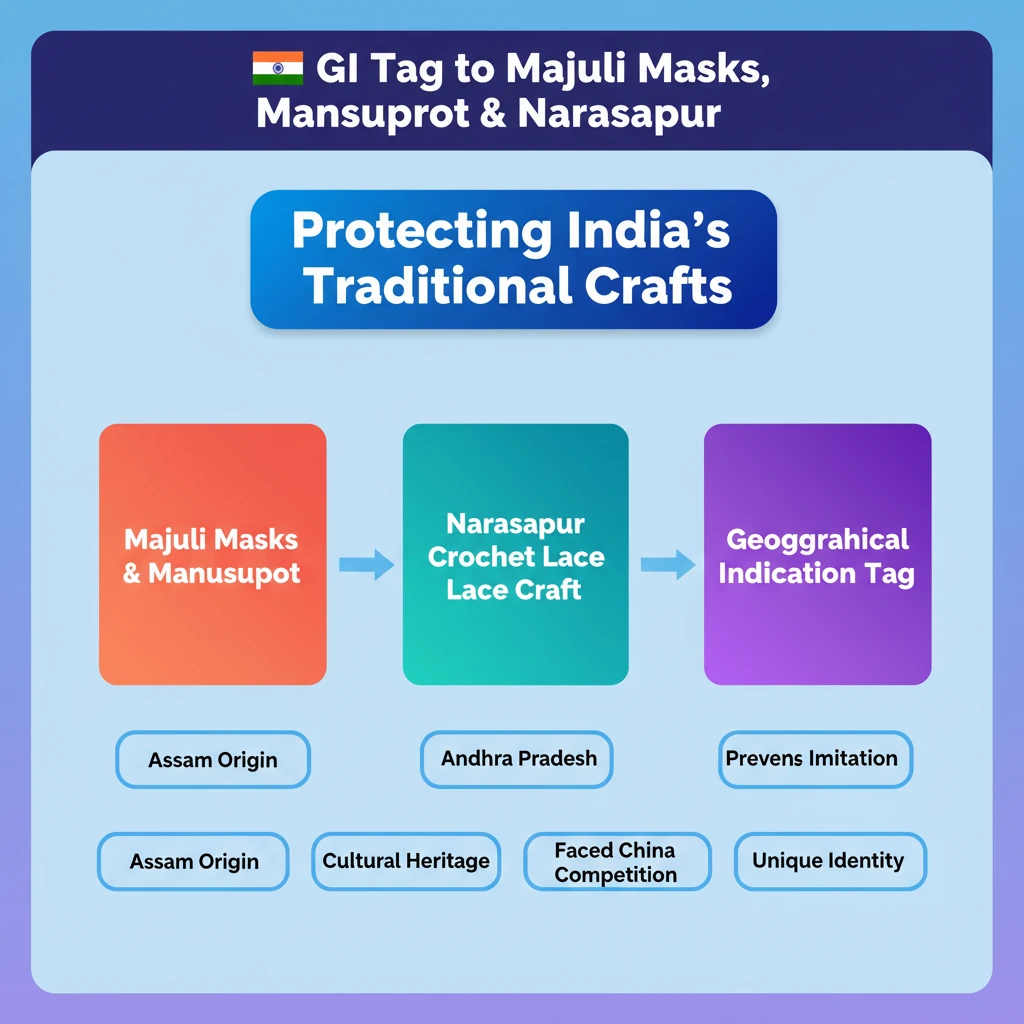
- •Majuli Masks, Majuli Manuscript Painting, and Narasapur Crochet Lace Craft recently received GI tags.
- •GI tags protect the unique identity of traditional crafts from imitation and competition.
- •Narasapur Crochet Lace faced competition from machine-made lace from China.
- •GI tags aim to rejuvenate, promote, and preserve India's rich cultural heritage.
🧠 Memory Techniques
98% Verified Content
📚 Reference Sources
•Geographical Indications Registry (India)
•Ministry of Culture, Government of India
•NCERT textbooks (for prehistoric art context)