What is the World Craft City? - Art And Culture | UPSC Learning
Topics
0 topics • 0 completed
🔍
No topics match your search
What is the World Craft City?
Medium⏱️ 8 min read
art and culture
📖 Introduction
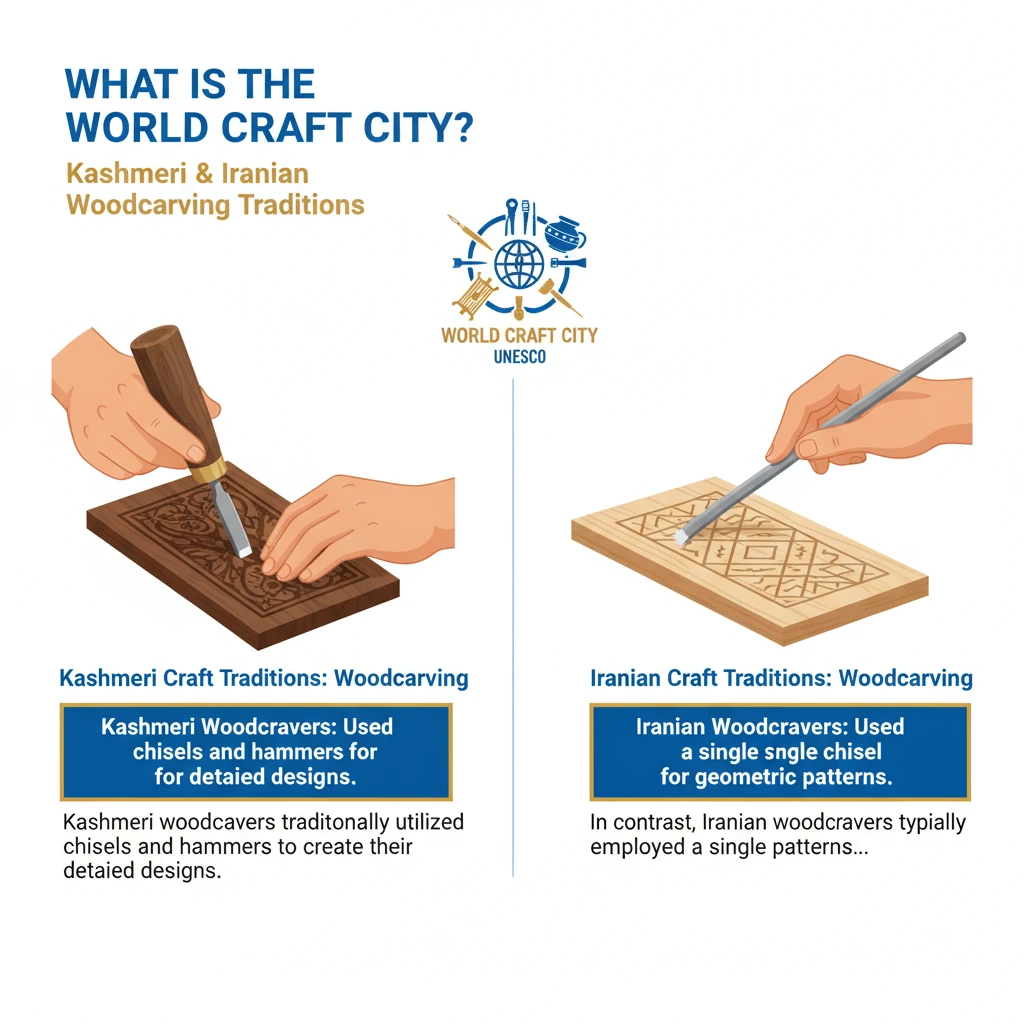
<h4>Kashmiri Craft Traditions: Woodcarving</h4><p><strong>Kashmiri woodcarvers</strong> traditionally utilized <strong>chisels</strong> and <strong>hammers</strong> to create their detailed designs. This approach allowed for intricate and varied patterns, showcasing a distinct local style.</p><div class="info-box"><strong>Kashmiri Woodcarvers:</strong> Used chisels and hammers for detailed designs.</div><p>In contrast, <strong>Iranian woodcarvers</strong> typically employed a <strong>single chisel</strong>. Their focus was often on producing elegant <strong>floral motifs</strong>, reflecting a different artistic tradition and technique.</p><div class="info-box"><strong>Iranian Woodcarvers:</strong> Used a single chisel, often for floral motifs.</div><h4>Kashmiri Craft Traditions: Carpet Weaving</h4><p>The art of <strong>carpet weaving</strong> in <strong>Kashmir</strong> was profoundly influenced by <strong>Persian techniques</strong>. This cultural exchange led to the adoption of sophisticated methods that enriched local craftsmanship.</p><p>Key <strong>Persian knotting methods</strong>, such as the <strong>Farsi baf</strong> and <strong>Sanna knots</strong>, were seamlessly incorporated into the production of <strong>Kashmiri carpets</strong>. These techniques contributed to the durability and intricate designs of the textiles.</p><div class="key-point-box"><strong>Persian Influences:</strong> Farsi baf and Sanna knots adopted in Kashmiri carpet weaving.</div><p>Furthermore, many <strong>Kashmir carpet patterns</strong> were named after prominent <strong>Iranian cities</strong> like <strong>Kashan</strong> and <strong>Tabriz</strong>. This naming convention highlights the deep cultural ties and mutual inspiration between the regions.</p><p><strong>Artisan exchanges</strong> played a crucial role, further enhancing skills and inspiring new forms of craftsmanship. This interaction fostered a rich blend of artistic traditions.</p><h4>Kashmiri Craft Traditions: Embroidery</h4><p><strong>Uzbekistan's suzani embroidery</strong> is recognized as a significant precursor to <strong>Kashmir's sozni work</strong>. This connection points to historical artistic pathways and shared textile heritage.</p><div class="info-box"><strong>Influence:</strong> Uzbek suzani embroidery influenced Kashmiri sozni work.</div><p>Similarities between <strong>suzani</strong> and <strong>sozni</strong> were observed in several aspects. These included the fundamental <strong>techniques</strong> used, the characteristic <strong>color palettes</strong> employed, and the prevalence of distinct <strong>floral motifs</strong>.</p><h4>The World Craft City Initiative: Overview</h4><p>The <strong>“World Craft City”</strong> initiative was launched in <strong>2014</strong> by the <strong>World Crafts Council AISBL (WCC-International)</strong>. It operates under the broader <strong>WCC-World Craft City Programme</strong>.</p><div class="info-box"><strong>Launch:</strong> 2014 by World Crafts Council AISBL (WCC-International).</div><p>This initiative recognizes cities for their significant contributions to <strong>cultural, economic, and social development</strong> through the promotion and preservation of crafts. It highlights the role of crafts in urban life.</p><h4>Role of World Crafts Council AISBL (WCC-International)</h4><p>The <strong>WCC AISBL</strong> was established in <strong>1964</strong> as a <strong>non-profit organization</strong>. Its foundational goal is to support and guide craftspersons globally.</p><p>The primary aims of <strong>WCC AISBL</strong> include enhancing the <strong>status of crafts</strong> in both cultural and economic life. It also strives to promote <strong>fellowship</strong> and collaboration among craftspersons worldwide.</p><div class="key-point-box"><strong>WCC AISBL Aims:</strong> Enhance craft status (cultural/economic), promote fellowship among craftspersons.</div><h4>Indian World Craft Cities</h4><p>Several Indian cities have received the prestigious recognition as <strong>World Craft Cities</strong> by the <strong>WCC</strong>. This acknowledgment underscores India's rich craft heritage.</p><ul><li><strong>Srinagar</strong> (Jammu and Kashmir)</li><li><strong>Jaipur</strong> (Rajasthan)</li><li><strong>Mamallapuram</strong> (Tamil Nadu)</li><li><strong>Mysore</strong> (Karnataka)</li></ul><div class="info-box"><strong>Indian World Craft Cities:</strong> Srinagar, Jaipur, Mamallapuram, Mysore.</div><h4>Srinagar's Craft Recognition</h4><p>The <strong>WCC</strong> specifically announced the <strong>‘Seal of Authenticity of the Craft’</strong> for <strong>Kashmir’s handicrafts</strong>. This seal serves as a crucial certification.</p><p>This certification specifically authenticates <strong>handmade products</strong> originating from <strong>Jammu and Kashmir</strong>. It provides a mark of quality and genuineness.</p><div class="exam-tip-box">This 'Seal of Authenticity' is vital for UPSC, highlighting efforts to preserve and market traditional crafts globally. It connects to topics like GI tags and cultural heritage.</div><p>The initiative aims to provide <strong>global recognition</strong> for these unique crafts and to enhance their overall <strong>quality</strong>, particularly within the <strong>textile industry</strong>. This boosts economic prospects for artisans.</p><h4>Key Crafts of Srinagar: Pashmina Shawls</h4><p><strong>Pashmina Shawls</strong> are among the most renowned crafts of <strong>Srinagar</strong>. They are celebrated globally for their exceptionally <strong>fine quality</strong> and <strong>intricate handwoven patterns</strong>.</p><div class="info-box"><strong>Pashmina Shawls:</strong> Known for fine quality and intricate handwoven patterns.</div><p>These exquisite shawls originate from <strong>Kashmir</strong>, where the delicate <strong>pashmina fabric</strong> is meticulously <strong>hand-spun</strong> and subsequently <strong>hand-woven</strong> by skilled artisans. This labor-intensive process contributes to their high value.</p>
💡 Key Takeaways
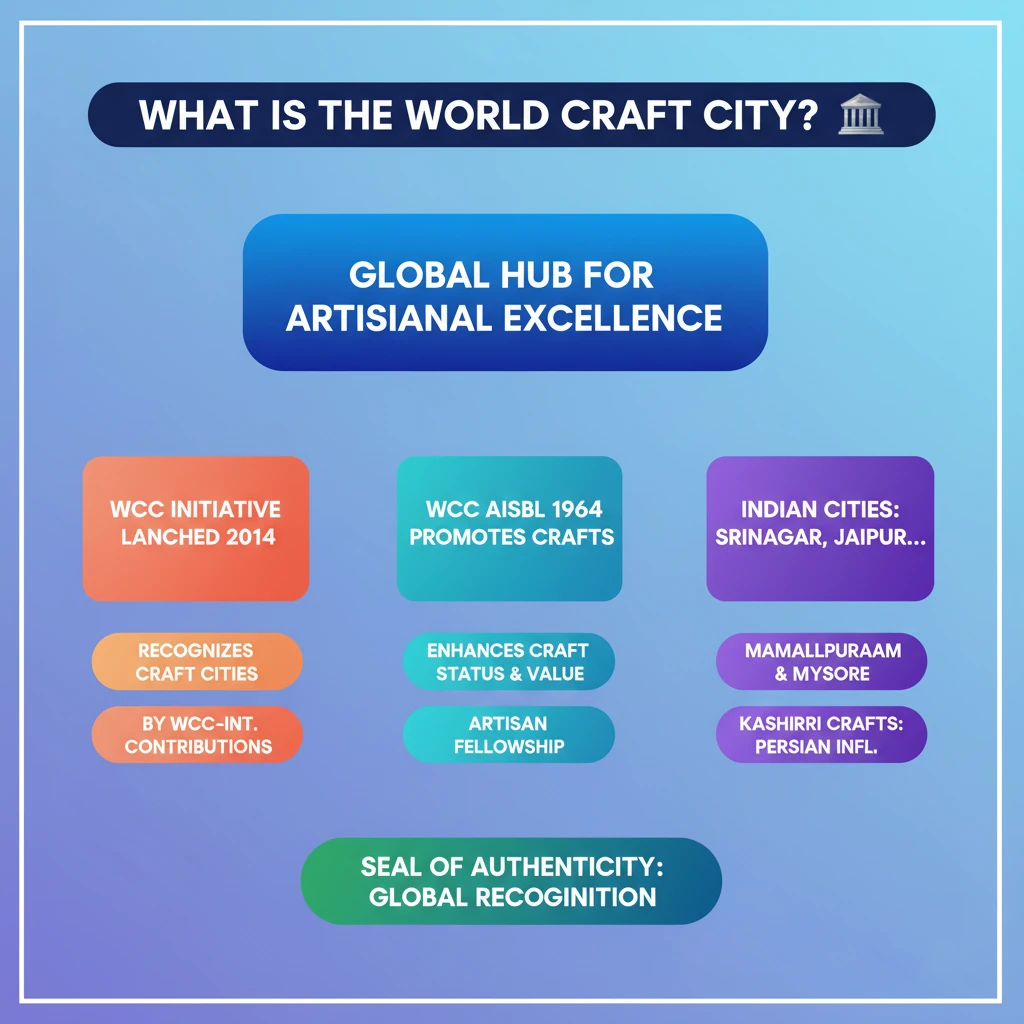
- •The World Craft City initiative, launched in 2014 by WCC-International, recognizes cities for their craft contributions.
- •WCC AISBL, established in 1964, aims to enhance craft status and promote artisan fellowship.
- •Srinagar, Jaipur, Mamallapuram, and Mysore are India's recognized World Craft Cities.
- •Kashmiri crafts like carpet weaving and sozni embroidery show strong Persian and Uzbek influences.
- •The 'Seal of Authenticity of the Craft' certifies handmade Kashmiri products, boosting global recognition and quality.
- •Pashmina shawls are a key craft of Srinagar, known for fine quality and intricate patterns.
- •This initiative promotes cultural preservation, economic empowerment, and social development through crafts.
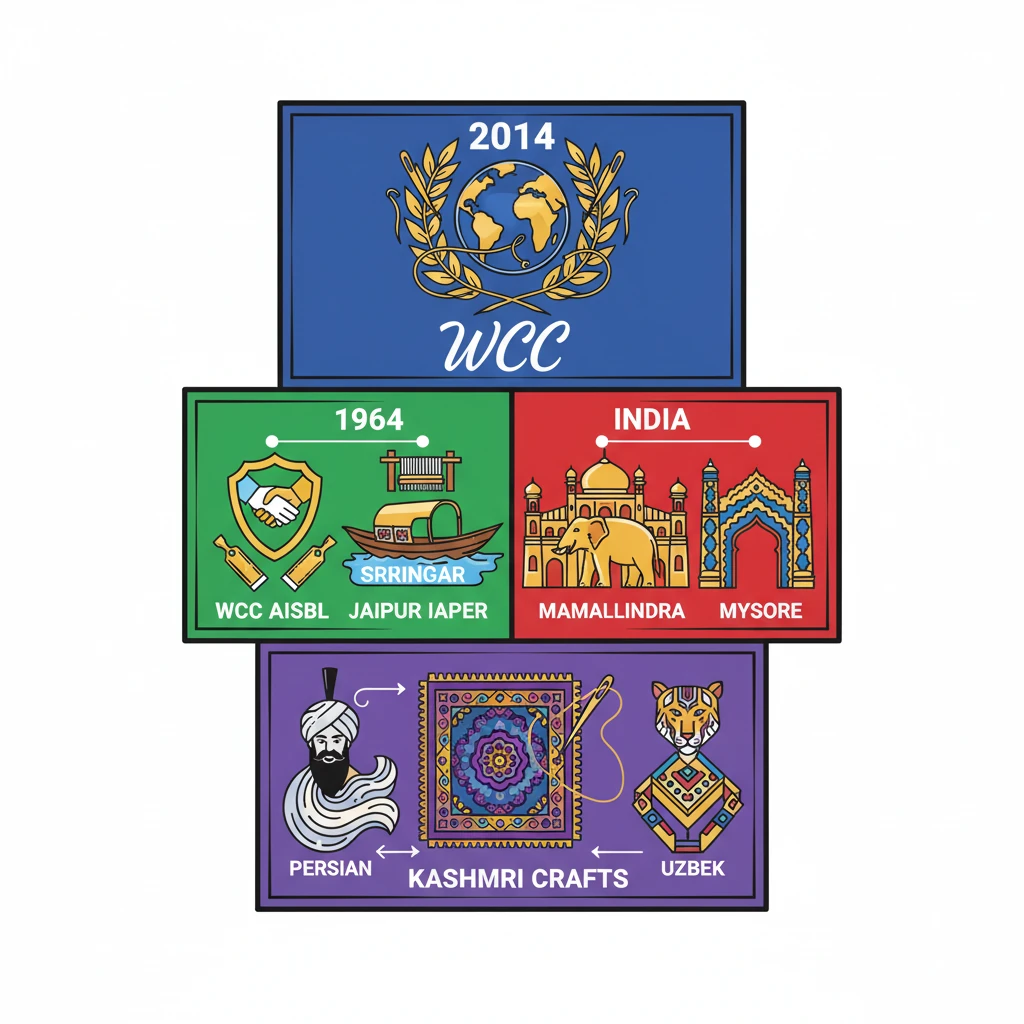
🧠 Memory Techniques
98% Verified Content