Gwalior Inscription (King Bhoja I) - Art And Culture | UPSC Learning
Topics
0 topics • 0 completed
🔍
No topics match your search
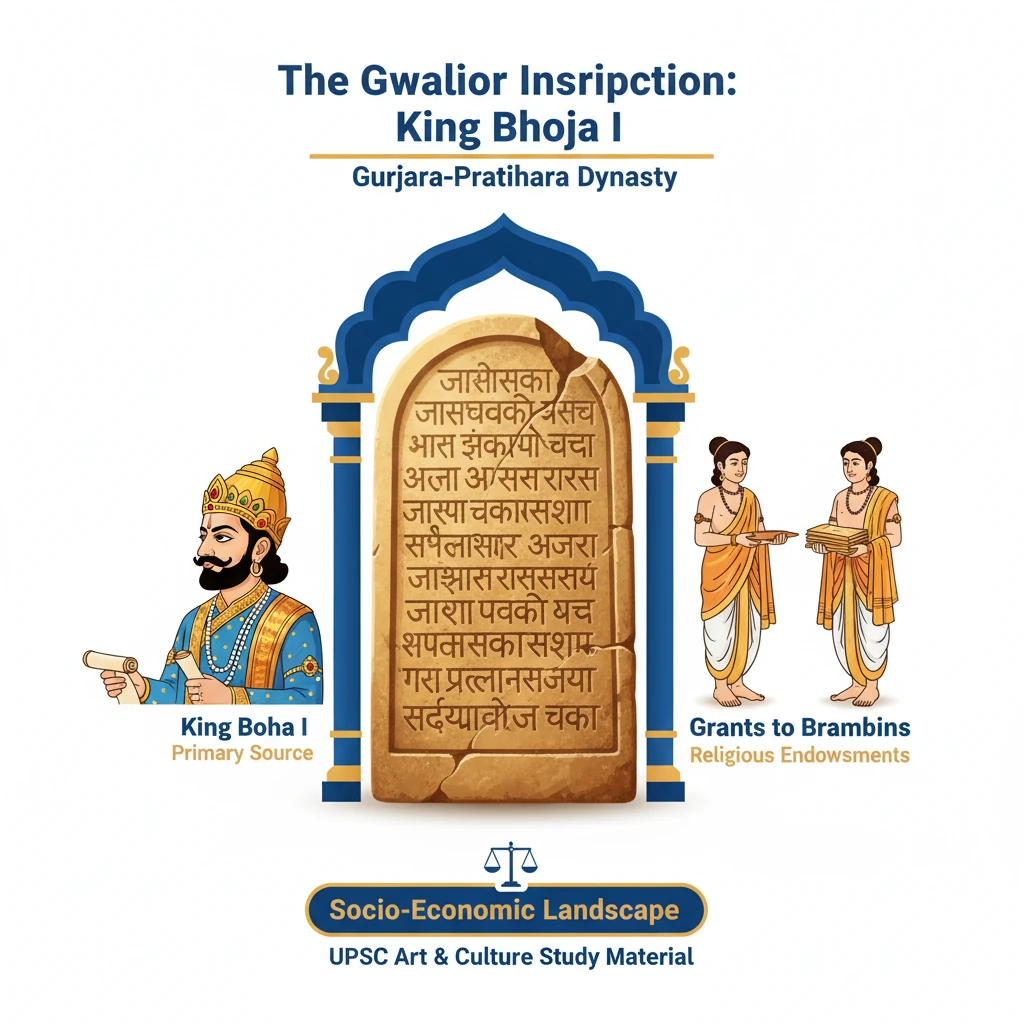
Gwalior Inscription (King Bhoja I)
Medium⏱️ 6 min read
art and culture
📖 Introduction
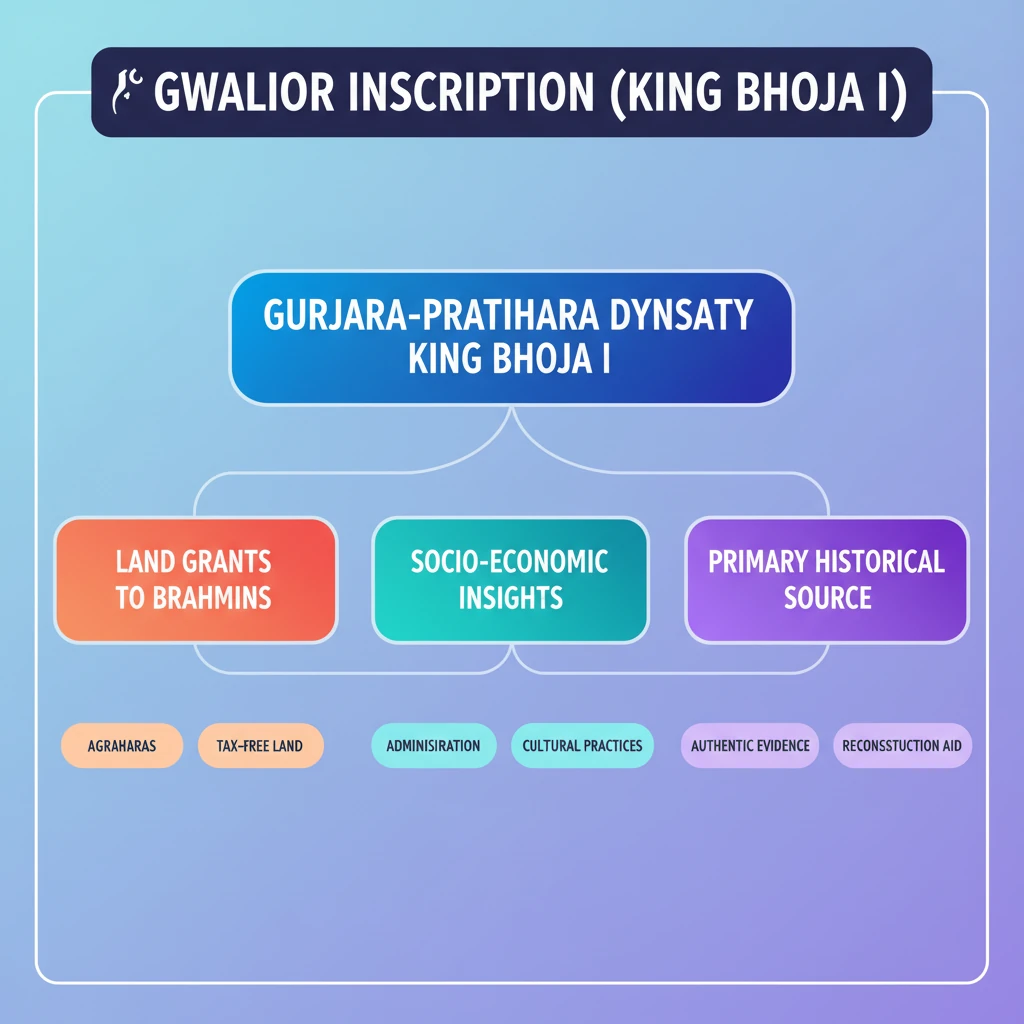
<h4>The Gwalior Inscription: An Overview</h4><p>The <strong>Gwalior Inscription</strong> is a significant historical document primarily associated with <strong>King Bhoja I</strong> of the <strong>Gurjara-Pratihara dynasty</strong>. It serves as a crucial primary source for understanding the socio-economic landscape of the period.</p><h4>Key Details and Content</h4><p>This inscription specifically describes various <strong>grants to Brahmins</strong>, highlighting the prevalent practice of religious endowments during that era. Such grants often involved land or revenue assignments.</p><div class="info-box"><strong>Associated Ruler:</strong> King Bhoja I<br><strong>Dynasty:</strong> Gurjara-Pratihara Dynasty<br><strong>Location:</strong> Gwalior, Madhya Pradesh<br><strong>Primary Subject:</strong> Land grants and socio-economic practices</div><h4>Insights into Socio-Economic Practices</h4><p>A key aspect mentioned in the inscription is the reference to <strong>Agraharas</strong>. These were villages or lands granted to Brahmins, often tax-free, for their sustenance and for maintaining religious or educational institutions.</p><div class="key-point-box">The mention of <strong>Agraharas</strong> in the <strong>Gwalior Inscription</strong> provides invaluable insights into the agrarian economy, land tenure systems, and the patronage extended to the priestly class under the <strong>Gurjara-Pratiharas</strong>.</div><h4>Historical Significance</h4><p>The inscription is vital for reconstructing the administrative and social structure of the <strong>Gurjara-Pratihara empire</strong>. It reflects the strong influence of religious institutions and the role of rulers in supporting them.</p><div class="exam-tip-box">For <strong>UPSC Prelims</strong>, remember the ruler (<strong>King Bhoja I</strong>) and dynasty (<strong>Gurjara-Pratihara</strong>) associated with the <strong>Gwalior Inscription</strong>. For <strong>Mains</strong>, focus on its implications for understanding socio-economic conditions and land grants.</div>
💡 Key Takeaways
- •The Gwalior Inscription is linked to King Bhoja I of the Gurjara-Pratihara dynasty.
- •It describes grants of land, including Agraharas, to Brahmins.
- •The inscription offers crucial insights into socio-economic practices and administration.
- •Inscriptions are primary sources for historical reconstruction, offering authentic evidence.
- •Agraharas were tax-free land grants to Brahmins, fostering religious and educational centers.
- •Other key inscriptions include Banskhera Copper Plate (Harshavardhana) and Deopara Prashasti (Vijaya Sena).
- •These records help understand ancient Indian polity, economy, and cultural patronage.
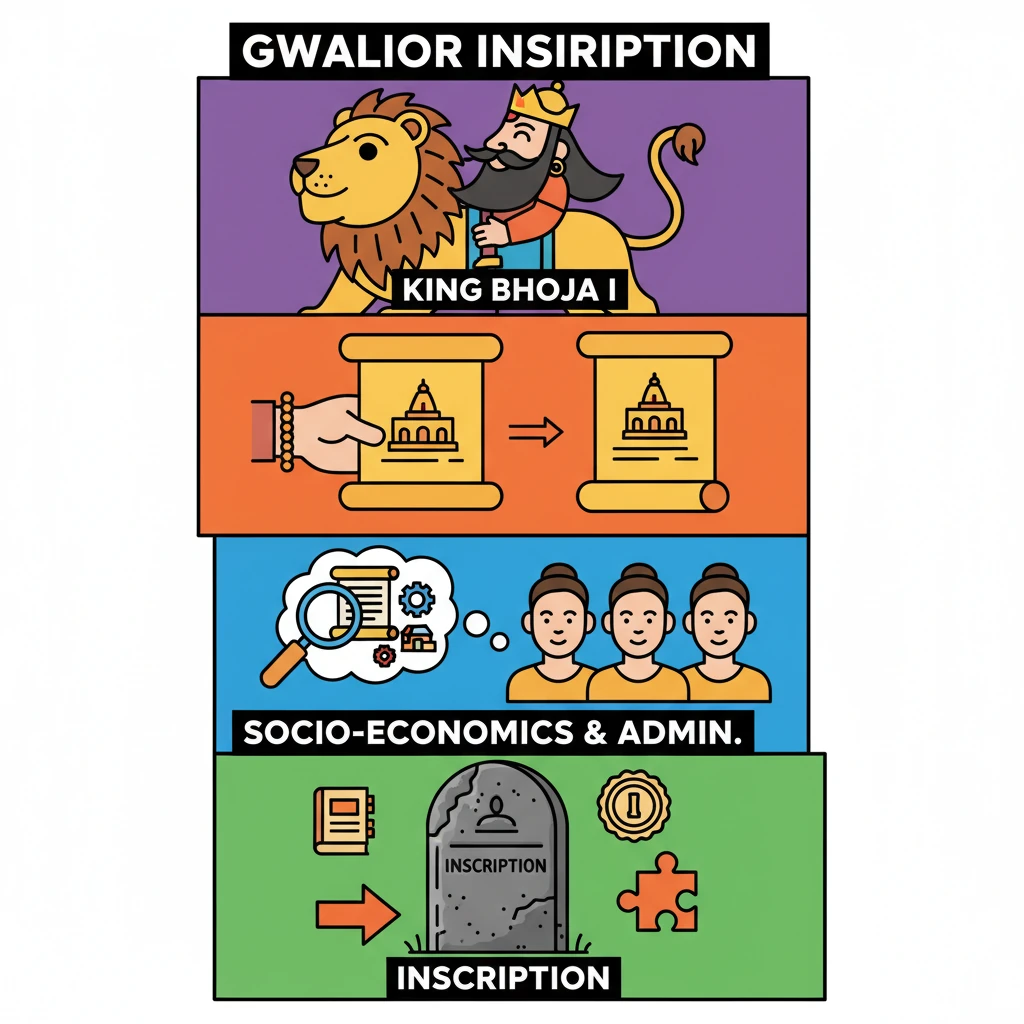
🧠 Memory Techniques
98% Verified Content
📚 Reference Sources
•NCERT History Textbooks (Ancient India)
•Upinder Singh, A History of Ancient and Early Medieval India: From the Stone Age to the 12th Century