Martand Sun Temple Glows in Tricolor - Art And Culture | UPSC Learning
Topics
0 topics • 0 completed
🔍
No topics match your search
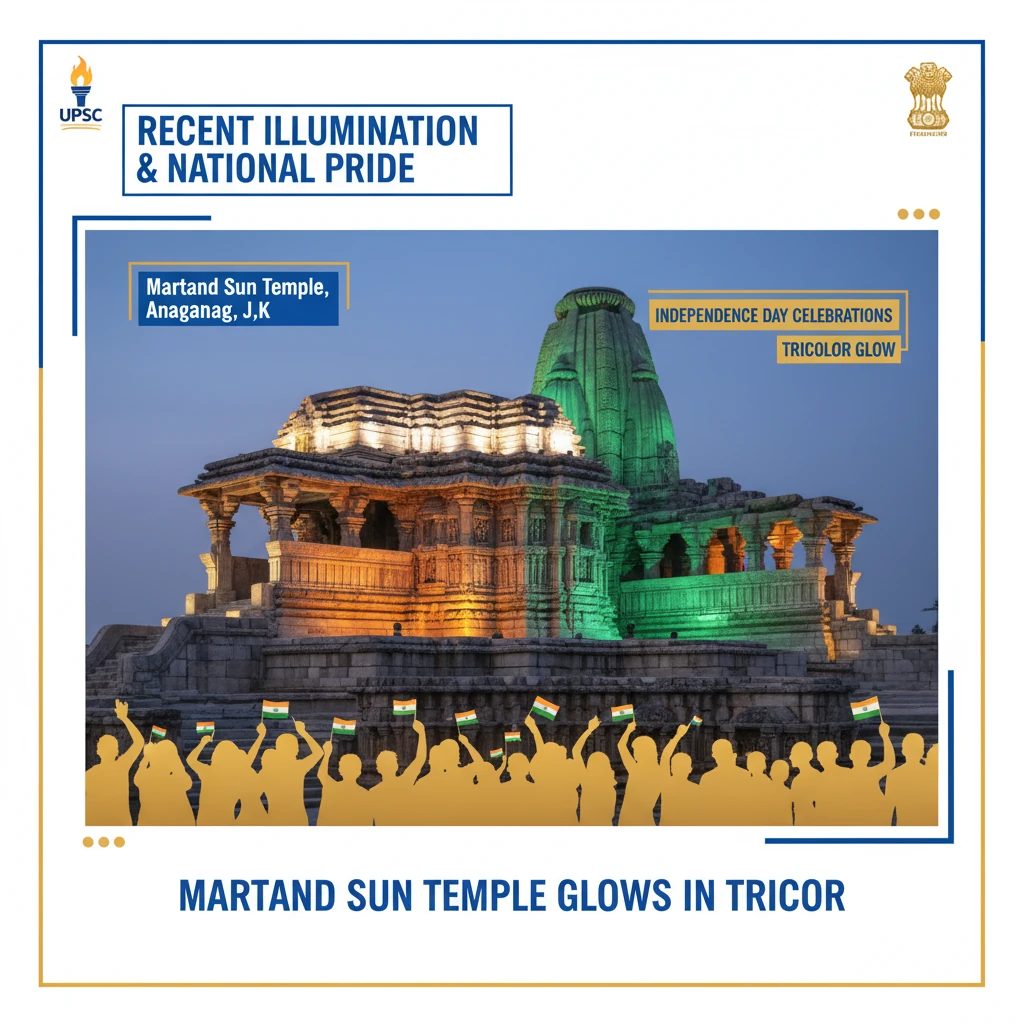
Martand Sun Temple Glows in Tricolor
Medium⏱️ 6 min read
art and culture
📖 Introduction
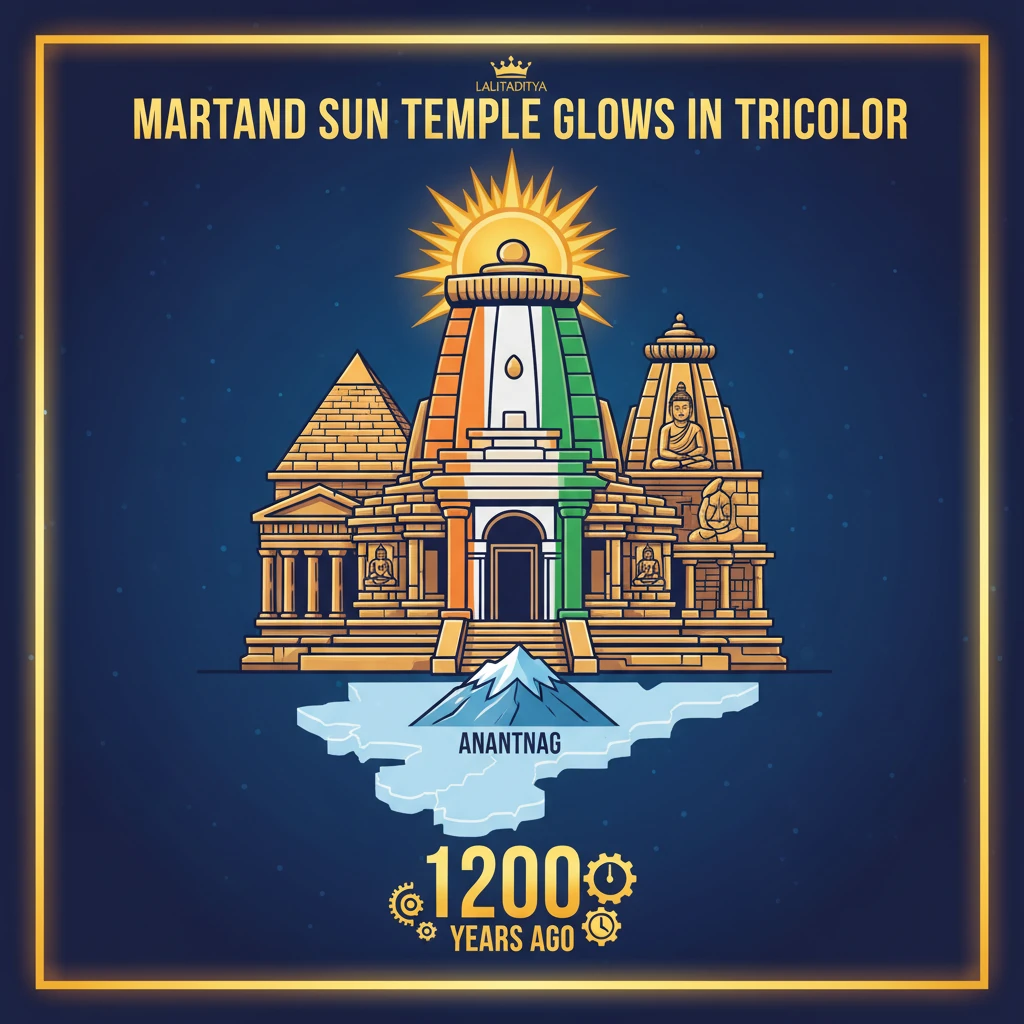
<h4>Recent Illumination and National Pride</h4><p>The <strong>Martand Sun Temple</strong>, located in <strong>Anantnag district</strong>, <strong>Jammu & Kashmir</strong>, was recently illuminated with the <strong>tricolors</strong> of the Indian flag. This event was a significant part of the <strong>Independence Day celebrations</strong>.</p><p>The illumination sparked a deep sense of <strong>pride and joy</strong> among local residents and tourists alike. It drew large crowds, eager to witness this historic moment for the ancient temple.</p><div class="key-point-box">This initiative highlights the government's focus on showcasing and integrating national heritage sites into broader patriotic celebrations.</div><h4>Construction and Patronage</h4><p>The <strong>Martand Temple</strong> was constructed approximately <strong>1200 years ago</strong>. Its creation is attributed to <strong>King Lalitaditya Muktapida</strong> of the powerful <strong>Karkota dynasty</strong>.</p><div class="info-box"><strong>Ruler:</strong> King Lalitaditya Muktapida<br><strong>Dynasty:</strong> Karkota dynasty<br><strong>Reign:</strong> 725 AD to 753 AD (ruled Kashmir)<br><strong>Construction Period:</strong> Around 8th century AD</div><p>The temple was dedicated to <strong>Martand</strong>, the <strong>Sun god</strong>, reflecting the prevalent solar worship traditions of the era. It stood as a testament to the grandeur of Kashmiri architecture.</p><h4>Architectural Grandeur and Features</h4><p>The Martand Sun Temple featured a truly grand architectural style. It incorporated massive <strong>grey stone walls</strong>, creating an imposing structure.</p><p>A significant element was its courtyard, which was filled with <strong>river water</strong>, symbolizing its importance and adding to its aesthetic appeal.</p><div class="info-box"><strong>Key Architectural Features:</strong><ul><li><strong>Three distinct chambers:</strong> The temple uniquely comprised a <strong>mandapa</strong> (hall), <strong>garbhagriha</strong> (sanctum sanctorum), and <strong>antalaya</strong> (antechamber).</li><li><strong>Peristyle:</strong> Ruins suggest the temple was surrounded by a <strong>peristyle of 84 pillars</strong>, a hallmark of Kashmiri temple architecture.</li><li><strong>Lime Mortar:</strong> The use of <strong>lime mortar</strong> in construction was unusual for its time, suggesting potential involvement of <strong>immigrant Byzantine architects</strong>.</li></ul></div><h4>Confluence of Styles and Cultural Assimilation</h4><p>The architecture of the <strong>Martand Temple</strong> is remarkable for its <strong>confluence of styles</strong>. It displays a blend of various cultural influences.</p><p>These influences include <strong>classical Greco-Roman</strong>, <strong>Buddhist-Gandhara</strong>, and <strong>North Indian</strong> architectural elements. This unique blend reflects Kashmir's rich historical connections with diverse cultures and empires.</p><div class="exam-tip-box">For UPSC, note how Martand Sun Temple exemplifies syncretism in Indian art and architecture, a crucial theme for <strong>GS1 Art & Culture</strong>. The blend of styles shows Kashmir's historical position as a cultural crossroads.</div><h4>Historical Documentation</h4><p>The detailed history of the <strong>Martand Sun Temple</strong> is well-documented in the renowned historical chronicle, <strong>Rajatarangini</strong>. This text was authored by <strong>Kalhana</strong> in the <strong>12th century</strong>.</p>
💡 Key Takeaways
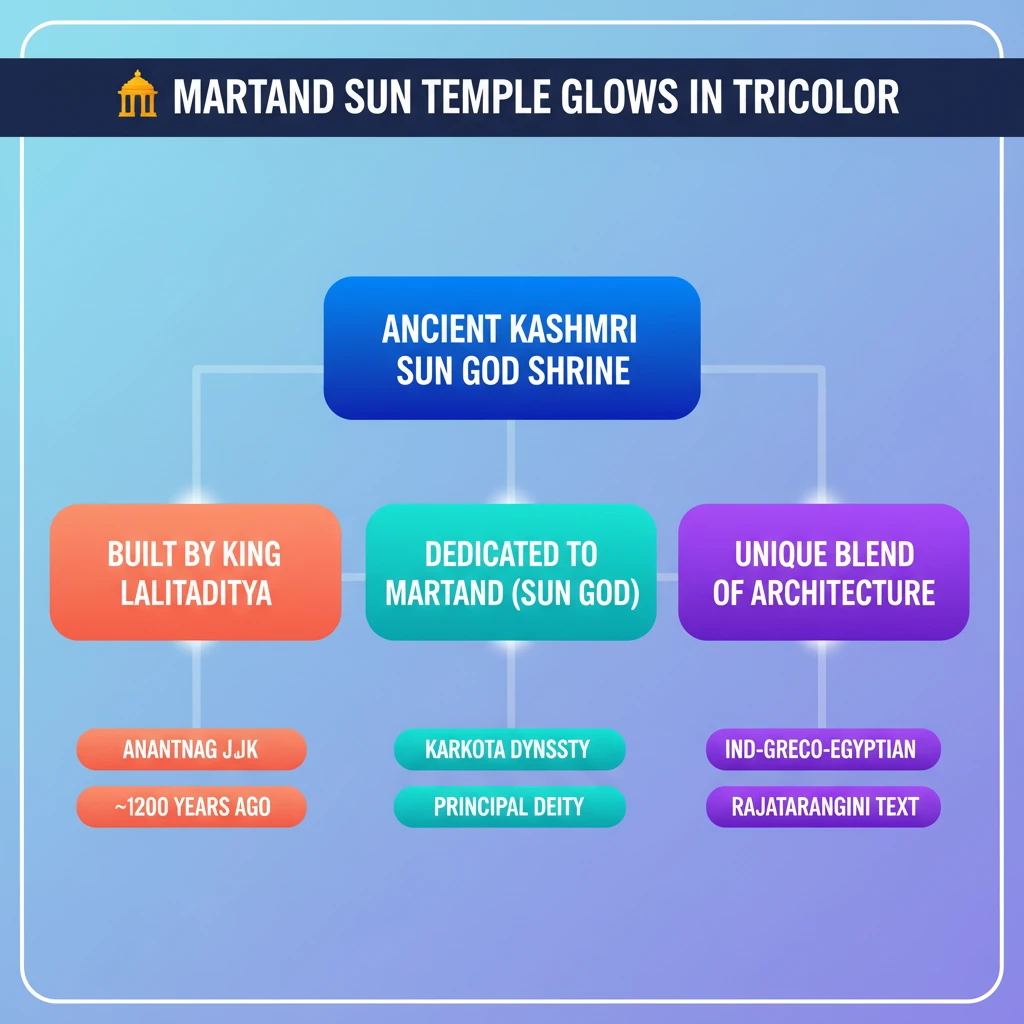
- •Martand Sun Temple is located in Anantnag district, Jammu & Kashmir.
- •It was built by King Lalitaditya Muktapida of the Karkota dynasty around 1200 years ago.
- •The temple is dedicated to Martand, the Sun god.
- •Its architecture is a unique blend of Egyptian, Greek, Gandharan, and North Indian styles.
- •The temple's history is documented in Kalhana's 12th-century text, Rajatarangini.
- •Recently, it was illuminated with tricolors for Independence Day, enhancing national pride.
- •Key features include three chambers (mandapa, garbhagriha, antalaya) and a peristyle of 84 pillars.
🧠 Memory Techniques
95% Verified Content
📚 Reference Sources
•Archaeological Survey of India (ASI) official records (general knowledge)
•NCERTs on Indian Art and Culture (general knowledge)
•Kalhana's Rajatarangini (historical reference)