What does Delisting a Monument Mean? - Art And Culture | UPSC Learning
Topics
0 topics • 0 completed
🔍
No topics match your search
What does Delisting a Monument Mean?
Medium⏱️ 8 min read
art and culture
📖 Introduction
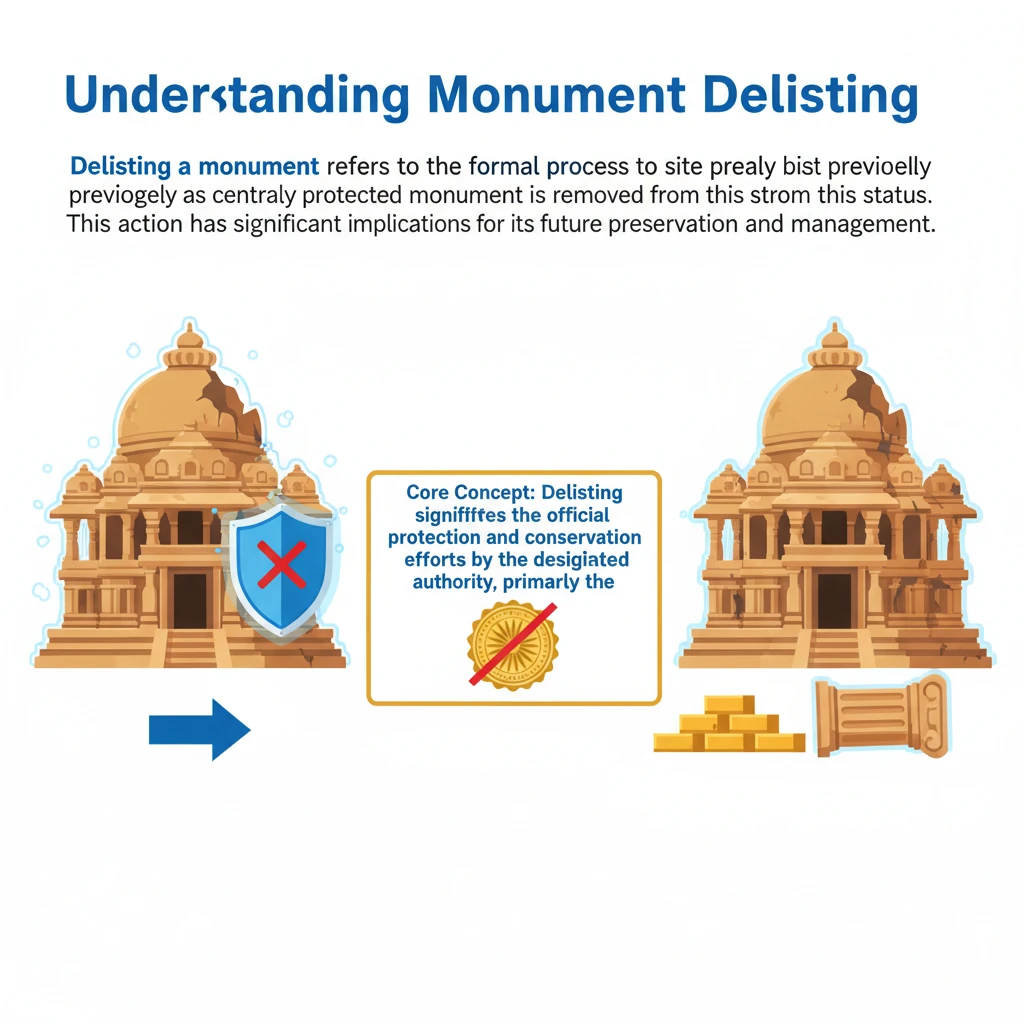
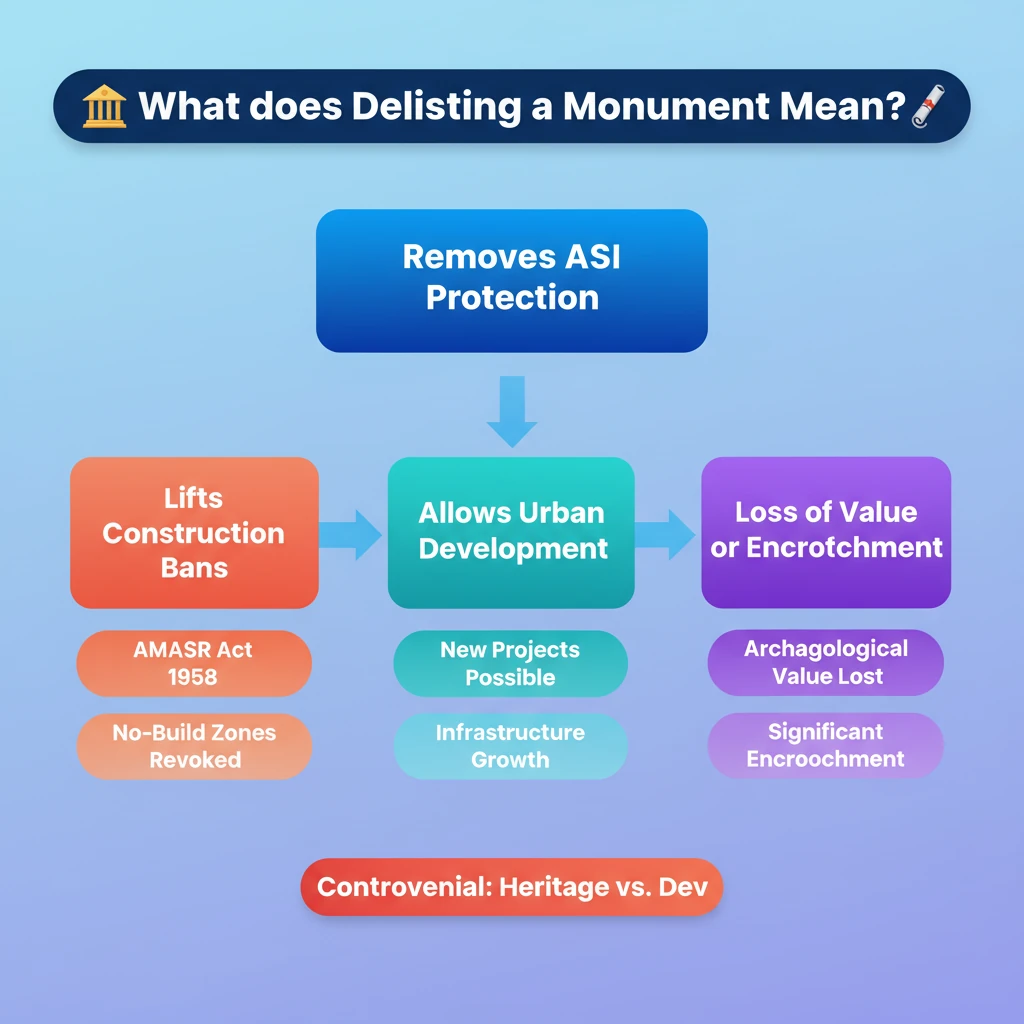
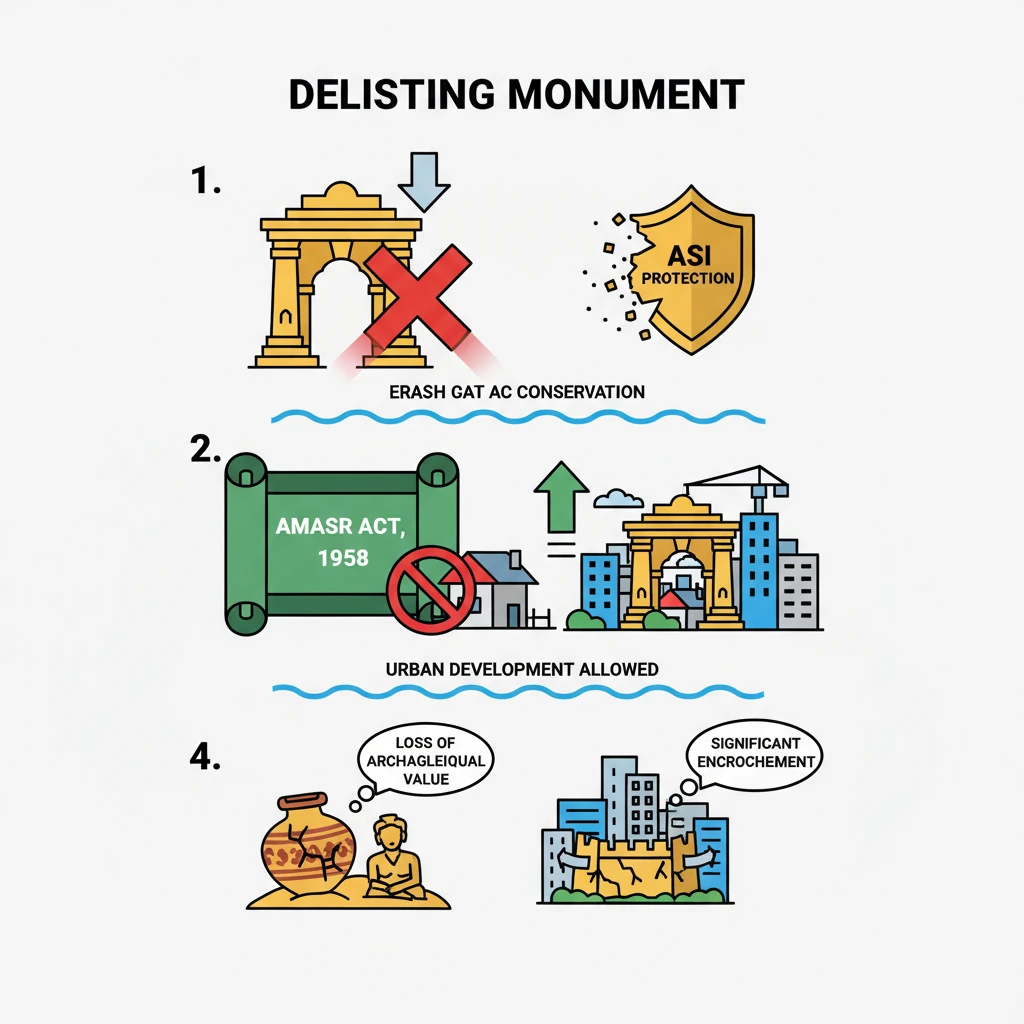
<h4>Understanding Monument Delisting</h4><p><strong>Delisting a monument</strong> refers to the formal process by which a site previously designated as a <strong>centrally protected monument</strong> is removed from this status. This action has significant implications for its future preservation and management.</p><div class="key-point-box"><strong>Core Concept:</strong> Delisting signifies the withdrawal of official protection and conservation efforts by the designated authority, primarily the <strong>Archaeological Survey of India (ASI)</strong>.</div><h4>Removal from ASI's Purview</h4><p>When a monument is <strong>delisted</strong>, it will no longer be conserved, protected, or maintained by the <strong>Archaeological Survey of India (ASI)</strong>. This effectively removes it from the <strong>ASI's list of centrally protected monuments</strong>, ending its statutory protection.</p><div class="info-box"><strong>Key Implication:</strong> Loss of official protection means the monument is no longer subject to the strict conservation guidelines and resources provided by the <strong>ASI</strong>.</div><h4>Impact on Construction and Urbanisation</h4><p>The <strong>Ancient Monuments and Archaeological Sites and Remains Act, 1958 (AMASR Act)</strong>, imposes strict regulations on activities around protected sites. Specifically, any kind of <strong>construction-related activity</strong> is generally prohibited within a designated regulated area.</p><p>Upon <strong>delisting</strong>, these restrictions are lifted. This allows for potential <strong>construction</strong> and <strong>urbanisation</strong> activities in and around the previously protected area, which would have been impossible under the <strong>AMASR Act</strong>.</p><div class="exam-tip-box"><strong>UPSC Insight:</strong> Questions on <strong>heritage management</strong> often revolve around the balance between preservation and development. Understanding delisting helps in analyzing such dilemmas, particularly concerning the <strong>AMASR Act</strong>.</div>
💡 Key Takeaways
- •Delisting removes a monument from the ASI's protection and conservation.
- •The AMASR Act, 1958, prohibits construction around protected sites.
- •Delisting lifts these construction restrictions, allowing for urban development.
- •Reasons for delisting can include loss of archaeological value or significant encroachment.
- •The process is often controversial, balancing heritage with development needs.
- •It highlights the challenges in managing India's vast cultural heritage.
🧠 Memory Techniques
98% Verified Content
📚 Reference Sources
•The Ancient Monuments and Archaeological Sites and Remains Act, 1958 (AMASR Act)
•Archaeological Survey of India (ASI) official website
•Ministry of Culture, Government of India publications