What are the Benefits of Weed? - Agriculture Allied Sector | UPSC Learning
Topics
0 topics • 0 completed
🔍
No topics match your search
What are the Benefits of Weed?
Easy⏱️ 7 min read
agriculture allied sector
📖 Introduction
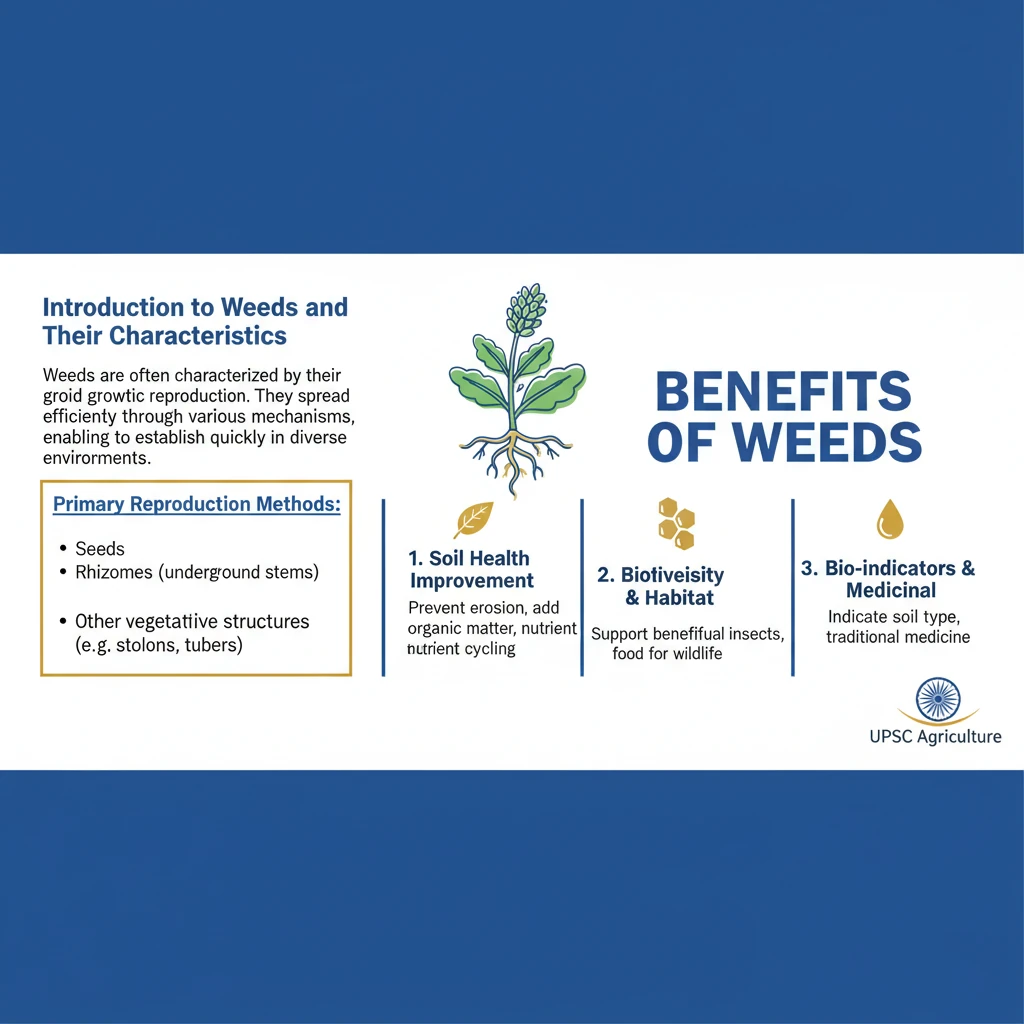
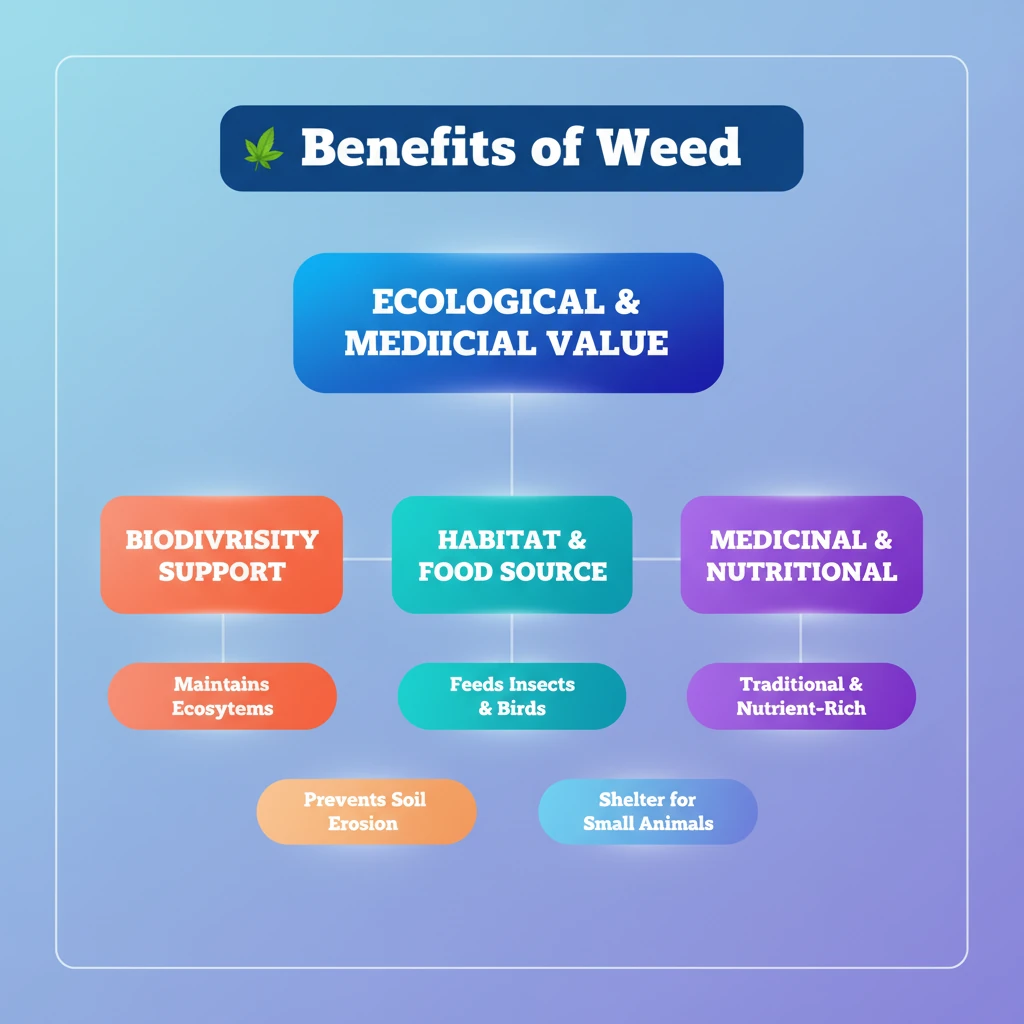
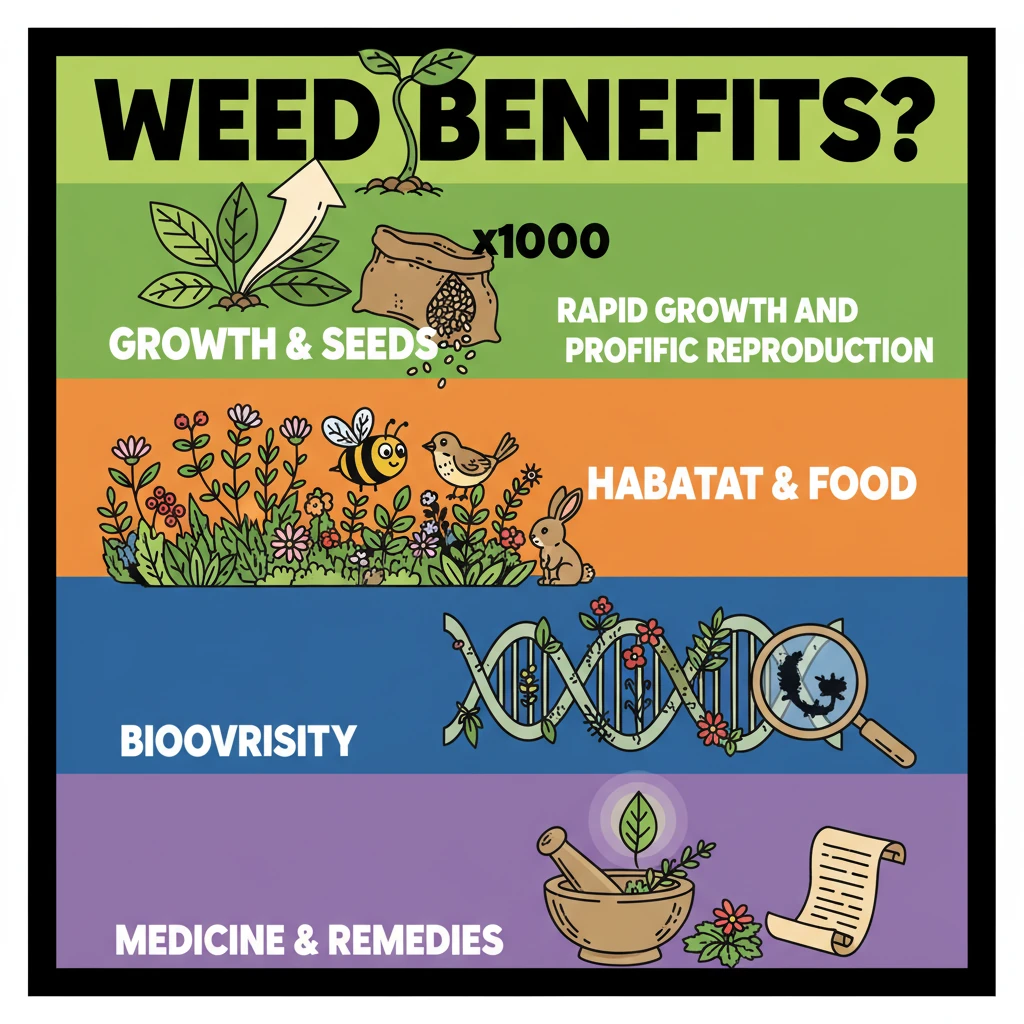
<h4>Introduction to Weeds and Their Characteristics</h4><p>Weeds are often characterized by their <strong>rapid growth</strong> and prolific reproduction. They spread efficiently through various mechanisms, enabling them to establish quickly in diverse environments.</p><div class="info-box"><strong>Primary Reproduction Methods:</strong><ul><li><strong>Seeds</strong></li><li><strong>Rhizomes</strong> (underground stems)</li><li>Other <strong>vegetative structures</strong> (e.g., stolons, tubers)</li></ul>This facilitates their widespread distribution and persistence.</div><h4>Habitat and Food for Wildlife</h4><p>Many weed species serve as crucial <strong>habitat and food sources</strong> for diverse wildlife. This includes various <strong>insects, birds, and small animals</strong>, providing shelter and sustenance.</p><div class="key-point-box">Weeds are integral to maintaining <strong>biodiversity</strong>. They support ecosystems by fostering <strong>secondary species</strong> that depend on their presence for survival, contributing to a balanced ecological web.</div><h4>Medicinal and Nutritional Uses</h4><p>Beyond their ecological role, certain weeds possess significant <strong>medicinal properties</strong>. They are frequently utilized as <strong>natural remedies</strong> in traditional medicine systems across different cultures.</p><p>Examples include <strong>plantain, dandelion, and nettle</strong>, which are recognized for their health benefits and traditional therapeutic applications.</p><div class="info-box">Some weeds are also <strong>edible</strong>, offering valuable <strong>nutrients</strong> when incorporated into diets. They can be rich in vitamins, minerals, and antioxidants.</div><h4>Natural Pollinator Attractants</h4><p>A notable benefit of many weeds is their ability to attract <strong>pollinators</strong>. Their flowers draw in essential insects like <strong>bees, butterflies, and other beneficial insects</strong>, which are vital for plant reproduction.</p><div class="exam-tip-box">By supporting healthy <strong>pollinator populations</strong>, weeds indirectly contribute to the increased productivity of adjacent <strong>crops and cultivated plants</strong>. This is a crucial aspect for agricultural sustainability and food security, often asked in <strong>UPSC GS Paper III (Agriculture)</strong>.</div>
💡 Key Takeaways
- •Weeds are characterized by rapid growth and prolific reproduction through seeds and vegetative structures.
- •They provide essential habitat and food sources for insects, birds, and small animals.
- •Weeds contribute significantly to maintaining biodiversity within ecosystems.
- •Some weeds possess valuable medicinal properties and are used in traditional remedies.
- •Certain weed species are edible and offer important nutritional benefits.
- •Many weeds attract pollinators like bees and butterflies, indirectly boosting crop productivity.
- •The perception of weeds is evolving, recognizing their ecological and economic benefits beyond just being pests.
🧠 Memory Techniques
95% Verified Content
📚 Reference Sources
•FAO publications on sustainable agriculture and biodiversity
•Academic research papers on ethnobotany and weed ecology