India’s Basmati Rice Cultivation Dispute and the Direct Seeded Rice - Agriculture Allied Sector | UPSC Learning
Topics
0 topics • 0 completed
🔍
No topics match your search

India’s Basmati Rice Cultivation Dispute and the Direct Seeded Rice
Medium⏱️ 8 min read
agriculture allied sector
📖 Introduction
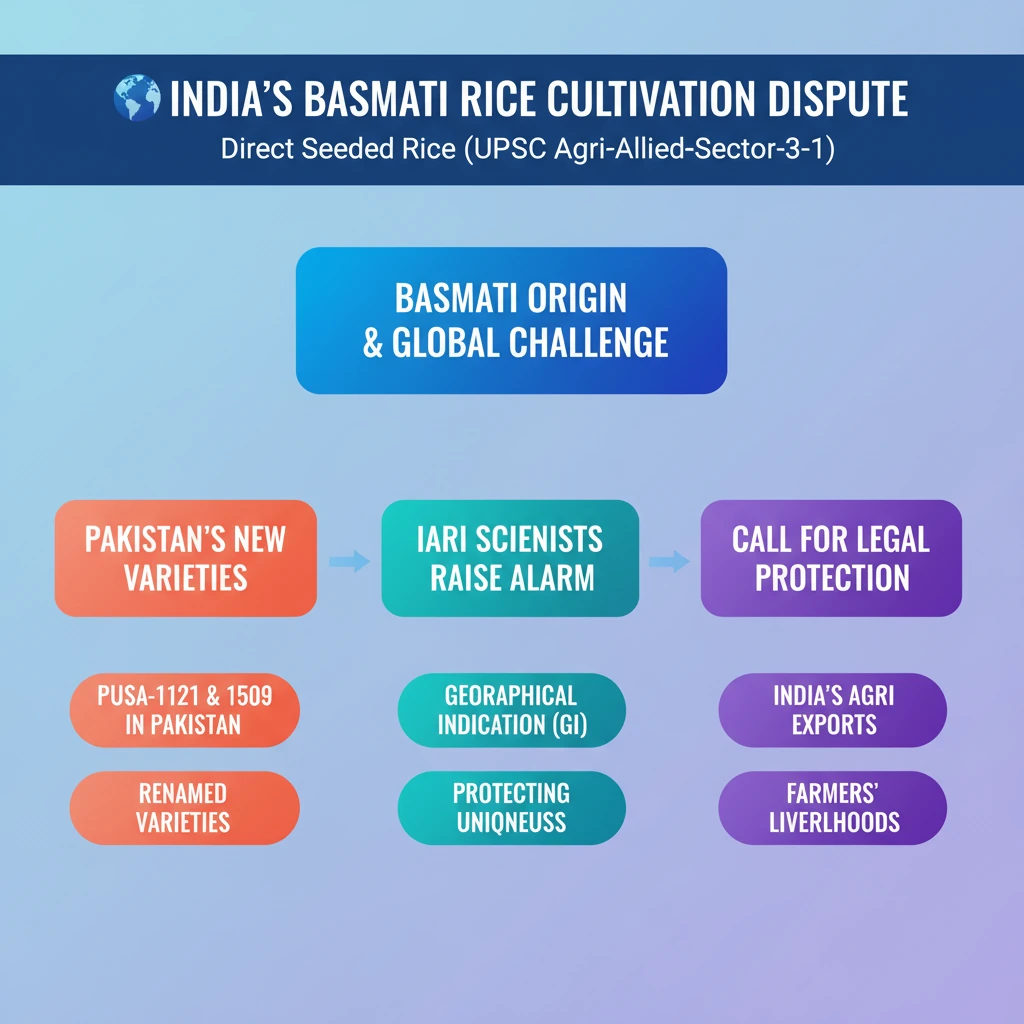
<h4>India's Basmati Rice: A Global Delicacy</h4><p><strong>Basmati rice</strong> is a highly valued agricultural product from <strong>India</strong>, renowned for its unique aroma, long grain, and distinct flavour. It holds significant cultural and economic importance for the nation, particularly in its agricultural export portfolio.</p><div class="info-box"><strong>Key Characteristics:</strong> Long grain, aromatic, unique flavour, soft texture upon cooking.</div><h4>Concerns Over Cross-Border Cultivation</h4><p>Recent reports have highlighted a concerning issue: <strong>India's prized basmati rice varieties</strong> are reportedly being cultivated in <strong>Pakistan</strong>. These varieties are then marketed under different names, potentially infringing on India's intellectual property.</p><p>This situation has raised significant alarm among agricultural scientists and stakeholders in <strong>India</strong>, particularly regarding the intellectual property and market rights associated with <strong>Basmati</strong>.</p><h4>Specific Basmati Varieties at Risk</h4><p>The varieties specifically identified in this cross-border cultivation issue include <strong>Pusa-1121 Basmati</strong> and <strong>1509 Basmati</strong>. These are some of <strong>India's</strong> most popular and commercially successful <strong>Basmati</strong> strains, developed through extensive research.</p><div class="key-point-box"><strong>Pusa-1121</strong> and <strong>1509 Basmati</strong> are high-yielding, aromatic varieties developed in <strong>India</strong>, contributing significantly to its agricultural exports.</div><h4>Call for Legal Action and Safeguards</h4><p>Scientists at the <strong>Indian Agricultural Research Institute (IARI)</strong> have expressed strong concerns over these developments. They are urging for immediate and decisive <strong>legal action</strong> to address the unauthorized cultivation and marketing.</p><p>The primary objective of such action is to <strong>safeguard the interests of Indian farmers and exporters</strong>. Protecting the unique identity of <strong>Indian Basmati</strong> is crucial for maintaining its market position and economic benefits.</p><div class="exam-tip-box">This issue highlights the importance of <strong>Geographical Indication (GI) tags</strong> and international intellectual property rights in agriculture, a critical topic for <strong>UPSC GS-III</strong>.</div>
💡 Key Takeaways
- •India's prized Basmati rice varieties, like Pusa-1121 and 1509, are reportedly being cultivated in Pakistan under new names.
- •This situation raises significant concerns among Indian agricultural scientists, particularly from the Indian Agricultural Research Institute (IARI).
- •Legal action is being urged to safeguard the interests of Indian farmers and exporters.
- •The dispute underscores the critical importance of Geographical Indication (GI) tags for protecting unique agricultural products.
- •It impacts India's agricultural exports, brand value, and the livelihoods of millions of Basmati farmers.
- •Robust Intellectual Property Rights (IPR) protection is essential for safeguarding India's agricultural heritage and economic interests in the global market.
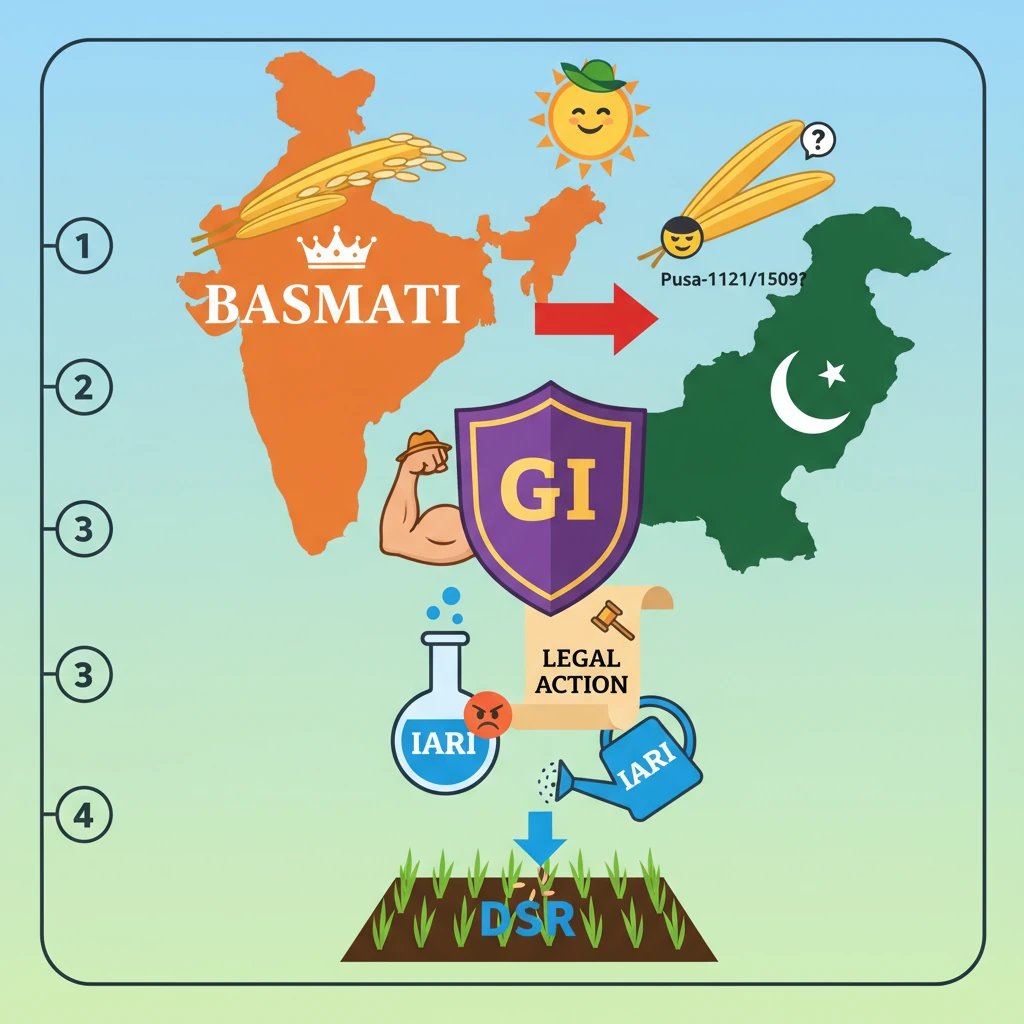
🧠 Memory Techniques
95% Verified Content
📚 Reference Sources
•Reports from Indian Agricultural Research Institute (IARI)
•News articles and reports on India-Pakistan Basmati dispute and GI tags