Micronutrient-Rich Food, Climate Resilience & Sustainable Agriculture - Agriculture Allied Sector | UPSC Learning
Topics
0 topics • 0 completed
🔍
No topics match your search
Micronutrient-Rich Food, Climate Resilience & Sustainable Agriculture
Medium⏱️ 8 min read
agriculture allied sector
📖 Introduction
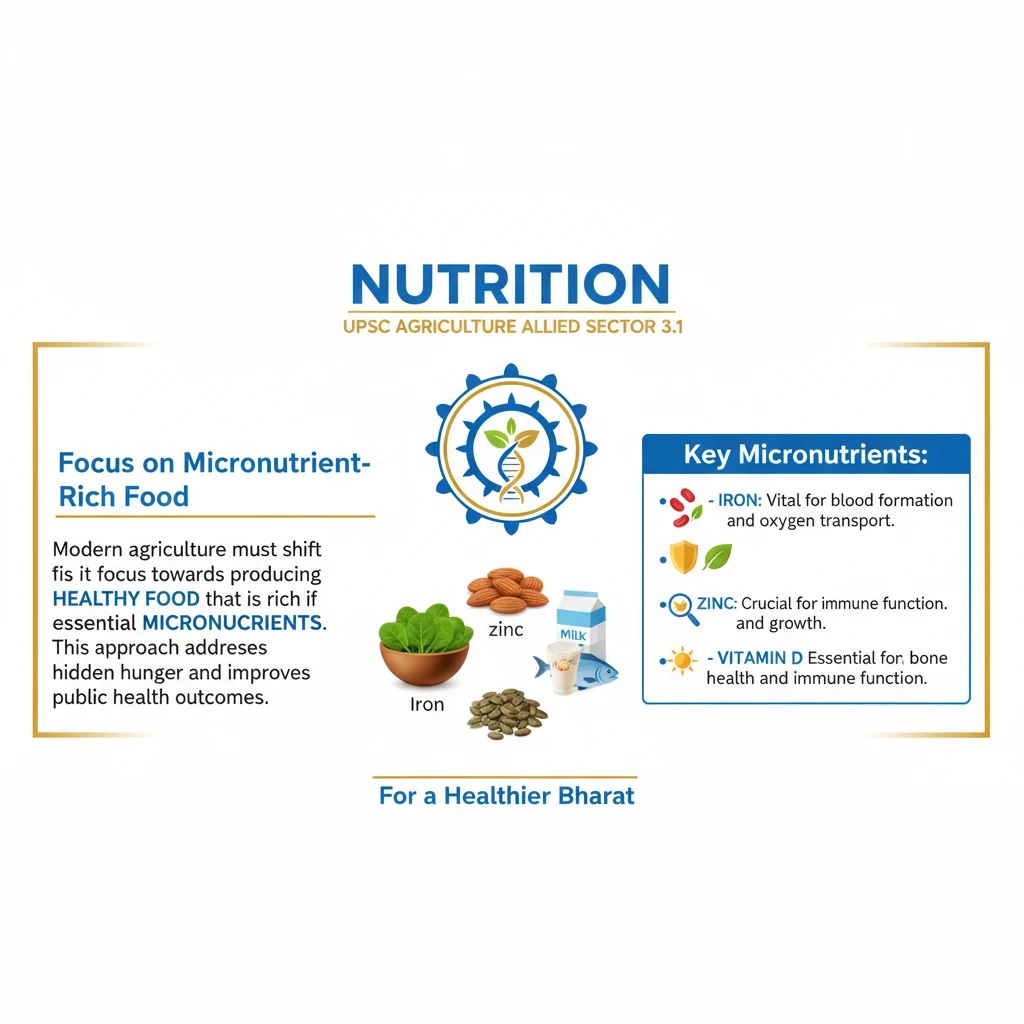
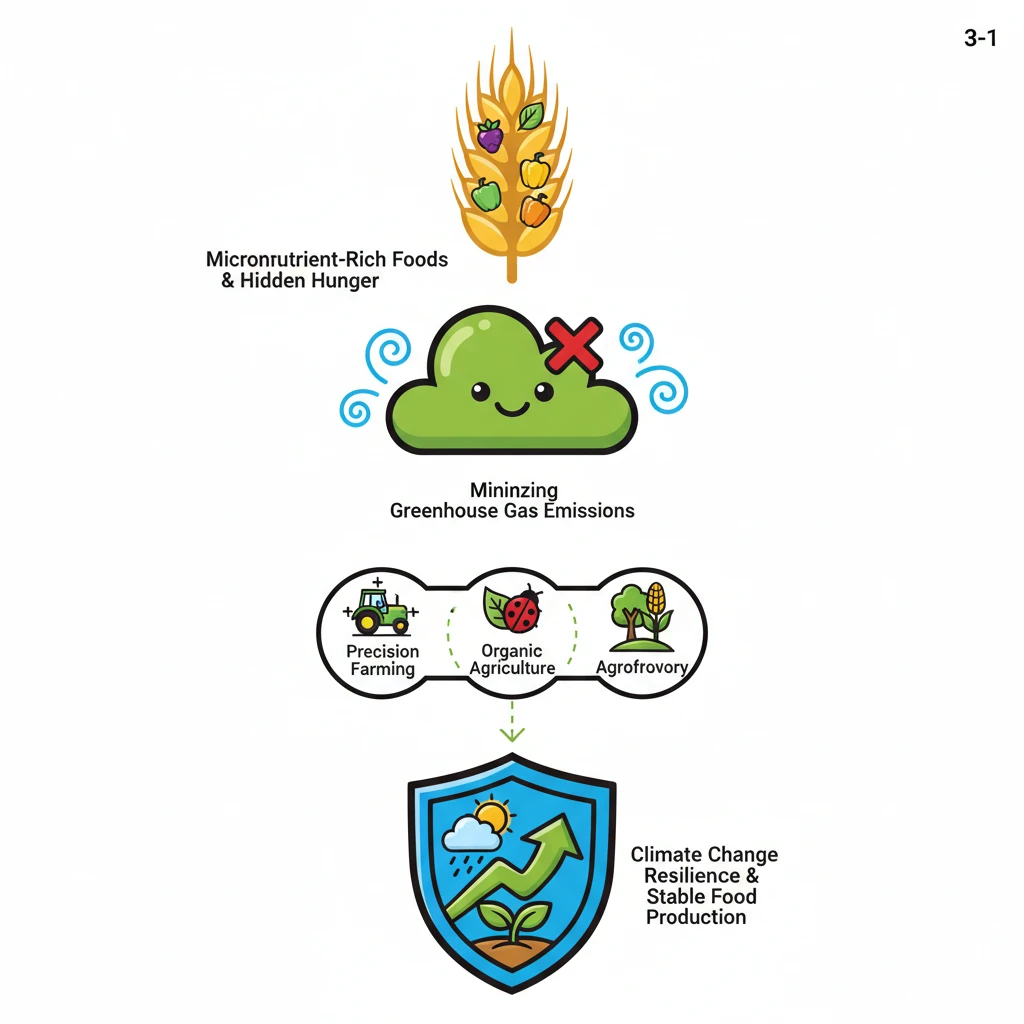
<h4>Focus on Micronutrient-Rich Food</h4><p>Modern agriculture must shift its focus towards producing <strong>healthy food</strong> that is rich in essential <strong>micronutrients</strong>. This approach addresses hidden hunger and improves public health outcomes.</p><div class="key-point-box"><strong>Key Micronutrients:</strong><ul><li><strong>Iron:</strong> Vital for blood formation and oxygen transport.</li><li><strong>Zinc:</strong> Crucial for immune function and cell growth.</li><li><strong>Vitamin A:</strong> Essential for vision, immune system, and skin health.</li><li><strong>Folate:</strong> Important for cell division and preventing birth defects.</li></ul>These micronutrients are vital for various bodily functions and overall human development.</div><h4>Minimizing Greenhouse Gas Emissions in Agriculture</h4><p>Agricultural practices need to adopt strategies that significantly reduce <strong>Greenhouse Gas (GHG) Emissions</strong>. This is crucial for combating climate change and ensuring environmental sustainability.</p><div class="info-box"><strong>Techniques for GHG Reduction:</strong><ul><li><strong>Precision Farming:</strong> Optimizes input use (fertilizers, water) through technology, reducing waste and emissions.</li><li><strong>Organic Agriculture:</strong> Avoids synthetic fertilizers and pesticides, relying on natural processes to maintain soil health and reduce fossil fuel-based inputs.</li><li><strong>Agroforestry:</strong> Integrates trees and shrubs into agricultural landscapes, enhancing carbon sequestration and biodiversity.</li><li><strong>Conservation Tillage:</strong> Minimizes soil disturbance, leading to improved soil structure, reduced erosion, and lower fuel consumption for farm machinery.</li></ul>These methods help minimize inputs like synthetic fertilizers and fossil fuels, thereby directly reducing agricultural emissions.</div><h4>Enhancing Climate Change Resilience in Agriculture</h4><p>Building <strong>resilience to Climate Change</strong> is paramount for agricultural systems to withstand adverse impacts like droughts, floods, and extreme temperatures. This ensures food security in a changing climate.</p><div class="key-point-box"><strong>Strategies for Climate Resilience:</strong><ul><li><strong>Adjusting Planting Dates:</strong> Modifying sowing times to align with changing rainfall patterns and temperature regimes.</li><li><strong>Selecting Climate-Resistant Crop Varieties:</strong> Utilizing crops engineered or naturally adapted to tolerate stress factors such as drought, salinity, or heat.</li><li><strong>Agroforestry:</strong> The integration of trees provides shade, reduces wind erosion, improves soil moisture retention, and diversifies farm income, all contributing to resilience.</li></ul>These adaptations can significantly increase agricultural resilience to the varied impacts of climate change, ensuring stable yields and farmer livelihoods.</div>
💡 Key Takeaways
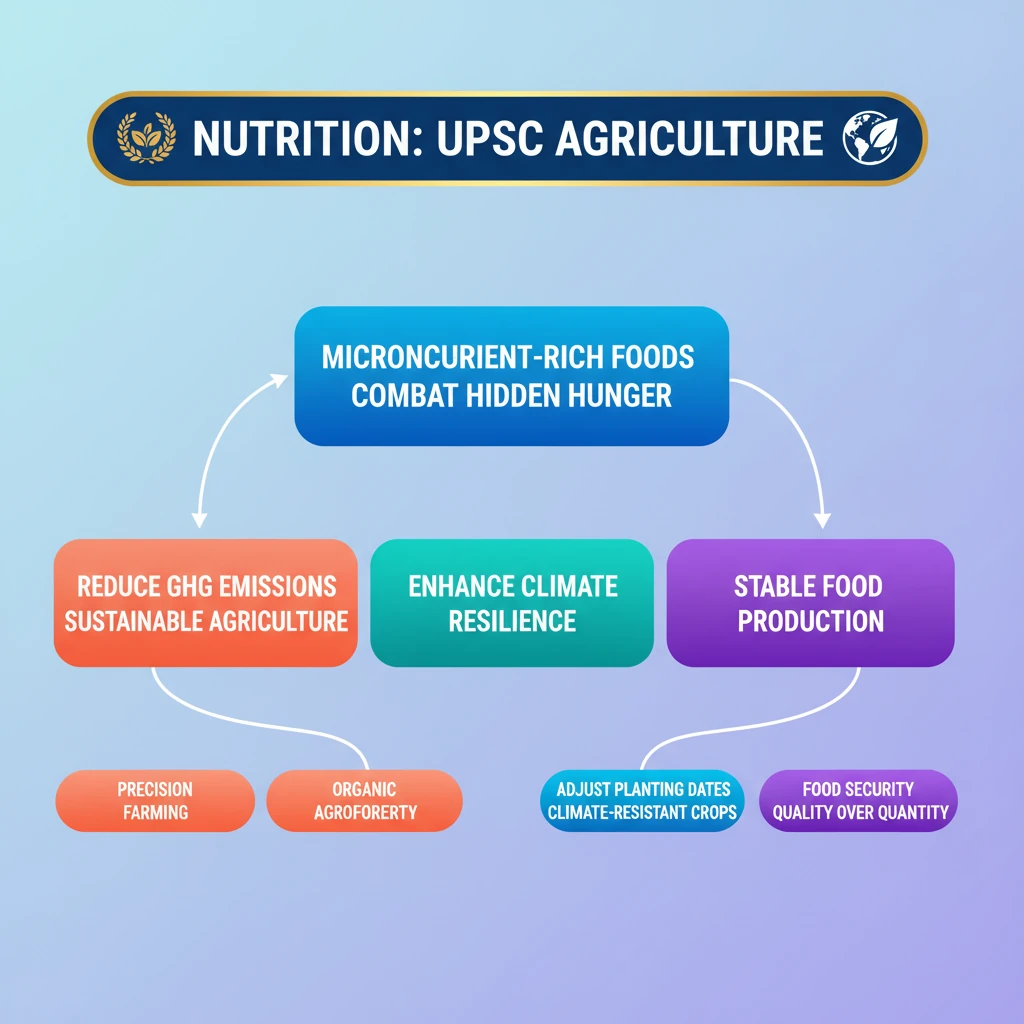
- •Agriculture must prioritize producing micronutrient-rich foods to combat hidden hunger.
- •Minimizing Greenhouse Gas Emissions is crucial for sustainable agriculture and climate action.
- •Techniques like precision farming, organic agriculture, and agroforestry reduce agricultural emissions.
- •Enhancing climate change resilience is vital for ensuring stable food production.
- •Adjusting planting dates and selecting climate-resistant crop varieties are key resilience strategies.
- •Sustainable agriculture integrates nutritional security, environmental sustainability, and climate adaptation.
- •Modern agricultural policies increasingly focus on holistic approaches to food systems.
🧠 Memory Techniques
95% Verified Content
📚 Reference Sources
•FAO reports on Climate-Smart Agriculture
•ICAR publications on Biofortification
•Government of India, Ministry of Agriculture & Farmers Welfare documents