Investment Forum for Advancing Climate Resilient Agrifood Systems in India - Agriculture Allied Sector | UPSC Learning
Topics
0 topics • 0 completed
🔍
No topics match your search
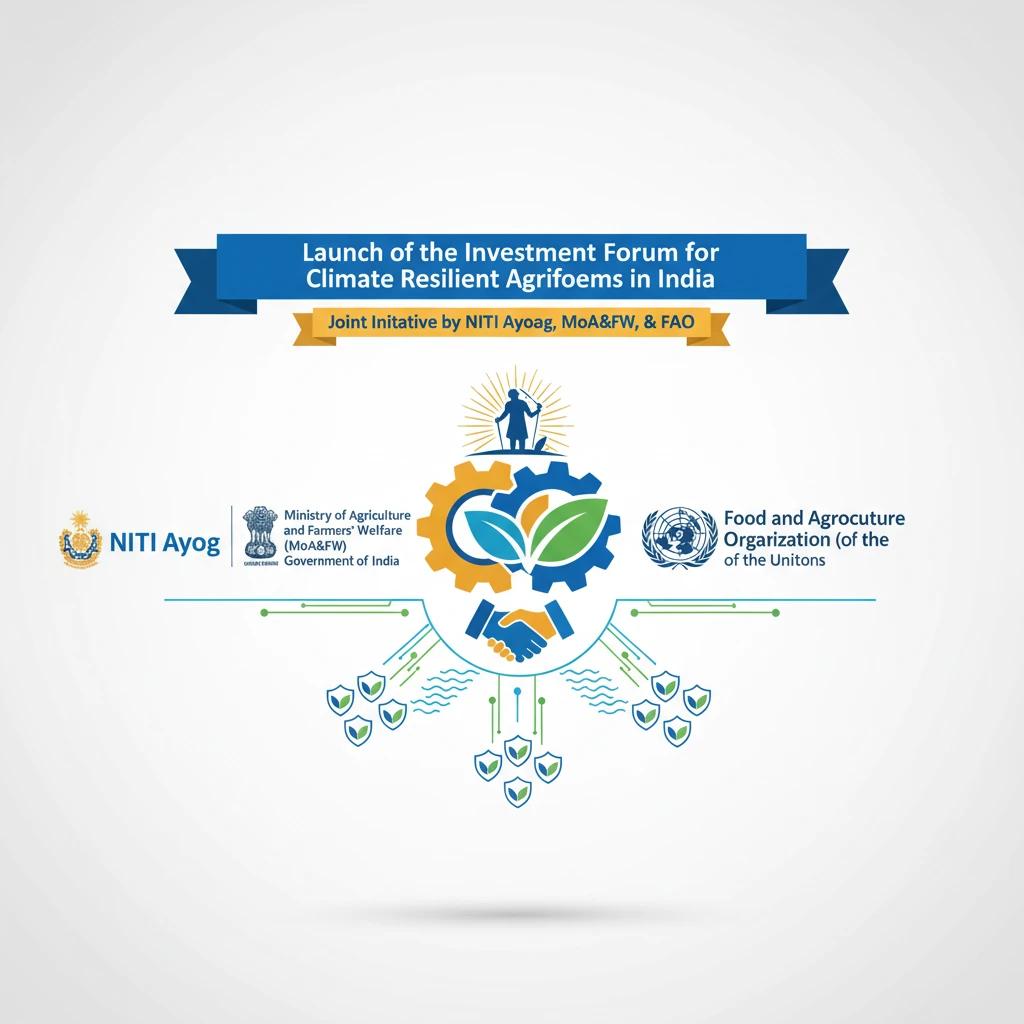
Investment Forum for Advancing Climate Resilient Agrifood Systems in India
Medium⏱️ 7 min read
agriculture allied sector
📖 Introduction
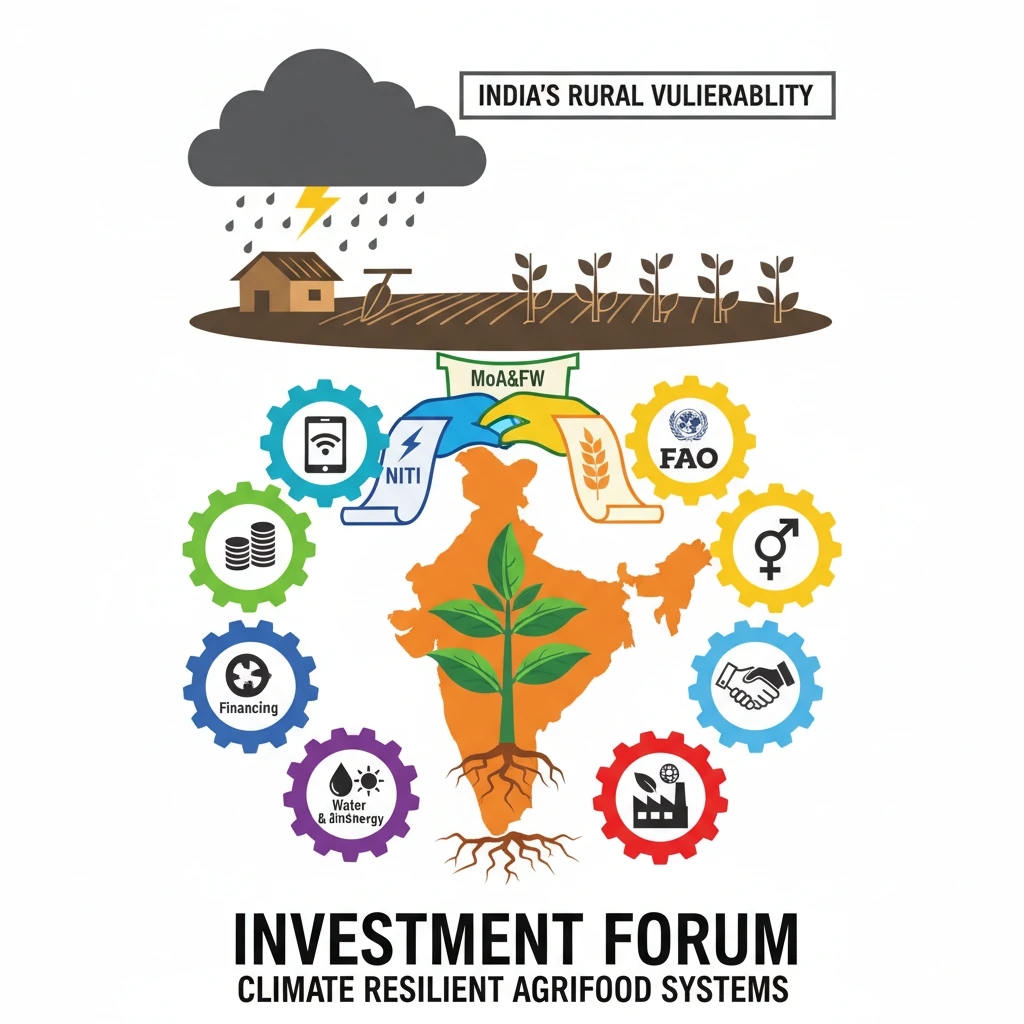
<h4>Launch of the Investment Forum for Climate Resilient Agrifood Systems</h4><p>The <strong>National Institution for Transforming India (NITI Aayog)</strong>, the <strong>Ministry of Agriculture and Farmers’ Welfare (MoA&FW)</strong> of the Government of India, and the <strong>Food and Agriculture Organization (FAO)</strong> of the United Nations collaboratively launched a significant initiative.</p><p>This joint effort is known as the <strong>‘Investment Forum for Advancing Climate Resilient Agrifood Systems in India’</strong>. The forum was inaugurated in <strong>New Delhi</strong>, underscoring its national importance.</p><div class="info-box"><strong>Key Organizers:</strong><ul><li><strong>NITI Aayog</strong> (India)</li><li><strong>MoA&FW</strong> (India)</li><li><strong>FAO</strong> (United Nations)</li></ul><strong>Location:</strong> New Delhi</div><h4>Purpose of the Investment Forum</h4><p>The primary aim of this initiative is to develop an effective <strong>investment and partnership strategy</strong>. This strategy is crucial for fostering <strong>climate-resilient agrifood systems</strong> across various stakeholders in India.</p><div class="key-point-box">The forum seeks to mobilize resources and collaborations to build a sustainable and climate-proof agricultural sector in India.</div><h4>Key Areas of Deliberation</h4><p>The forum facilitated extensive discussions and deliberations across <strong>six critical areas</strong> vital for achieving climate resilience in agriculture:</p><ul><li><strong>Climate Resilient Agriculture:</strong> Sharing experiences and identifying effective pathways.</li><li><strong>Digital Infrastructure and Solutions:</strong> Leveraging technology for climate adaptation.</li><li><strong>Financing Climate Resilient Agrifood Systems:</strong> Exploring both <strong>domestic and global funding mechanisms</strong>.</li><li><strong>Climate Resilient Value Chains:</strong> Strengthening supply chains against climate shocks.</li><li><strong>Production Practices and Inputs:</strong> Promoting methods and resources for climate resilience.</li><li><strong>Gender Mainstreaming and Social Inclusion:</strong> Ensuring equitable participation and benefits for vulnerable groups.</li></ul><h4>Significance of Investing in Climate-Resilient Agrifood Systems</h4><p><strong>Climate change</strong> poses profound implications for India, particularly impacting its economically vulnerable rural population. A large segment of this population relies heavily on <strong>climate-sensitive agricultural livelihoods</strong>.</p><div class="exam-tip-box">Understanding the socio-economic impact of climate change on agriculture is crucial for <strong>UPSC GS-III (Economy, Environment)</strong> and <strong>GS-I (Geography)</strong>.</div><p>Agriculture itself contributes approximately <strong>13% of total greenhouse gas emissions</strong> in India. Simultaneously, it remains highly vulnerable to the adverse impacts of climate change.</p><div class="info-box"><strong>Dual Role of Agriculture:</strong><ul><li><strong>Contributor:</strong> ~13% of India's <strong>GHG emissions</strong></li><li><strong>Vulnerable:</strong> Highly susceptible to climate change impacts</li></ul></div><h4>Vulnerability of Indian Agriculture to Climate Change</h4><p>Indian agriculture faces significant threats from various climate-related phenomena. These include:</p><ul><li><strong>Extreme Temperatures:</strong> Leading to heat stress on crops and livestock.</li><li><strong>Droughts:</strong> Causing water scarcity and crop failure.</li><li><strong>Floods:</strong> Resulting in crop damage and soil erosion.</li><li><strong>Cyclones:</strong> Devastating coastal agricultural areas.</li><li><strong>Soil Salinity:</strong> Affecting land productivity, especially in coastal and irrigated regions.</li></ul>

💡 Key Takeaways
- •The Investment Forum was launched by NITI Aayog, MoA&FW, and FAO in New Delhi.
- •Its main goal is to create an investment and partnership strategy for climate-resilient agrifood systems in India.
- •Six key areas were discussed, including digital solutions, financing, and gender mainstreaming.
- •Climate change significantly impacts India's economically vulnerable rural population dependent on agriculture.
- •Indian agriculture contributes to GHG emissions and is highly susceptible to extreme weather events like droughts and floods.
- •Investing in climate resilience is crucial for ensuring food security and sustainable livelihoods in India.
- •The forum aligns with India's national and international commitments on climate action and sustainable development.
🧠 Memory Techniques
95% Verified Content
📚 Reference Sources
•NITI Aayog Official Website (for initiatives and mandates)
•Ministry of Agriculture & Farmers' Welfare (MoA&FW) Official Website
•Food and Agriculture Organization (FAO) of the United Nations Publications on Climate Change and Agriculture