3 Years of PM GatiShakti National Master Plan - economy | UPSC Learning
Topics
0 topics • 0 completed
🔍
No topics match your search
3 Years of PM GatiShakti National Master Plan
Medium⏱️ 8 min read
economy
📖 Introduction
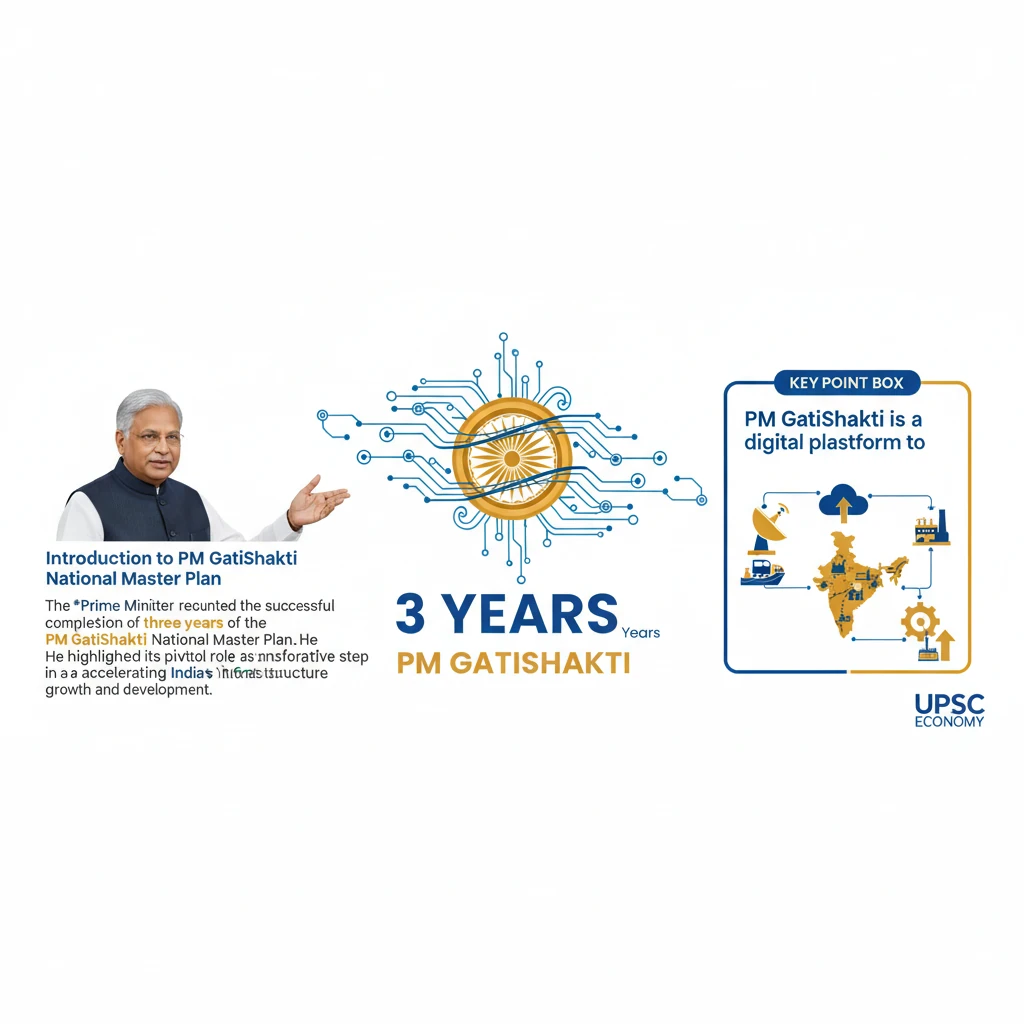
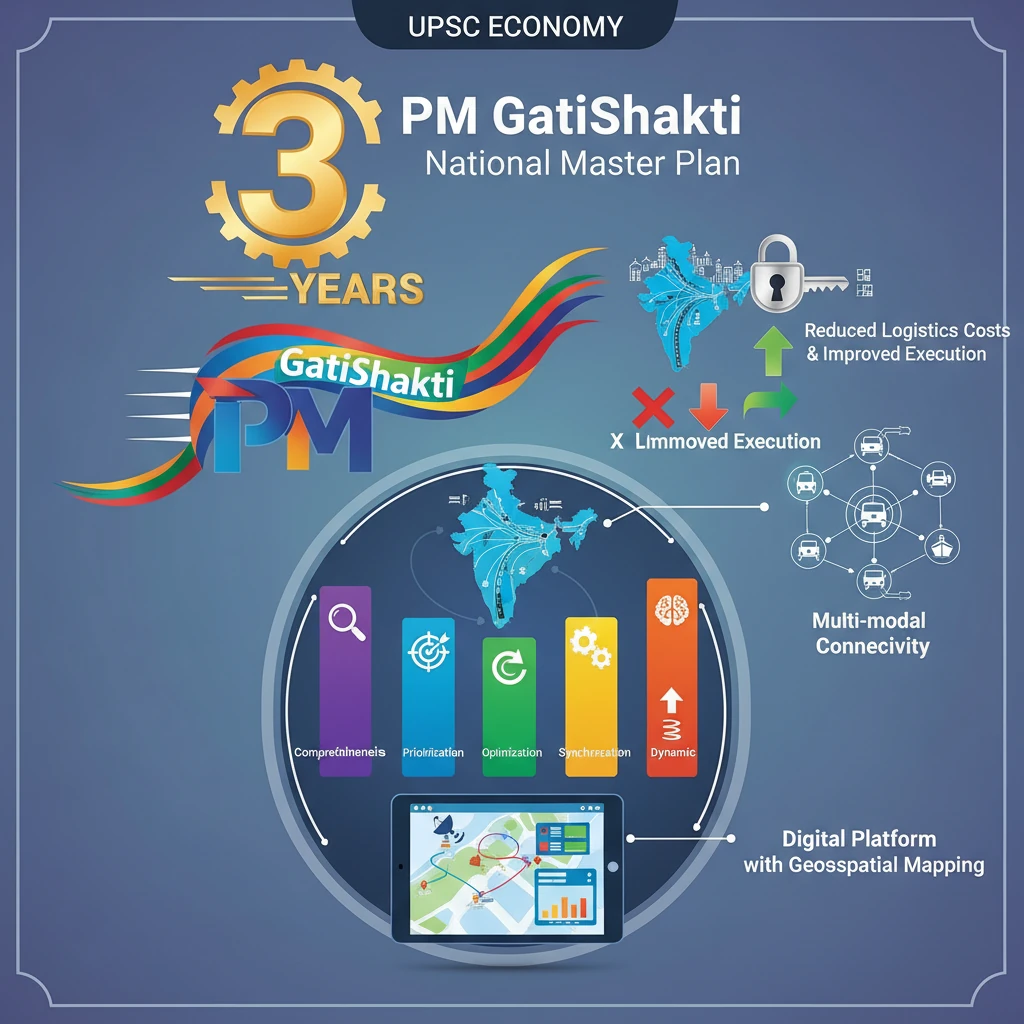
<h4>Introduction to PM GatiShakti National Master Plan</h4><p>The <strong>Prime Minister</strong> recently lauded the successful completion of <strong>three years</strong> of the <strong>PM GatiShakti National Master Plan</strong>. He highlighted its pivotal role as a <strong>transformative step</strong> in accelerating <strong>India’s infrastructure growth</strong> and development.</p><div class='key-point-box'><p><strong>PM GatiShakti</strong> is a <strong>digital platform</strong> designed to bring 16 ministries, including Railways and Roadways, together for <strong>integrated planning and coordinated implementation</strong> of infrastructure connectivity projects. It aims to reduce logistical costs and improve efficiency.</p></div><h4>Core Objectives of PM GatiShakti</h4><p>The primary goal of <strong>PM GatiShakti</strong> is to create a <strong>holistic and integrated approach</strong> to infrastructure development. This includes reducing delays, improving project execution, and enhancing the overall logistics ecosystem in India.</p><ul><li>It seeks to ensure <strong>seamless multi-modal connectivity</strong> for the movement of people, goods, and services.</li><li>The plan focuses on boosting <strong>economic growth</strong> by optimizing infrastructure planning and project implementation.</li><li>A key objective is to reduce the <strong>logistics cost</strong>, which is crucial for making Indian products more competitive globally.</li></ul><h4>Pillars of PM GatiShakti</h4><p>The framework of <strong>PM GatiShakti</strong> is built upon six foundational pillars that guide its implementation and strategic vision.</p><ol><li><strong>Comprehensiveness:</strong> All existing and planned infrastructure initiatives of various Ministries are mapped onto a single platform.</li><li><strong>Prioritization:</strong> Projects are prioritized based on their national importance and potential for multi-modal impact.</li><li><strong>Optimization:</strong> The plan aims to optimize route and project designs to minimize time and cost overruns.</li><li><strong>Synchronization:</strong> Facilitates coordination among various government departments for better project execution.</li><li><strong>Analytical:</strong> Provides comprehensive data for better decision-making and project monitoring.</li><li><strong>Dynamic:</strong> The platform is continuously updated, allowing for real-time monitoring and adjustments to projects.</li></ol><div class='exam-tip-box'><p>For <strong>UPSC Mains GS Paper 3</strong>, understanding the <strong>six pillars</strong> and their implications for infrastructure development is crucial. Be prepared to discuss how GatiShakti addresses traditional challenges in project implementation.</p></div>
💡 Key Takeaways
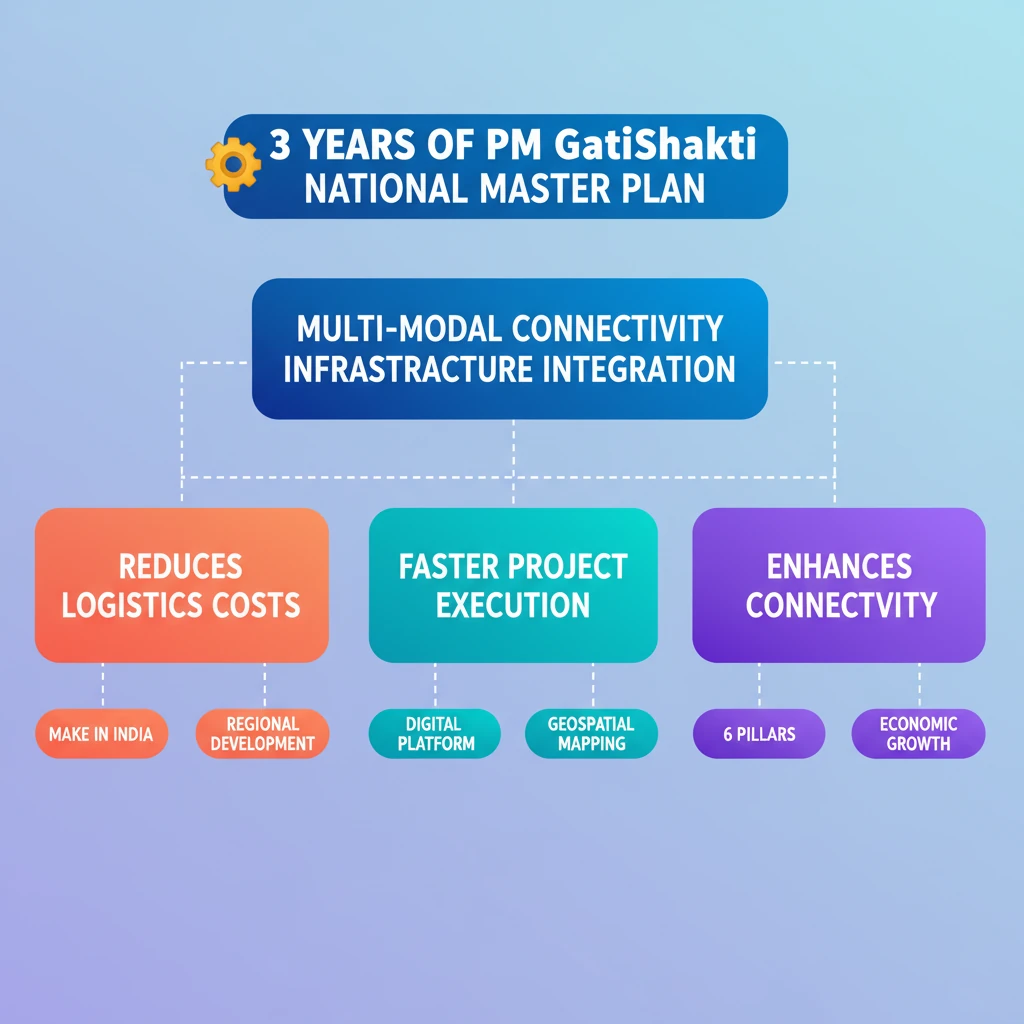
- •PM GatiShakti is a National Master Plan for Multi-modal Connectivity, integrating 16 ministries for infrastructure planning.
- •Aims to reduce logistics costs, improve project execution, and enhance multi-modal connectivity.
- •Built on six pillars: Comprehensiveness, Prioritization, Optimization, Synchronization, Analytical, Dynamic.
- •Utilizes a digital platform with geospatial mapping for real-time monitoring and integrated decision-making.
- •Crucial for 'Make in India', regional development, and achieving India's economic growth targets.
🧠 Memory Techniques
95% Verified Content
📚 Reference Sources
•Ministry of Commerce and Industry official documents
•NITI Aayog reports on infrastructure development
•Economic Survey of India